文旅业

Search documents
春节假期访港旅客约177万人次 同比增14%
Xin Lang Cai Jing· 2026-02-24 13:12
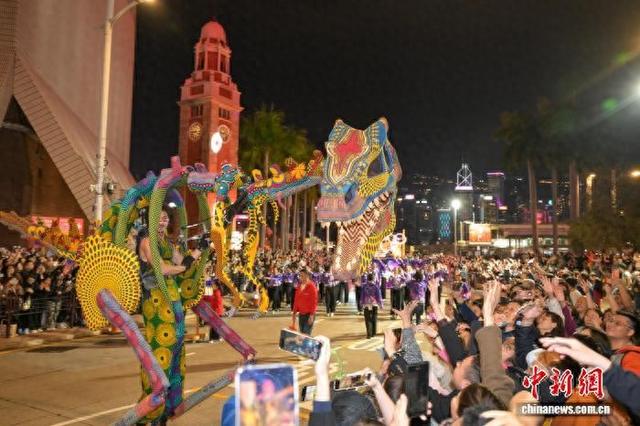
Group 1 - During the 2026 Chinese New Year holiday (February 15 to 23), approximately 1.77 million visitors traveled to Hong Kong, representing a 14% increase compared to the previous year [1] - Among the visitors, around 1.5 million were from mainland China, also up by 14% year-on-year, while non-mainland visitors totaled about 270,000, reflecting a similar 14% increase [1] - The average daily entry of mainland visitors was about 170,000, with the peak day being February 18, when around 210,000 mainland travelers visited Hong Kong [1] Group 2 - The Chinese New Year holiday featured various events such as the "Cathay New Year International Gala Night" and fireworks at Victoria Harbour, attracting significant participation from both locals and tourists [3] - Approximately 2,400 mainland inbound travel groups brought nearly 84,000 visitors to Hong Kong, with overnight stays accounting for about 74%, and the number of travel groups increased by approximately 9% compared to last year [3] - Hotel occupancy rates in Hong Kong reached around 90% during the holiday period, indicating strong demand in the hospitality sector [3] Group 3 - The tourism and cultural activities during the holiday positively impacted Hong Kong's retail sector, with New World Development Company reporting a notable performance at its cultural retail landmark "K11 MUSEA" [3] - From February 16 to 22, foot traffic at "K11 MUSEA" increased by 10% year-on-year, achieving a record high for the Lunar New Year holiday since its opening, while visitor spending rose by 60%, with the largest single transaction exceeding 2 million HKD [3]

撬动万亿文旅市场,美团的底牌是什么?
阿尔法工场研究院· 2025-06-09 10:39
Core Viewpoint - The article emphasizes the transformative impact of the younger generation on the tourism and hospitality industry, highlighting their preference for immersive local experiences over traditional sightseeing, which is reshaping consumption patterns and driving economic growth in related sectors [1][5][6]. Group 1: Tourism and Economic Impact - The tourism industry is revitalizing local economies, with examples of boutique accommodations enhancing surrounding organic agriculture and cultural experiences [2][3]. - The consumption multiplier effect in the tourism sector is significant, with a ratio of 1:3, indicating that for every unit spent in tourism, an additional three units are generated in related industries [4]. - The younger demographic, particularly those under 30, is becoming a crucial force in supporting the trillion-yuan market, with their travel spending significantly higher than other age groups [6][17]. Group 2: Changing Consumer Behavior - A notable shift in consumer behavior is observed, where 68% of post-95 tourists value deep cultural experiences over mere landmark visits, indicating a preference for authentic local engagement [10][11]. - Data shows a substantial increase in orders for local experiences during peak travel times, with growth rates of 112% for ancient villages and 228% for nature exploration activities [13]. - The hotel industry is transitioning to a "user identification" phase, focusing on understanding consumer behavior and preferences to cater to diverse needs beyond just accommodation [13][14]. Group 3: Membership and Integration Strategies - Meituan's membership system integrates various lifestyle services, enhancing user engagement and providing hotels with a platform to identify and serve high-value customers effectively [16][17]. - The collaboration between Meituan and major hotel chains to create a unified membership system has led to significant increases in bookings, particularly among younger consumers [17][18]. - The article outlines the evolution of the hotel industry towards a comprehensive service model, where hotels are not just places to stay but also hubs for dining, entertainment, and shopping [44][48]. Group 4: Future Trends and Innovations - The article discusses the importance of integrating "accommodation +" strategies, which include combining lodging with entertainment, dining, and shopping experiences, to enhance customer satisfaction and revenue [29][33]. - The growth of "accommodation + dining" and "accommodation + shopping" models indicates a shift towards a more holistic approach to hospitality, with significant year-on-year growth in these areas [39][43]. - The ongoing technological advancements, particularly AI, are expected to further reshape the tourism industry, focusing on creating a seamless experience that integrates various aspects of travel and lifestyle [46][48].