
文物回归

Search documents
文艺气象·印迹
Ren Min Ri Bao· 2026-01-04 03:43
Group 1 - The Palace Museum will celebrate its 100th anniversary in 2025, showcasing significant exhibitions like "Guarding a Century: From the Forbidden City to the Palace Museum" [2] - The inclusion of the Western Xia Tombs in the World Heritage List increases China's total number of World Heritage sites to 60 [6] - The 2025 Spring Festival marks the first celebration since "Spring Festival: A Social Practice of Chinese New Year" was added to UNESCO's list of intangible cultural heritage, enhancing local tourism through traditional customs [8] Group 2 - The Shanghai Museum's "Pyramids at the Peak: Ancient Egyptian Civilization Exhibition" attracted over 2.77 million visitors, setting a world record for museum exhibitions [9] - The Chinese film market reached a box office of 50 billion yuan with nearly 1.19 billion viewers in 2025, demonstrating resilience and vitality [9] - The "National Reading Promotion Regulations" were published, emphasizing the importance of reading in cultural development and national character [10] Group 3 - The 2025 report on domestic television viewership indicated a total of 250.5 billion views, reflecting a thriving market for various genres [11] - The return of the Chu Silk Manuscripts, after 79 years, highlights the ongoing efforts in cultural heritage repatriation [18][20] - The 80th anniversary of the victory in the Chinese People's War of Resistance Against Japanese Aggression was commemorated with significant cultural events, reinforcing national spirit [21][15] Group 4 - The cultural phenomenon in 2025 shows a resurgence of interest in traditional culture, with significant sales of cultural products and public engagement in historical discoveries [16] - The emergence of "new popular art" is characterized by ordinary individuals creating impactful works, contributing to a vibrant cultural landscape [17] - The narrative of heroism and sacrifice during the Anti-Japanese War continues to resonate, as seen in various cultural expressions and commemorations [22][25]

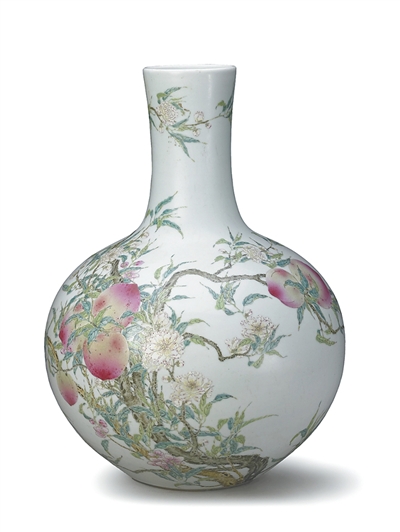
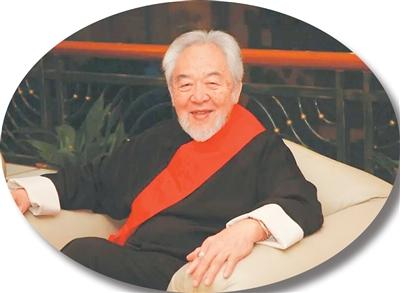
传承“爱国爱家爱故乡”的赤子之心(侨·博物馆⑫)
Ren Min Ri Bao Hai Wai Ban· 2025-12-04 22:59
Core Viewpoint - The article highlights the life and contributions of Shan Sheng, a prominent overseas Chinese leader and philanthropist, who dedicated his life to promoting China's reunification and preserving Chinese culture through the Shan Sheng Collection Museum in Taizhou, Jiangsu Province [4][5][10]. Group 1: Museum and Contributions - The Shan Sheng Collection Museum, established in 2010, houses nearly 500 artifacts, documents, and artworks donated by Shan Sheng, reflecting his patriotism and dedication to Chinese culture [2][4]. - The museum serves as an important platform for cultural exchange related to Hong Kong, Macau, and Taiwan, having received over 600,000 visitors [7][10]. - Shan Sheng's collection includes significant artifacts aimed at promoting the return of lost cultural heritage to China, emphasizing the importance of cultural roots [11][12]. Group 2: Advocacy and Legacy - Shan Sheng actively organized events to promote the "One Country, Two Systems" policy and advocated for legislation to curb Taiwan independence, mobilizing overseas Chinese for the cause [5][6]. - His efforts included organizing signature campaigns and participating in international conferences to raise awareness about China's reunification [6][10]. - Shan Sheng's legacy continues to inspire future generations, with the museum serving as a patriotic education base that shares his story and values [10][12].
长沙子弹库战国帛书正式入藏湖南省博物馆
Chang Sha Wan Bao· 2025-10-14 02:18
Core Viewpoint - The return of the "Bullet Warehouse Warring States Silk Manuscripts," specifically the second and third volumes "Five Elements Order" and "Offensive and Defensive Divination," to the Hunan Provincial Museum marks a significant cultural event, highlighting the successful repatriation of valuable artifacts that had been lost overseas for 79 years [1][2]. Group 1: Artifact Details - The Bullet Warehouse Warring States Silk Manuscripts are recognized as the earliest known silk manuscripts in China, discovered in 1942 and subsequently lost overseas in 1946 [1]. - The manuscripts consist of three volumes that document astronomical calendars, cosmology, and military divination from the pre-Qin period, serving as essential resources for research in various fields such as astronomy, military science, and historical literature [1]. Group 2: Preservation and Research - After arriving at the Hunan Provincial Museum on September 10, 2023, the manuscripts underwent a 14-day environmental adaptation observation and were assessed for preservation in a controlled temperature and humidity environment [1]. - The museum has completed standardized imaging of all manuscripts and discovered over 40 previously invisible ink characters on a partially unpeeled manuscript [1]. - The Hunan Provincial Museum is positioned as a key institution for the protection and research of Huxiang culture, taking on the responsibility of safeguarding and deepening the study of this national treasure [2].
荷兰向尼日利亚归还百余件贝宁青铜器
Zhong Guo Xin Wen Wang· 2025-06-23 02:25
Core Points - Nigeria and the Netherlands held a ceremony to return 119 Benin bronzes, fulfilling a commitment made in February [1][2] - The returned artifacts include a king's head, an ivory sculpture, and two animal-shaped bronzes, with the rest going to the traditional ruler of the Benin Kingdom [1] - The return of these artifacts is seen as a step towards restoring national pride and dignity for Nigeria [1] Summary by Sections Artifact Return - The 119 artifacts returned include 113 from the Leiden Museum in the Netherlands, which were acquired through violent means [2] - The Benin bronzes date back to the 16th to 18th centuries and represent the art of the Benin Kingdom [2] Cultural Diplomacy - Nigeria's Minister of Arts, Culture, Tourism, and Creative Economy emphasized the country's right to reclaim its historical heritage [1] - The return is viewed as a model for other Western countries to follow in returning colonial-era looted artifacts [1] International Agreements - Germany has signed an agreement to return over 1,000 Benin bronzes to Nigeria, indicating a growing sense of historical responsibility in the international community [1][2]
一枚辽金时期云冈石窟佛眼“回家”
Zhong Guo Xin Wen Wang· 2025-05-10 02:40
Group 1 - A piece of Yungang Grottoes Buddha eye from the Liao-Jin period has been donated back to its original location in Shanxi Province [1][2] - The Buddha eye was originally donated to the Yungang Grottoes Museum in 1985 by the director of the Nelson Museum in the United States, marking the first piece of Yungang Grottoes artifacts to return from overseas [1][2] - The current donor, Tian Yijun, discovered the Buddha eye approximately 20 years ago at an antique market and later recognized its significance after reading an article about Yungang Grottoes [1][2] Group 2 - The donated artifact weighs 0.514 kilograms, stands 7 centimeters tall, and has a diameter of 10 centimeters at its larger end, characterized by a coarse sandy texture and dark red color [2] - Experts from Shanxi Province conducted evaluations and confirmed that the artifact is indeed a Buddha eye from the Yungang Grottoes, dating back to the Liao-Jin period [2] - The chairman of the Shanxi Lingyan Yungang Grottoes Protection Foundation expressed optimism about using digital technology for future research and identification of similar artifacts [2]