文物捐赠制度

Search documents
捐出去的藏品不该成为“泼出去的水”
Xin Lang Cai Jing· 2026-01-11 23:23
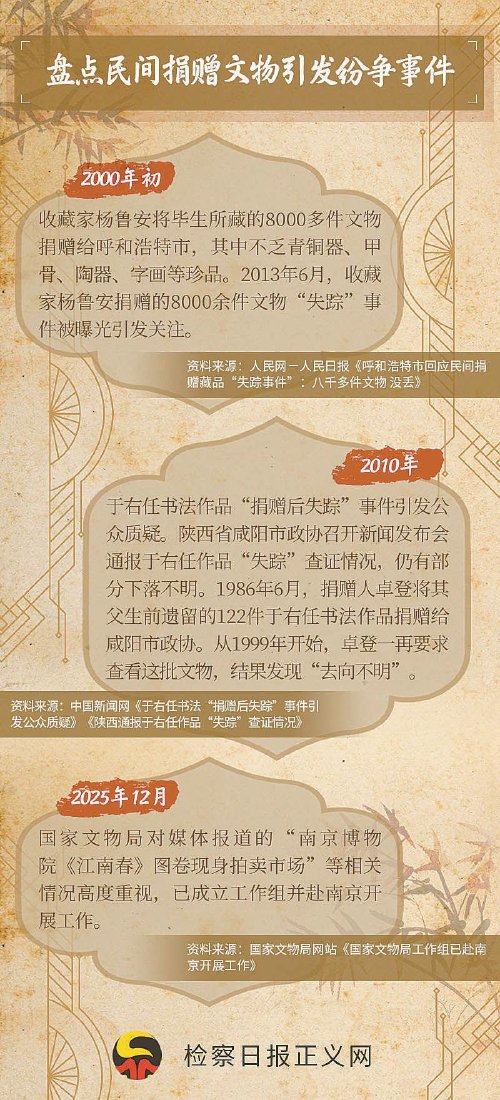
Core Viewpoint - The recent incident involving the donation of a Ming Dynasty painting to the Nanjing Museum has raised significant concerns about the management and rights associated with cultural relic donations, highlighting a trust crisis between collectors and museums [2][3]. Group 1: Donation Practices and Obligations - Cultural relic donations are often conditional gifts, where the museum must fulfill certain obligations as per the donation agreement, reflecting the donor's wishes and the museum's capabilities [4][5]. - The Civil Code allows for donations to be accompanied by obligations, meaning museums must adhere to the terms set forth in the donation agreements [5]. - Museums are encouraged to respect the donor's intentions regarding the collection, preservation, and exhibition of donated items, as stipulated by the Cultural Relics Protection Law [5]. Group 2: Legal Framework and Management - The Cultural Relics Protection Law outlines that museums must classify relics, maintain archives, and establish strict management systems, which are essential for the legal protection of collections [9]. - The process of accepting donations typically includes communication, evaluation, agreement signing, and detailed record-keeping to ensure legality and compliance [6][9]. - Experts emphasize the necessity of setting collection standards to filter out non-compliant items, particularly to avoid the acceptance of counterfeit relics [7]. Group 3: Issues of Trust and Transparency - The incident involving the Nanjing Museum has revealed a lack of transparency and communication regarding the status of donated items, leading to disputes over ownership and authenticity [8][12]. - There is a call for improved mechanisms for monitoring and supervising the management of donated relics, ensuring that donors can inquire about the use and management of their contributions [12][15]. - The public's concern over the management of cultural relic donations has prompted investigations into the practices of museums, indicating a demand for more standardized and transparent donation processes [16].

独家|南京博物院馆藏明代仇英《江南春》为何现身拍卖市场?
Xin Lang Cai Jing· 2025-12-17 00:26
Core Viewpoint - The dispute between the descendants of Pang Laishen and the Nanjing Museum revolves around the disappearance of valuable donated artworks, particularly the Ming Dynasty painting "Jiangnan Spring" by Qiu Ying, which was recently found at an auction with an estimated value of 88 million yuan [1][5][20]. Group 1: Background of the Donation - Pang Laishen, a renowned collector, donated 137 pieces of ancient paintings to the Nanjing Museum in 1959, which were recognized as significant cultural heritage [1][12]. - The donation was formally acknowledged by the Nanjing Museum with receipts and certificates, affirming the value and authenticity of the artworks [9][10]. Group 2: Legal Actions and Disputes - Pang Shuling, the great-granddaughter of Pang Laishen, filed a lawsuit against the Nanjing Museum, questioning the disappearance of the donated artworks and demanding their return [1][5][20]. - The Nanjing Museum claimed that five of the donated artworks, including "Jiangnan Spring," were identified as forgeries and subsequently removed from their collection, but did not provide clear documentation on their whereabouts [20][22]. Group 3: Auction Incident - The painting "Jiangnan Spring" unexpectedly appeared at an auction in Beijing, leading to a public outcry and subsequent withdrawal of the artwork from the auction [1][5][20]. - The auction house initially valued the painting at 88 million yuan, highlighting its significance in the art market [26][27]. Group 4: Museum's Response and Management Issues - The Nanjing Museum has not provided satisfactory explanations regarding the management and flow of the donated artworks, raising concerns about their operational transparency [27][40]. - Legal experts suggest that museums should prioritize returning artworks to original donors if they are deemed forgeries, emphasizing the need for proper procedures in handling donated items [37][42]. Group 5: Cultural and Public Trust Implications - The ongoing dispute reflects broader issues regarding public trust in the museum's management of cultural heritage and the responsibilities of institutions towards donors [38][40]. - The case has sparked discussions about the rights and obligations between museums and donors, particularly in the context of cultural preservation and trust [42][43].