清初王时敏《仿北苑山水轴》

Search documents
江苏成立专班后,捐赠者后人发声
Xin Lang Cai Jing· 2025-12-18 11:04
Core Viewpoint - The controversy surrounding the donation of valuable artworks by the descendants of Pang Laichen to the Nanjing Museum has escalated after one of the donated pieces, a Ming Dynasty painting, appeared at an auction, prompting investigations and legal actions [1][19]. Group 1: Background of the Donation - Pang Laichen (1864-1949) was a renowned collector in modern China, known for his exceptional collection of ancient paintings, which were donated to various state cultural institutions, with the Nanjing Museum receiving the most, totaling 137 pieces [2][20]. - The donated artworks included significant pieces that have become treasures of the institutions [20]. Group 2: Legal Actions and Investigations - Pang Laichen's great-granddaughter, Pang Shuling, has filed a lawsuit against the Nanjing Museum, questioning how the donated painting, "Jiangnan Spring," ended up in the auction market and demanding the return of five missing artworks [4][22]. - The Nanjing Museum has acknowledged receiving court documents regarding the dispute and stated that they will cooperate with the investigation into the five disputed artworks, which were previously deemed forgeries by expert panels [5][24]. Group 3: Public and Government Response - The Jiangsu Provincial Department of Culture and Tourism has formed a task force to investigate the matter, indicating that if any illegal activities are found, appropriate actions will be taken [1][19]. - Pang Shuling expressed her expectation for a thorough investigation and accountability for those responsible for the artworks' disappearance [1][19].

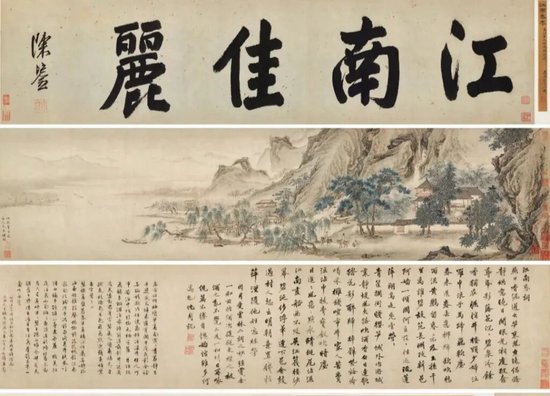
独家|南京博物院馆藏明代仇英《江南春》为何现身拍卖市场?
Xin Lang Cai Jing· 2025-12-17 00:26
Core Viewpoint - The dispute between the descendants of Pang Laishen and the Nanjing Museum revolves around the disappearance of valuable donated artworks, particularly the Ming Dynasty painting "Jiangnan Spring" by Qiu Ying, which was recently found at an auction with an estimated value of 88 million yuan [1][5][20]. Group 1: Background of the Donation - Pang Laishen, a renowned collector, donated 137 pieces of ancient paintings to the Nanjing Museum in 1959, which were recognized as significant cultural heritage [1][12]. - The donation was formally acknowledged by the Nanjing Museum with receipts and certificates, affirming the value and authenticity of the artworks [9][10]. Group 2: Legal Actions and Disputes - Pang Shuling, the great-granddaughter of Pang Laishen, filed a lawsuit against the Nanjing Museum, questioning the disappearance of the donated artworks and demanding their return [1][5][20]. - The Nanjing Museum claimed that five of the donated artworks, including "Jiangnan Spring," were identified as forgeries and subsequently removed from their collection, but did not provide clear documentation on their whereabouts [20][22]. Group 3: Auction Incident - The painting "Jiangnan Spring" unexpectedly appeared at an auction in Beijing, leading to a public outcry and subsequent withdrawal of the artwork from the auction [1][5][20]. - The auction house initially valued the painting at 88 million yuan, highlighting its significance in the art market [26][27]. Group 4: Museum's Response and Management Issues - The Nanjing Museum has not provided satisfactory explanations regarding the management and flow of the donated artworks, raising concerns about their operational transparency [27][40]. - Legal experts suggest that museums should prioritize returning artworks to original donors if they are deemed forgeries, emphasizing the need for proper procedures in handling donated items [37][42]. Group 5: Cultural and Public Trust Implications - The ongoing dispute reflects broader issues regarding public trust in the museum's management of cultural heritage and the responsibilities of institutions towards donors [38][40]. - The case has sparked discussions about the rights and obligations between museums and donors, particularly in the context of cultural preservation and trust [42][43].