新冠肺炎疫情

Search documents
疫情来了抢口罩,为啥日本人还疯抢卫生纸,连安倍都被惊动?
Mei Ri Jing Ji Xin Wen· 2025-11-24 08:07
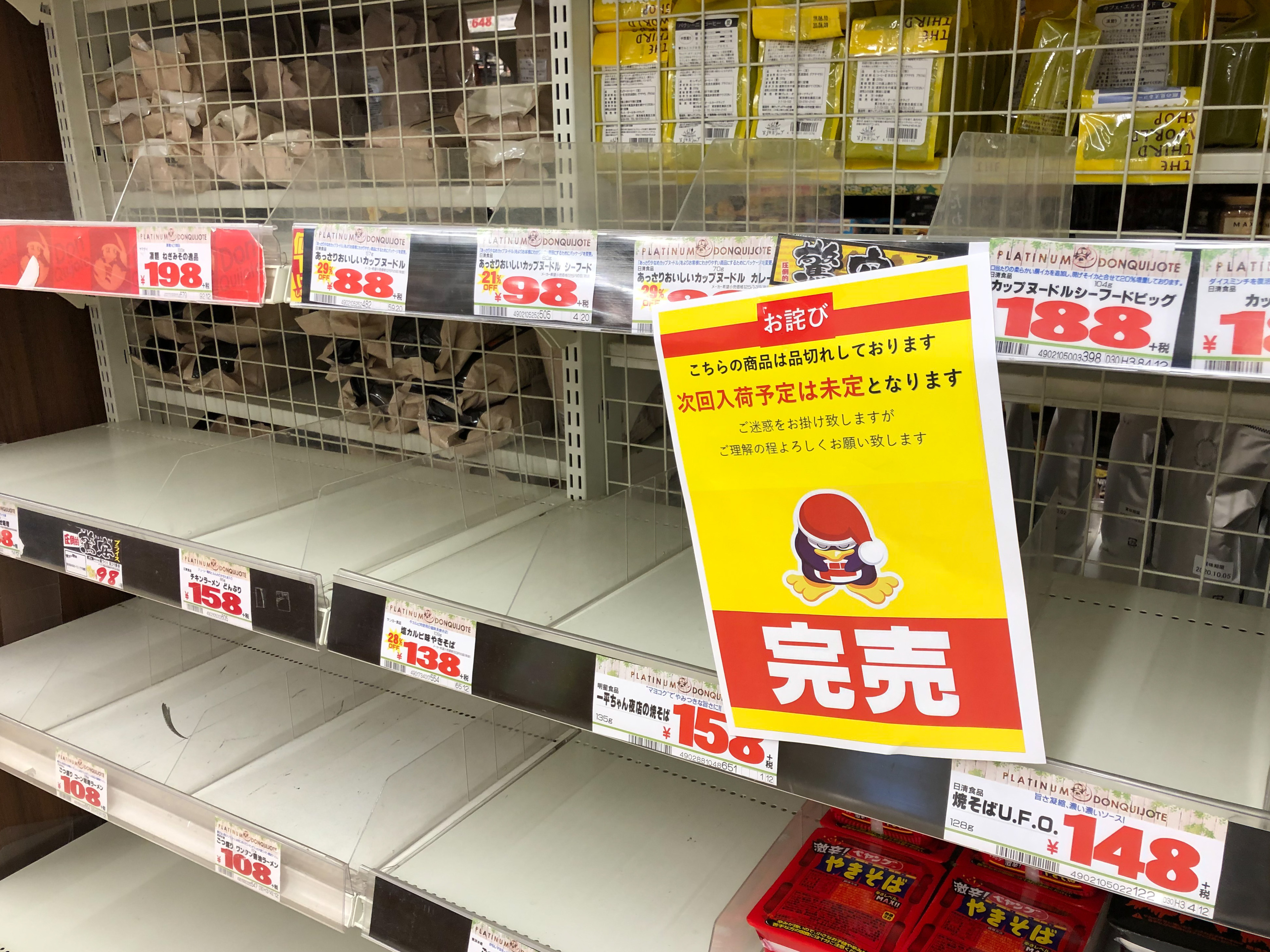
Core Viewpoint - The COVID-19 pandemic has led to a global surge in demand for essential goods, particularly toilet paper, driven by misinformation and panic buying in various countries, including Japan, the United States, and Australia [4][5][6]. Group 1: COVID-19 Impact - As of March 1, Japan reported 947 confirmed COVID-19 cases, with a significant number linked to the Diamond Princess cruise ship [4]. - The World Health Organization raised the global risk level of COVID-19 from "high" to "very high" on February 28 [1]. Group 2: Panic Buying Phenomenon - In Japan, misinformation regarding toilet paper shortages led to widespread panic buying, with stores running out of stock [4][9]. - Similar trends were observed in the United States, where stores in Washington and Oregon experienced shortages of toilet paper and other essentials due to panic buying [6][7]. - Australian supermarkets also faced similar situations, with consumers hoarding toilet paper and canned goods following the announcement of new COVID-19 cases [8]. Group 3: Misinformation and Public Response - Social media in Japan propagated false claims that toilet paper production was dependent on materials imported from China, prompting consumers to stockpile [4][9]. - Japanese officials, including Prime Minister Shinzo Abe, reassured the public that domestic production of toilet paper was sufficient to meet demand and urged calm [4][9]. Group 4: Supply Chain and Consumption Patterns - The supply chain for toilet paper in Japan is robust, with 98% of toilet paper produced domestically, mitigating concerns over shortages [9]. - The average American consumes approximately 141 rolls of toilet paper annually, the highest in the world, while Japan ranks fourth with 91 rolls per person [13]. Group 5: E-commerce and Consumer Behavior - Japan's low e-commerce penetration rate, less than 10%, may have contributed to the panic buying behavior, as consumers are less accustomed to online shopping for essentials [14]. - In contrast, the U.S. e-commerce retail sales accounted for about 11% of total retail sales in 2019, indicating a more established online shopping culture [16].