新能源产业协同生态

Search documents
构建新能源产业协同生态
Xin Hua Ri Bao· 2026-02-02 23:21
Core Insights - The province's renewable energy industry has rapidly developed since the "14th Five-Year Plan," with the industry scale expected to exceed 800 billion yuan in 2024, and offshore wind power installed capacity accounting for 28% of the national total [1] - Despite the growth, there are still areas for improvement in key core technology autonomy, industrial chain collaboration efficiency, and innovation element adaptability, necessitating the establishment of a collaborative ecosystem driven by technological innovation [1] Group 1: Focus on Core Technology - The province faces challenges in high-efficiency photovoltaic cells and 10MW offshore wind turbines, with key equipment like hydrogen storage and transportation relying on imports, which account for over 60% of the total industry chain cost [2] - There is a need to strengthen high-level innovation platforms and integrate into national strategic technology layouts, such as establishing branches of national laboratories in Jiangsu [2] - A layered and categorized approach to technology breakthroughs is essential, focusing on core component materials in photovoltaic and wind power sectors, and advancing research in energy storage and hydrogen energy [2] Group 2: Technology Transfer and Innovation - The province should leverage its technology market and industry technology transaction platforms to facilitate regular "laboratory-enterprise" connections and result roadshows [3] - Establishing pilot and testing bases in key areas like Suzhou and Wuxi can help overcome bottlenecks from laboratory to production line [3] Group 3: Industry Chain Integration - Although the province leads in scale, issues like industrial chain collaboration and regional layout uniformity hinder value chain enhancement, necessitating deep integration of the two chains [4] - A gradient cultivation system for enterprises should be established, supporting startups with R&D subsidies and market access [4] - The use of AI and industrial internet technologies can empower the photovoltaic and wind power sectors, while targeted investment in weak links like energy storage and hydrogen energy is crucial [4] Group 4: Regional Development Optimization - The province should guide different regions to focus on specific areas, such as high-end manufacturing in southern Jiangsu and hydrogen energy development in northern Jiangsu, to create specialized industrial clusters [5] Group 5: Element Support Mechanism - There is a need to address issues related to the flow and efficiency of elements, aiming to build an efficient collaborative support system for continuous innovation [6] Group 6: Platform and Talent Support - Enhancing national demonstration bases and building integrated platforms for R&D and industrialization are vital for promoting close alignment between research and industry needs [7] - Establishing a provincial-level innovation fund can support key technology breakthroughs and reduce innovation costs for enterprises [7] - The "Jiangsu New Energy Talent" plan aims to attract top scientists and engineers, while promoting interdisciplinary education and talent cultivation [7] Group 7: Data Utilization - Integrating data from various sectors to create a provincial-level renewable energy big data center can enhance innovation chain collaboration efficiency [8]

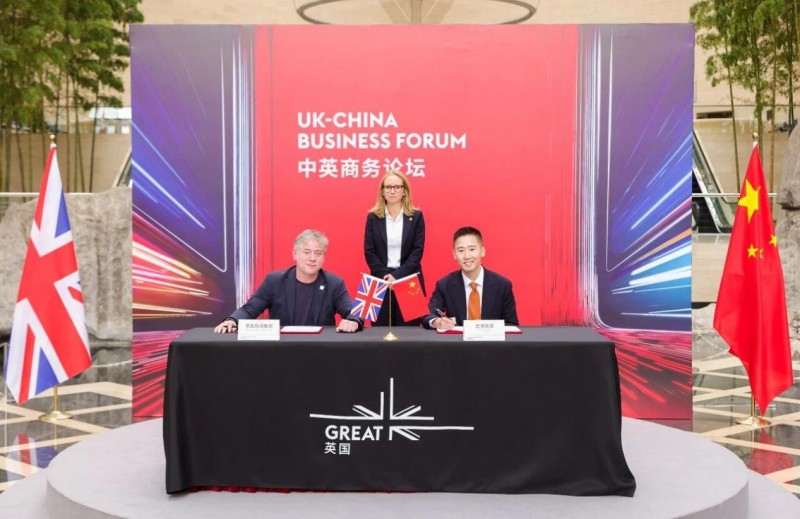
中英绿色合作深化 碧澄能源牵头构建新能源产业协同生态
Sou Hu Wang· 2026-01-30 14:13
Group 1 - The core viewpoint of the articles highlights the deepening cooperation between China and the UK in the renewable energy sector, marked by the strategic partnership between Bicheng Energy and Octopus Energy to establish a digital trading platform for electricity [1][3] Group 2 - Bicheng Energy has been expanding its business footprint across China, with operational centers in six major cities, creating a nationwide asset expansion and management network that covers over a hundred cities domestically and extends to international markets in the Middle East, Southeast Asia, and Oceania [2] - The support from major stakeholders like Temasek and Prologis has provided Bicheng Energy with unique advantages in resource integration and capital operations [2] - Prologis, as a core strategic investor, has exemplified industrial synergy through its collaboration with Bicheng Energy, launching the Luoneng Capital to invest in distributed green energy, securing over 2GW of quality commercial distributed photovoltaic projects [2] - Prologis has established a diversified investment and operation system in the renewable energy sector, managing a grid-connected capacity of 1.35GW by 2025, generating an annual electricity output of 1.11 billion kWh, which equates to a reduction of 641,000 tons of CO2 emissions [2]