
新质基建

Search documents
中国交建:公司先后参与宁夏中卫云数据中心等项目
Zheng Quan Ri Bao· 2025-12-12 14:13
Group 1 - The company focuses on the development of new infrastructure business [2] - The company has participated in several key projects, including the Ningxia Zhongwei Cloud Data Center, Xinjiang Kerong Cloud Intelligent Computing Center, and the National Cybersecurity Base Intelligent Computing Center [2]


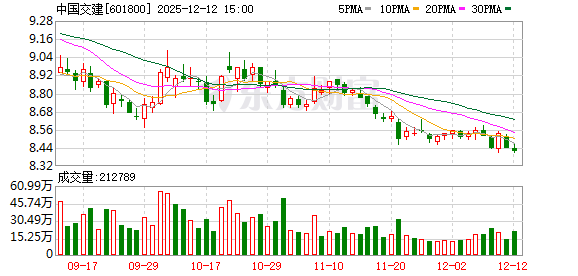
中国交建:先后参与了宁夏中卫云数据中心、新疆克融云智算中心、国家网安基地智算中心等项目
Mei Ri Jing Ji Xin Wen· 2025-12-12 11:49
Group 1 - The company has focused on the development of new infrastructure business and has participated in several large-scale computing power center projects [2] - Notable projects include the Ningxia Zhongwei Cloud Data Center, Xinjiang Kerong Cloud Intelligent Computing Center, and the National Cybersecurity Base Intelligent Computing Center [2]
中信建投:建筑行业上半年营收利润规模下降,现金流改善
智通财经网· 2025-09-27 06:37
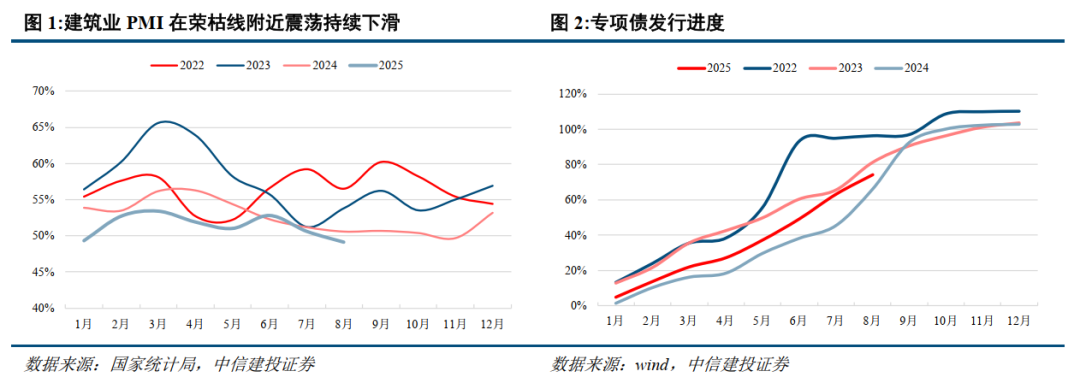
Core Viewpoint - The construction industry experienced a decline in revenue and profit in the first half of the year, but improvements in cash flow and impairment losses were noted due to debt reduction policies. The industry is seeing increased concentration, with energy and overseas projects maintaining high growth rates. High-quality infrastructure companies are expected to benefit from improved market sentiment and balance sheet recovery, while some construction firms focusing on new productivity will achieve both performance and valuation enhancements [1][11][36]. Revenue and Profit Summary - The overall revenue of the construction industry reached 39,711 billion yuan, a year-on-year decrease of 5.9%, with a decline rate narrowing by 2.8 percentage points compared to the same period last year [1][11]. - The net profit attributable to shareholders was 911 billion yuan, down 6.9% year-on-year, with the decline rate also narrowing by 2.8 percentage points compared to the previous year [1][11]. - In the first and second quarters, the revenue growth rates were -6.3% and -5.6%, respectively, while net profit growth rates were -8.4% and -5.2%, indicating a slight improvement in the second quarter [11]. Cash Flow and Impairment Summary - The industry benefited from debt reduction policies, resulting in a cash outflow reduction of 205 billion yuan compared to the same period last year, and impairment provisions were 264 billion yuan, down 46 billion yuan year-on-year [11][36]. Investment and Market Conditions - Infrastructure investment growth has slowed, with the construction industry PMI hovering around 50% due to the ongoing downturn in the real estate sector and reduced fiscal spending since the second quarter. From January to August, infrastructure investment grew by 5.42%, with narrow infrastructure investment growth at 2.0%, both being the lowest levels of the year [1][36]. - The planned issuance of 4.4 trillion yuan in special bonds this year, an increase of 500 billion yuan from last year, has seen a 79.3% progress rate by mid-September, although the increased use of these bonds has led to some diversion of funds from infrastructure projects [1]. Industry Concentration and Overseas Growth - The construction industry signed new contracts worth 13.9 trillion yuan, a year-on-year decrease of 6.5%, with the market share of the eight major state-owned enterprises rising to 55.2%, an increase of 3.6 percentage points from the previous year [23]. - Overseas business maintained high growth, achieving a total revenue of 345.5 billion yuan, a year-on-year increase of 8.1%, accounting for 8.7% of the total industry revenue, up 1.1 percentage points from the previous year [23].

中信建投:建筑业资产重估与景气投资并重 关注核电、新质基建、一带一路建设等优质细分领域
智通财经网· 2025-06-16 06:41
Group 1 - The construction sector's performance from Q4 2024 is primarily driven by debt resolution policies, external disturbances, and industry sentiment [1] - Since May, positive developments in US-China negotiations have improved market risk appetite, leading to a spillover of positive sentiment into the construction industry [1] - As of June 10, 2025, the construction sector's PE ratio is 10.73x, at the 58th percentile since 2014, while the PB ratio is 0.73x, at the 7.1st percentile since 2014, indicating a significant decline in profitability [1] Group 2 - Market risk appetite has been volatile, with construction dividend assets likely to benefit from changes in market preferences and policy support [2] - The construction dividend assets are mainly concentrated in eight major construction state-owned enterprises and high-dividend local infrastructure state-owned enterprises, with their profitability linked to operational performance and macroeconomic improvements [2] Group 3 - Fiscal policies have created a soft constraint on infrastructure spending, with a focus on economically developed regions and areas with sufficient investment from special bonds and central enterprises [3] - Since the implementation of debt resolution policies, 4.4 trillion yuan of refinancing special bonds have been issued to address local government debt issues [3] Group 4 - Investment opportunities are identified in low-valuation central state-owned enterprises, including China State Construction, China Railway, and others [4] - Companies benefiting from the Belt and Road Initiative, such as China National Materials, are also highlighted as potential investment targets [4] - High-growth infrastructure companies, including China Nuclear Engineering and others, are recommended for investment consideration [4]