
中国资产重估

Search documents
共议“十五五”开局新机遇 中信证券春季策略会把脉资本市场新生态
Sou Hu Cai Jing· 2026-03-20 02:24
Group 1 - The A-share market is at a critical turning point, transitioning from stock game to incremental allocation, indicating the formation of a more resilient and robust capital market ecosystem [2][3] - The "14th Five-Year Plan" emphasizes building a modern industrial system and strengthening the foundation of the real economy, with new productive forces like AI and biotechnology moving from concept to industrial application [2][3] - The capital market is optimizing its ecosystem, with improved investor return protection and more inclusive multi-level capital market systems, supporting new industries and technological innovation [3] Group 2 - The spring investment strategy for 2026 suggests focusing on undervalued sectors and pricing power, particularly in Chinese manufacturing, amidst global geopolitical tensions and financial conditions weakening [4][5] - Key issues facing the market include the impact of Middle Eastern conflicts on supply chains, potential changes in market style due to weakening financial conditions, and the influence of AI on economic structure and asset allocation [4][5] - The expected GDP growth rate for China in 2026 is around 4.9%, with a "V"-shaped recovery anticipated, supported by proactive fiscal policies and a stable monetary environment [6][7] Group 3 - The macroeconomic outlook indicates a rebalancing phase in the global economy, with U.S. structural issues affecting its monetary policy, while Chinese equity assets are expected to perform well amid recovery and rising inflation [6][7] - Ongoing reforms in China aim to deepen income distribution reforms, enhance fiscal capabilities, and address industry challenges, while focusing on energy security and the aerospace strategy [8]

迎接中国资产的重估
ZHONGTAI SECURITIES· 2026-03-15 07:43
Report Industry Investment Rating - The industry rating is "Overweight", indicating an expected increase of over 10% in the industry index relative to the benchmark index in the next 6 - 12 months [23] Core Viewpoints - The report suggests that China's assets are undergoing revaluation. In the face of external shocks such as the recent US - Iran conflict, the A - share market shows strong resilience. Whether the US - Iran conflict eases or intensifies, the A - share market has good prospects. If the conflict eases, the interrupted spring rally will continue; if it intensifies, China's relative advantages in geography and industrial structure make it a "safe" market. The inflow of northbound funds and the low valuation of the A - share market also support the revaluation of Chinese assets, and a slow - bull pattern is emerging [3][21] Summary by Directory Introduction: The Advantages of A - share Market under External Shocks - The A - share market has shown strong resilience in the face of external disturbances such as the 2020 global pandemic and the 2025 tariff shock. After short - term "extreme drops", the Shanghai Composite Index can quickly digest the impact and rebound, often stabilizing earlier than other external markets [6] I. A - share Market with Low Absolute Valuation and "Valley" Effect - Despite the bull market in the A - share market since last year, its gains in the 1 - year and 3 - year dimensions have lagged behind other Asia - Pacific markets. In February 2026, the Nikkei 225 and the South Korean Composite Index had significant gains, while the Shanghai Composite Index had a small increase and the Hong Kong stock market declined. The PE - TTM of the Shanghai Composite Index is significantly lower than that of other core markets, such as the S&P 500, the South Korean Composite Index, and the Nikkei 225, showing a "valuation valley" [10][12] II. Revaluation of Chinese Assets: Continuous and Substantial Inflow of Northbound Funds - Northbound funds' trading volume has increased significantly, and the speed of foreign capital entering the Chinese market has accelerated. As of March 13, 2026, the cumulative trading volume of northbound funds has reached 103.82 trillion yuan, a year - on - year increase of 57.3% compared with the same period in 2025. The proportion of northbound funds in the total A - share trading volume has also been rising steadily, indicating that Chinese assets are becoming more attractive for global allocation. This inflow is based on long - term investment in China's macro - economic recovery and policy stability, and a slow - bull pattern has initially emerged [15][17] III. Navigating Volatility and Seizing Revaluation Opportunities - The market rhythm has changed. The spring rally layout at the beginning of the year entered a cooling - off phase in mid - January. However, the repeated US - Iran conflict and the previous narrative of technological deflation have extended the time window of the spring rally, providing more time for market adjustment and structural layout. Historical experience shows that external disturbances are usually short - term emotional catharsis and risk - clearing processes, not the end of the bull market. With the low valuation of the A - share market and the continuous inflow of northbound funds, the A - share market's repair prospects are more optimistic [20][21]
券商春季策略会启幕!地缘重构与AI浪潮交织下,看好这些板块!中国资产重估正走向纵深
券商中国· 2026-03-07 10:40
Core Viewpoint - The article emphasizes the resilience of Chinese assets amidst global financial market fluctuations, highlighting "price increases" and "AI technology" as the two main investment themes for the future [1][2]. Group 1: Market Dynamics - The spring investment conferences hosted by Huatai Securities and Kaiyuan Securities focus on the evolving market landscape under multiple changes, with a particular emphasis on the importance of the "14th Five-Year Plan" as a key policy line for 2026 [1][2]. - The PPI (Producer Price Index) is expected to rebound, which will serve as a leading indicator for the further deepening of China's asset revaluation [4]. Group 2: Investment Themes - The main investment theme for the year is centered around "price increases," driven by geopolitical changes and the AI revolution, despite potential global liquidity weakening [5][10]. - The focus on AI technology remains strong, with recommendations for investors to diversify across the entire industry chain rather than concentrating on single segments like upstream chips or downstream applications [7]. Group 3: Economic Outlook - The expectation for 2026 is a structural slow bull market driven by "profit structure + capital structure," with a shift in market dynamics as real estate's investment attributes weaken [10]. - The new productive forces are anticipated to enhance the reliance on non-ferrous and power infrastructure, aligning with the global electrification process [8]. Group 4: Sector Performance - Stocks and commodities are projected to outperform bonds, with upstream resource products expected to perform better than downstream consumer sectors [6]. - High-performing sectors are likely to include cyclical industries, manufacturing, and TMT (Technology, Media, and Telecommunications), with a focus on companies that can benefit from the AI narrative and PPI expectations [6][10].



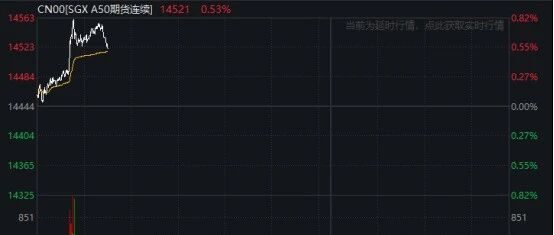
刚刚!A50,直线拉升!重要调整,20日生效→
证券时报· 2026-03-04 12:48
Core Viewpoint - FTSE Russell announced adjustments to the FTSE China Index Series, effective after market close on March 20, 2026, which reflects changes in the composition of the FTSE China A50 Index and other indices, potentially attracting passive investment funds and increasing overseas interest in Chinese assets [2][21]. Group 1: FTSE China A50 Index Adjustments - The FTSE China A50 Index will include China Shipbuilding, Tianfu Communication, and Wanhua Chemical, while excluding Everbright Bank, CRRC, and Shanxi Fenjiu [5][6]. - The index is composed of the 50 largest stocks by market capitalization from the Shanghai and Shenzhen stock exchanges, serving as a key indicator for international investors assessing the Chinese market [5][21]. Group 2: Other Index Adjustments - The FTSE China 50 Index will add Xinhua Insurance and Weichai Power, while removing Minsheng Bank and ZTE Corporation [8][9]. - The FTSE China A150 Index will incorporate 19 stocks including Sanhuan Group and China Giant Glass, while excluding Gujing Distillery and WanTai Biology [10][11]. - The FTSE China A200 Index will add 16 stocks including Sanhuan Group and China Giant Glass, while removing Gujing Distillery and WanTai Biology [13][14]. - The FTSE China A400 Index will include 54 stocks such as Aerospace Development and Guangku Technology, while excluding Aima Technology and Sanhuan Group [16][17]. Group 3: Market Implications - The adjustments are expected to attract passive investment funds, enhancing the appeal of Chinese assets amid increasing global economic uncertainty [21][22]. - Analysts indicate that the ongoing restructuring of international order and domestic industrial innovation trends are key drivers for the current A-share market rally and the revaluation of Chinese assets [22].
中金:伊朗局势如何影响中国资产?
中金点睛· 2026-03-03 09:33
Group 1 - The article discusses the escalation of geopolitical tensions in the Middle East, particularly the military actions between the US, Israel, and Iran, and its potential impact on global markets and Chinese assets [2][3]. - Historical data shows that geopolitical conflicts typically lead to an initial emotional shock in equity markets, with a tendency for investors to shift towards safe-haven assets like gold and US Treasuries [4][5]. - The article highlights that during the first week of recent conflicts, WTI crude oil and COMEX gold prices saw median increases of approximately 1.9% and 0.4%, respectively, while A-shares experienced median declines of about -1% [4][5]. Group 2 - The article outlines the short-term and long-term impacts of geopolitical conflicts on various industries, noting that energy prices often rise due to supply disruptions, which can lead to increased costs for many sectors, particularly transportation and logistics [6]. - It emphasizes that high energy prices can elevate inflation expectations, potentially leading to tighter monetary policies from major economies, which could adversely affect equity market performance [6]. - The article provides a sector performance analysis post-conflict, indicating that industries such as oil and gas, defense, and non-ferrous metals tend to perform relatively well in the short term, but long-term impacts are limited as markets return to fundamental drivers [6][7].

安联基金程彧:用规则化投资捕获成长和价值的双重机会
点拾投资· 2026-02-24 11:00
Core Viewpoint - The article discusses the return of active equity investment and how it can generate excess returns, emphasizing the importance of a structured investment approach in the context of the ongoing technological revolution and China's economic transformation [1][2]. Group 1: Investment Strategies - The investment strategy employed by Allianz Fund combines dividend value and technology growth using a barbell approach, allowing for investment in both "old economy" dividend stocks and "new economy" AI and technology innovations [1][2][16]. - Allianz Fund's research director, Cheng Yu, highlights the importance of forming earnings forecasts that exceed market expectations as a means to capture investment opportunities, particularly in the overseas computing power industry [2][15]. Group 2: Macroeconomic Context - Cheng Yu identifies four macroeconomic factors influencing the current investment landscape: the global fourth industrial revolution, ongoing geopolitical tensions, China's economic transformation, and the high-quality development phase of the Chinese capital market [5][7]. - The article suggests that high-dividend assets will benefit from the high-quality development of the capital market, while high-growth technology assets will gain strategic importance amid geopolitical tensions [7][8]. Group 3: Market Outlook - The article predicts that the revaluation of Chinese assets will continue, driven by improvements in the long-term competitiveness of the Chinese economy and clearer corporate earnings prospects [8][9]. - Cheng Yu expresses optimism about the future of Chinese technology, citing significant advancements in sectors such as semiconductors, biopharmaceuticals, and artificial intelligence, which are expected to bolster investor confidence [10][11]. Group 4: Research and Investment Framework - Allianz Fund emphasizes a rule-based active investment approach, aiming for stable and predictable investment outcomes through a disciplined investment process [14][15]. - The fund's research framework includes a deep focus on Return on Equity (ROE) and the underlying drivers of long-term profitability, which aids in making informed investment decisions [15][16].

创金合信基金魏凤春:分化与扰动
Xin Lang Cai Jing· 2026-02-11 02:26
Core Viewpoint - The article emphasizes the need for a strategic shift in investment thinking as the Chinese economy enters a new normal, highlighting the importance of adapting to macroeconomic changes and industry evolution [2][15]. Group 1: Historical Reflection - The phrase "walking out of the swamp" symbolizes a transition from a seemingly stable but stagnant state, urging investors to recognize the changing dynamics of the Chinese economy and the necessity for strategic asset allocation [2][15]. - The article warns against an over-reliance on low-risk assets, suggesting that such a trend could undermine the capital market's ability to discover value and price risks effectively [2][15]. Group 2: Future Outlook - The capital market in 2025 is expected to focus on beta returns, driven by geopolitical factors that lower risk premiums and lead to a revaluation of Chinese assets [4][17]. - A clear industrial plan is seen as essential for guiding capital expansion, with the expectation that 2026 will shift from beta to alpha returns, reflecting a restructuring of order and industry differentiation [4][17]. Group 3: Global Order Reconstruction - The article discusses the need for a reconstruction of global order, indicating that the old powers can no longer maintain the existing order, while new dominant forces have yet to emerge [5][18]. - The shift in U.S. policy from external conflict to internal consolidation is expected to alter the foundation of asset pricing in 2026, as external conflicts diminish [5][19]. Group 4: Technological Impact and Industry Organization - The article highlights that profit creation is fundamentally linked to innovation, with a clear consensus that technological and industrial innovation are essential for modernization [10][22]. - The emergence of AI and other technologies is anticipated to disrupt traditional industries, leading to a revaluation of companies based on their innovative capabilities versus mere imitation [10][22][23]. Group 5: Strategic Recommendations - The article advocates for a systematic approach to asset allocation, focusing on the formation of leading industries and balancing micro profitability with macro liquidity [12][24]. - It emphasizes the importance of distinguishing between "pseudo-growth" and genuine growth, as well as addressing the divergence in traditional industry cycles [12][24].
中金:资源股还能买吗?
中金点睛· 2026-02-08 23:37
Core Viewpoint - The commodity market in 2025 shows significant differentiation, with precious and industrial metals performing strongly due to factors like AI computing expansion and rising electricity infrastructure demand, while energy and agricultural products are weaker [2] Group 1: Historical Commodity Cycles and A-Share Market - The past four commodity cycles were driven by supply-demand mismatches and monetary environment resonance, often linked to global economic recovery and insufficient supply elasticity [4] - Historical commodity bull markets include: 1. 2006-2008: Rapid industrialization in China led to a commodity price surge, with metals and coal outperforming the Shanghai Composite Index by over 200% [5] 2. 2009-2011: Post-financial crisis liquidity and domestic infrastructure demand drove rapid commodity price rebounds, with similar outperformance in A-share sectors [5] 3. 2016: A supply-side reform cycle led to moderate commodity price increases, with A-shares showing less pronounced relative performance [5] 4. 2020-2022: Post-pandemic recovery and geopolitical tensions drove significant commodity price increases, with metals and coal sectors outperforming [5] Group 2: Price Transmission and Stock Performance - Resource stocks are highly correlated with commodity prices, but stock prices are influenced by future cash flows and discount rates, requiring analysis of price drivers and profit distribution [7] - Price increases driven by economic recovery typically lead to higher stock price elasticity, while supply-side disruptions may compress profits in downstream sectors [7] - Historical trends show that resource stocks often lead commodity price movements, reflecting anticipatory market behavior [7] Group 3: Market Changes and Financialization - Recent years have seen increased financialization of commodities, leading to greater price volatility and cross-market risk transmission [9] - Geopolitical events and supply chain issues have heightened uncertainty in commodity markets, with non-fundamental factors increasingly influencing prices [9] Group 4: Investment Outlook for Resource Stocks - Despite short-term volatility, the structural demand driven by AI and energy transition suggests that the commodity market's structural trends may not be over [11] - A-share market conditions remain favorable with ample liquidity and improving performance, providing opportunities for low-cost positioning [12] - Suggested investment areas include AI technology, overseas expansion, cyclical reversals, high dividend stocks, and sectors benefiting from strong earnings [13] Group 5: Specific Resource Sector Insights - In the metals sector, focus on companies with clear earnings releases and project progress, particularly in gold and copper [14] - In chemicals, attention should be on products with price elasticity and clear supply-demand improvements [14]

国金证券:内外需正在开始共振,中国资产重估之路也蓄势待发
Di Yi Cai Jing· 2026-02-08 09:46
Core Viewpoint - The global AI industry is entering a second phase, leading to a shift in the performance of the technology chain, making it complex to determine which companies will succeed [1] Group 1: Industry Trends - The trend of recovery in overseas manufacturing is strengthening, indicating a shift in the core contradictions of AI investment towards infrastructure represented by energy [1] - A quiet revaluation of global physical assets that cannot be disrupted by AI is beginning, with the return of funds from export enterprises signaling a resonance between domestic and external demand [1] Group 2: Investment Recommendations - The revaluation logic of physical assets is shifting from liquidity and dollar credit to low inventory and stabilizing demand, focusing on commodities such as crude oil, oil transportation, copper, aluminum, tin, lithium, and rare earths [1] - The Chinese equipment export chain, which has a global comparative advantage and confirmed cyclical bottom, includes sectors like power grid equipment, energy storage, engineering machinery, and wafer manufacturing [1] - Domestic manufacturing sectors that are at the bottom of the cycle include petrochemicals, dyeing, coal chemicals, pesticides, polyurethane, and titanium dioxide [1] - The consumption recovery channel is driven by the return of funds, easing of balance sheet pressures, and trends in personnel entry, focusing on sectors like aviation, duty-free, hotels, and food and beverages [1] - Non-bank financials are expected to benefit from the expansion of capital markets and the bottoming out of long-term asset returns [1]

资金逢低抢筹核心资产!同类最活跃A500ETF基金(512050)盘中成交额超百亿元,连续3日吸金超17亿元
Mei Ri Jing Ji Xin Wen· 2026-02-06 03:23
Group 1 - The A-shares market opened lower on February 6, but the A500 ETF fund (512050) saw a surge, with trading volume exceeding 10 billion yuan, ranking first among its peers [1] - Several chemical stocks within the A500 ETF rose significantly, with New Hope rising by 7%, and Zhejiang Longsheng, Huafeng Chemical, and Wanhua Chemical all increasing by over 4% [1] - Recent capital inflows into core broad-based assets have accelerated, with the A500 ETF fund experiencing a net inflow of over 1.7 billion yuan over three consecutive days [1] Group 2 - The A500 ETF fund (512050) offers advantages such as low fees (only 0.2%), strong liquidity (ranking first in average daily trading volume over the past year), and a large scale (over 40 billion yuan) [2] - The fund tracks the CSI A500 Index and employs a dual strategy of industry-balanced allocation and leading stock selection, covering all 35 sub-sectors, blending value and growth attributes [2] - Compared to the CSI 300, the A500 ETF is overweight in sectors like AI industry chain, pharmaceutical biology, electric equipment and new energy, and defense industry, providing a natural "dumbbell" investment characteristic [2]