无票免征

Search documents
9610、9710、9810乱成一锅粥?其实决定你利润的,是另一条隐形规则
Sou Hu Cai Jing· 2025-12-08 05:40
Core Viewpoint - The introduction of the "no-invoice exemption" policy in Shenzhen provides a temporary relief for sellers facing tax compliance issues, but it comes with significant long-term risks and potential loss of competitive advantage. Group 1: "No-Invoice Exemption" Policy - The "no-invoice exemption" allows for VAT and consumption tax exemption on cross-border e-commerce retail exports, addressing the issue of "no-invoice procurement" that hinders normal tax refund processes [4][5] - This policy offers a simplified declaration path for sellers with historical "no-invoice" issues, reducing the risk of being classified as tax evaders [5] - However, it results in a permanent loss of potential profits, as sellers forgo up to 13% in VAT refunds, which could otherwise be used for competitive pricing or reinvestment [6] Group 2: Hidden Risks - The policy only addresses VAT issues, potentially amplifying corporate income tax risks due to the lack of compliant cost invoices, which may lead to inflated profit assessments by tax authorities [7] - For example, a seller without cost invoices may be assessed a profit of 45,000 from a 300,000 revenue, despite actual profits being much lower, leading to higher tax liabilities on non-existent profits [8] Group 3: Business Models and Tax Structures - The 9610, 9710, and 9810 codes represent different business models and tax structures, each requiring specific operational capabilities to ensure compliance and efficiency in tax refunds [11][12] - The 9610 model is suitable for agile testing and independent sites, while the 9710 model is geared towards B2B transactions, and the 9810 model is primarily for FBA sellers [12][13] Group 4: Strategic Recommendations - For small and startup sellers, the "no-invoice exemption" may be a viable short-term solution to avoid tax risks, but they should gradually seek suppliers who can issue VAT invoices to transition to refundable models [16] - For growing and larger enterprises, prioritizing the 9710/9810 export tax refund models is crucial to maintain competitive profit margins, and they should consider engaging professional services to navigate the complexities of tax compliance [17]

跨境卖家狂喜,多地开启“无票免征”
Sou Hu Cai Jing· 2025-12-04 14:11
Core Viewpoint - The "no-invoice exemption" policy for cross-border e-commerce is being implemented in Shenzhen, providing significant relief for small and medium-sized sellers who have struggled with compliance and tax burdens due to the inability to obtain valid invoices [1][3]. Group 1: Policy Implementation - Shenzhen has officially joined the "no-invoice exemption" pilot program, becoming the third city after Hangzhou and Guangzhou to adopt this policy [1]. - The policy allows sellers to enjoy VAT exemptions even without obtaining input invoices, addressing long-standing compliance issues faced by small sellers [1][2]. - The pilot program is designed to shift the export model from "invoice-based tax control" to "data verification," enabling sellers to provide real, complete order, logistics, and financial data for tax exemptions [2][3]. Group 2: Impact on Sellers - The implementation of the "no-invoice exemption" is expected to significantly reduce tax costs for sellers. For instance, a company with an annual export volume of 10 million yuan could save approximately 1.3 million yuan in VAT costs if they meet the exemption criteria [5]. - The new policy enhances capital efficiency by streamlining the refund process through electronic data verification, reducing the time for funds to return to sellers [5]. - Sellers are required to ensure that all data is based on real transactions and must avoid discrepancies to qualify for the exemption [6]. Group 3: Future Outlook - If the pilot is successful, the "no-invoice exemption" could expand to cover 165 cross-border e-commerce comprehensive pilot zones nationwide by 2026, potentially benefiting over 100,000 cross-border enterprises [7]. - The trend indicates a shift towards compliance competition in the cross-border e-commerce sector, with the "no-invoice exemption" serving as a critical support for this transition [7][11]. - The policy's historical context shows that discussions around "no-invoice compliance" have been ongoing since 2015, but it has only recently gained the necessary operational framework for implementation [9][10].
跨境卖家集体松口气!无票免征试点遍地开花了
Sou Hu Cai Jing· 2025-12-02 06:18
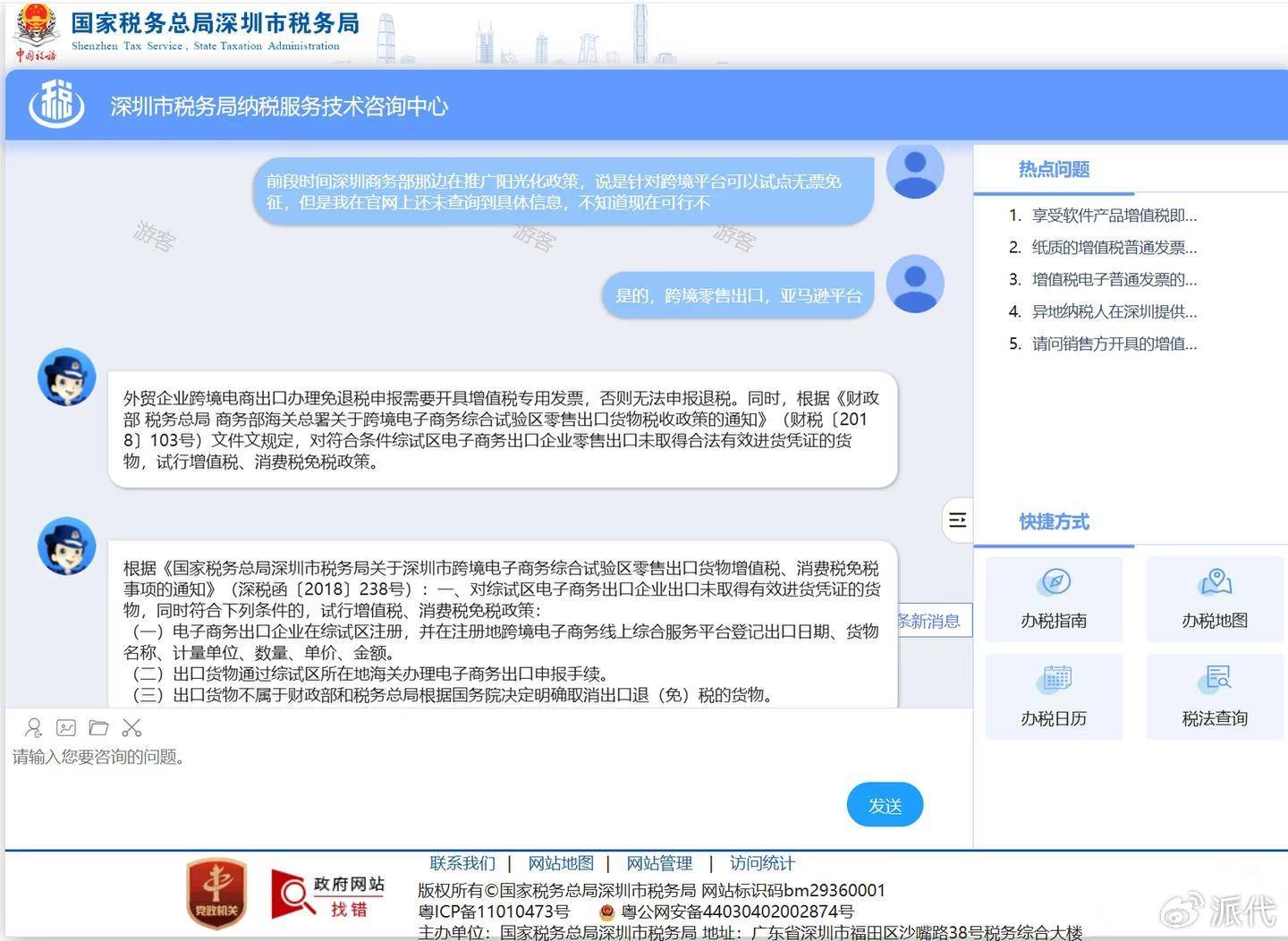
Core Insights - The recent "no invoice exemption" pilot program has been launched in several regions, allowing cross-border e-commerce sellers to benefit from tax exemptions, transforming previously theoretical policies into tangible financial benefits [2][3]. Group 1: "No Invoice Exemption" Issues - Cross-border e-commerce sellers often face challenges with "no invoice procurement," leading to an inability to deduct VAT and incurring a 13% sales tax, which directly cuts profits by 12.5% [3]. - The Ministry of Finance issued document Cai Shui [2018] No. 103, which allows for VAT and consumption tax exemptions for goods exported by cross-border e-commerce enterprises without valid procurement documents in pilot zones [3]. - The implementation of this policy was previously hindered by operational details, but recent breakthroughs in Shenzhen have opened the door for compliance pathways [3]. Group 2: 9610 and 9810 Model Analysis - The 9610 direct mail model allows sellers to register online and obtain customs qualifications, enabling them to enjoy tax exemption privileges [4][5]. - The 9810 overseas warehouse model, particularly beneficial for Amazon FBA and third-party warehouses, involves logistics companies acting as agents for customs declaration, streamlining the process through data verification [8][10]. Group 3: Pilot Implementation in Different Regions - Shenzhen has launched both 9610 and 9810 models, providing equal opportunities for small and micro enterprises and issuing the first 9610 "agent export goods proof" [9][10]. - Guangzhou's pilot focuses on the 9610 model with a limited platform, enhancing declaration efficiency by 60% through automated data verification [9]. - Hangzhou's approach integrates with platforms like AliExpress, allowing real-time data access for tax authorities, thus simplifying the process for sellers [11][12]. - Hunan has incorporated "no invoice exemption" into its annual support policies to attract industries from coastal areas [12]. Group 4: Seller Concerns and Practical Issues - Eligible enterprises for the pilot are primarily those registered in Shenzhen and Hangzhou, with a focus on genuine exports and clear financial flows [15]. - The tax savings potential is significant; for instance, a seller with monthly no-invoice procurement of 1 million would save 130,000 in VAT by utilizing the exemption [16]. - The operational process is reportedly straightforward, with electronic tax systems facilitating the necessary documentation without requiring physical visits to tax offices [16]. Group 5: Immediate Actions for Sellers - Sellers are advised to review past no-invoice procurement orders and ensure alignment with customs and logistics documents [19]. - Utilizing ERP systems to synchronize order, payment, and logistics data is recommended to prevent discrepancies [19].

涉及9610/9810模式!多地跨境电商试跑“无票免征”
Sou Hu Cai Jing· 2025-11-28 04:22
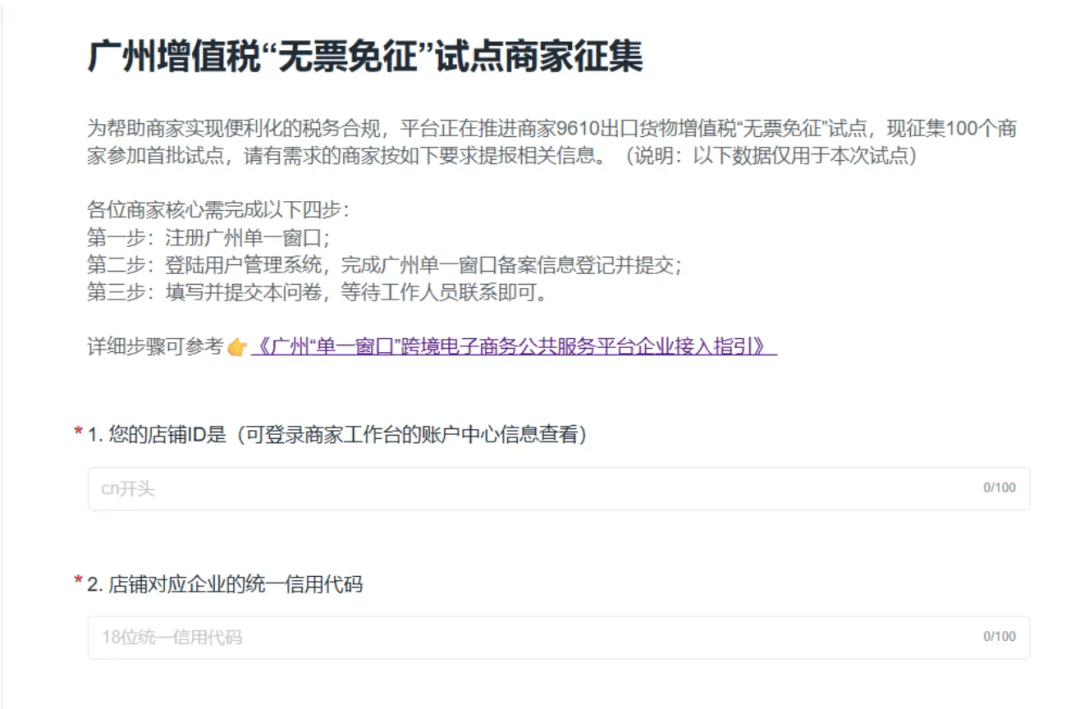
Core Viewpoint - The introduction of the "no-invoice exemption" policy for cross-border sellers is a significant development, allowing sellers to benefit from VAT exemptions without the need for invoices, thus reducing operational costs and compliance burdens [1][5][10]. Group 1: Policy Overview - The "9610 export goods VAT no-invoice exemption" pilot program is being promoted by AliExpress in collaboration with tax authorities in Guangzhou and Hangzhou, allowing sellers using the 9610 customs declaration model to enjoy VAT exemptions without providing invoices [1][5]. - Shenzhen has also joined the pilot program, focusing on the 9810 customs declaration model, which allows for a different approach to cross-border e-commerce [6][10]. - The policies in Guangzhou, Hangzhou, and Shenzhen differ in their applicable customs declaration models, with Guangzhou and Hangzhou specifically targeting the 9610 model [1][6]. Group 2: Customs Declaration Models - The 9610 model, known as "cross-border trade e-commerce," facilitates small retail exports through e-commerce platforms, allowing sellers to apply for export tax refunds after providing necessary documentation [4]. - The 9810 model, which involves exporting goods to overseas warehouses, enhances logistics efficiency and allows for immediate tax refund applications upon customs clearance [9][10]. Group 3: Compliance and Taxation - The recent announcement from the State Administration of Taxation aims to regulate the "buy-out export" model, requiring sellers to report actual ownership information to prevent tax evasion and ensure compliance [7]. - The "no-invoice exemption" pilot in Shenzhen addresses the compliance challenges faced by sellers reliant on gray market operations, aiming to alleviate their tax burdens [6][10]. Group 4: Industry Implications - If the pilot programs are successful, the "no-invoice exemption" policy could be expanded to 165 comprehensive pilot zones nationwide by 2026, potentially benefiting over 100,000 cross-border e-commerce enterprises [10]. - The evolving tax policies reflect a shift towards more adaptable regulations that align with the operational realities of the cross-border e-commerce industry, indicating a supportive environment for sellers [9][25].
重磅利好!深圳启动跨境电商“无票免征”试点!
Sou Hu Cai Jing· 2025-11-27 03:10
Core Insights - The introduction of the "no-invoice exemption" pilot program in Shenzhen aims to alleviate tax burdens for cross-border e-commerce sellers who struggle with obtaining valid VAT invoices [1][2][11] - This initiative is a response to the State Administration of Taxation's Announcement No. 17 of 2025, which regulates the "buying export" model [3][10] Group 1: Pilot Program Details - Shenzhen has officially launched the "no-invoice exemption" pilot program, allowing sellers to enjoy VAT exemptions without needing input invoices [1][2] - The program is designed collaboratively by the business and tax departments to help sellers transition to compliance [2][10] - Sellers participating in the pilot must be registered in Shenzhen and follow specific procedures for customs declaration and tax exemption registration [8][10] Group 2: Benefits for Sellers - The most immediate benefit is the exemption from VAT and consumption tax for goods without valid purchase certificates, potentially saving sellers significant tax costs [5][6] - The program helps sellers complete a "data closed loop," addressing the long-standing issue of lacking valid invoices, which has hindered their ability to claim export tax refunds [7][10] - If successful, the pilot could expand to 165 comprehensive trial zones nationwide by 2026, benefiting over 100,000 cross-border e-commerce enterprises [10][11] Group 3: Implementation and Compliance - The process involves sellers registering their export information through an online platform, which will automatically connect with customs, tax, and foreign exchange data to ensure compliance [10] - The tax authorities will rely more on platform and customs data rather than the completeness of sellers' purchase invoices to determine tax exemption eligibility [10] - The pilot program represents a practical solution for cross-border e-commerce sellers, providing a clear path for compliant exports and simplifying financial management [11]