
无线化

Search documents
小米出手了,安防摄像头市场巨变:4G、太阳能、AI成新战场
3 6 Ke· 2026-02-04 09:30
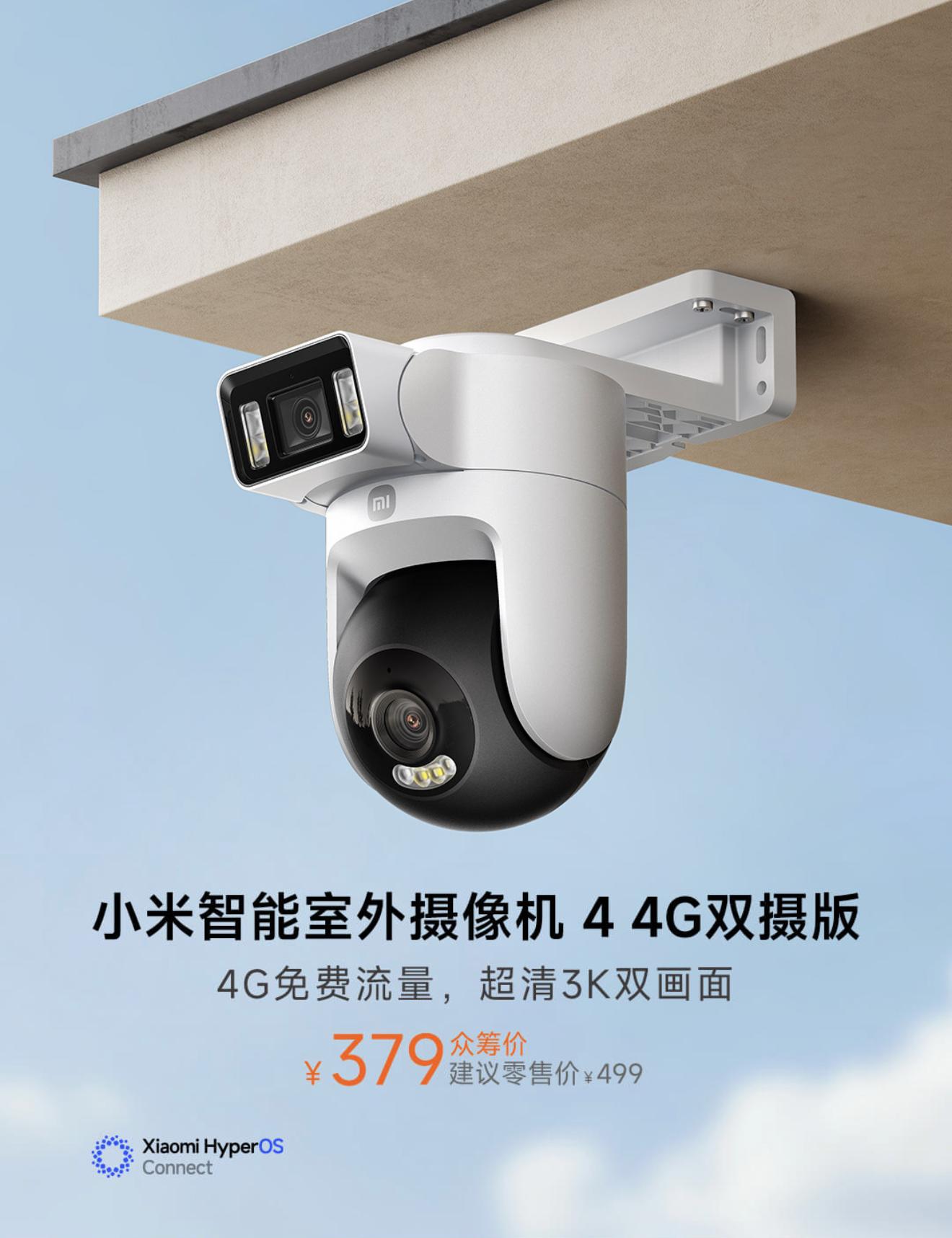
Core Insights - Xiaomi has launched its first outdoor 4G camera, breaking free from Wi-Fi and wired connections, featuring dual 5MP cameras and offering a free unlimited data plan for users of the Mi Home app [1][5] - The security camera market is experiencing a significant transformation with new players entering and a shift towards outdoor applications and low-power technologies [6][9] Company Developments - Xiaomi's outdoor 4G camera is priced at 379 yuan and supports various features such as AI human and vehicle recognition, smart color night vision, and IP66 dust and water resistance [1] - The camera utilizes built-in 4G SIM cards from China Telecom and Unicom, allowing for seamless network switching without additional charges [1][5] Industry Trends - By 2025, the Chinese consumer-grade surveillance camera market is expected to reach 55.07 million units, with online sales accounting for 63.6% of the total [6] - The market is seeing a shift towards head brands, with Xiaomi, JoAn, and Hikvision leading in sales volume and revenue [6] Technological Advancements - The security camera sector is undergoing a major technological update, with a focus on 4G connectivity and wireless power solutions, enabling cameras to operate in outdoor environments [9][12] - Major brands like Hikvision and Ezviz are advancing in the "wireless + 4G" technology, with products that include solar-powered options [13][15] Competitive Landscape - New entrants are flooding the market, with over 500 new brands emerging while more than 260 white-label manufacturers are exiting [6] - The competition is intensifying as brands incorporate AI technologies for features like human detection and intelligent tracking, with Xiaomi's new camera also emphasizing AI capabilities [19][21] Future Outlook - The global annual shipment of security cameras is currently around 300 to 400 million units, with a potential market expansion if wireless camera adoption increases significantly [12] - The industry is moving towards a future where cameras will be fully wireless, AI-enabled, and low-power, with predictions of wireless camera shipments reaching 10 billion units by 2035 [22]




36氪对话元鼎智能CEO汪洋:攻占欧美10万+泳池社区店,捏住行业命脉
3 6 Ke· 2025-06-18 02:58
Core Insights - The global pool robot market is experiencing rapid growth, with a projected compound annual growth rate (CAGR) of 32.1%, expected to reach a market size of $13.2 billion by 2028 [1][2] - The market is currently dominated by traditional players like Maytronics and Fluidra, but new Chinese entrants are emerging, focusing on wireless and smart innovations, low-cost strategies, and private label products [1][2] - The industry is shifting from a "growth-first" to an "efficiency-first" approach, emphasizing product, technology, and channel barriers rather than just low prices [3][5] Market Dynamics - The online sales channel is showing signs of fatigue, with Amazon's retail growth slowing to 7% despite overall revenue growth of 13% [2] - The professional pool channel, which holds 60% of the high-end market share, remains difficult for new entrants, with Chinese brands accounting for less than 5% [2] - Aiper, a fast-growing player, has seen its market share in Australia increase from 26% to 59% within a year, while competitors like Dolphin have seen a decline [2][3] Competitive Landscape - The competition is now defined by established low-cost players, traditional high-end brands, and strong channel players, making it challenging for new variables to emerge [3][5] - Aiper's focus on wireless communication technology has allowed it to break through traditional patent barriers, positioning it as a leader in innovation [2][3] - The company emphasizes that future competition will center on product, technology, and channel strength rather than pricing strategies [5][11] Channel Strategy - Aiper has invested heavily in global channel infrastructure since 2019, recognizing the importance of offline trust in the sales process [8][9] - The company has established partnerships with major retailers like Walmart while also penetrating specialized pool stores, which are crucial for building long-term customer relationships [10][11] - The collaboration with Fluidra has enabled Aiper to access over 1,000 specialized stores in France, enhancing its market presence [11][12] Technological Challenges - The development of underwater AI cleaning technology faces significant challenges, including the need for extensive data collection to accurately identify various types of debris in complex pool environments [6][7] - Aiper has a dedicated AI team focused on data collection and algorithm development, which is essential for maintaining a competitive edge in technology [4][6] Production and Supply Chain - Aiper has established a manufacturing presence in Vietnam to mitigate tariff pressures, with a combined annual production capacity exceeding 3 million units [14] - The company has implemented measures to ensure compliance with U.S. origin rules while maintaining stable sales despite rising logistics costs [14]