
日冕物质抛射活动(CME)

Search documents
太阳X级耀斑爆发 明后天可能出现较强地磁活动
Xin Lang Cai Jing· 2026-01-19 05:48
Core Viewpoint - The article discusses the occurrence of an X1.9-class solar flare from solar activity region 14341, marking the first X-class flare of 2026, with potential implications for geomagnetic activity on Earth [3][5]. Group 1: Solar Activity - The solar flare occurred on January 19 at 02:09 Beijing time, classified as X1.9, indicating a significant level of solar activity [3]. - The solar activity region 14341 is located in the eastern central part of the sun, covering an area of 500 microhectares and exhibiting a complex β-γ magnetic field type [5]. - Accompanying the flare was a coronal mass ejection (CME), which is expected to lead to strong geomagnetic activity on January 20-21 [5]. Group 2: Impact and Monitoring - The flare did not affect the ionosphere or shortwave radio communications in China due to its occurrence during nighttime [5]. - The current winter conditions in northern regions, combined with the moon's phase on the evening of January 20, are favorable for capturing beautiful aurora photographs [7]. - The National Space Weather Monitoring and Warning Center will closely monitor solar dynamics and provide timely services related to the solar activity [7].

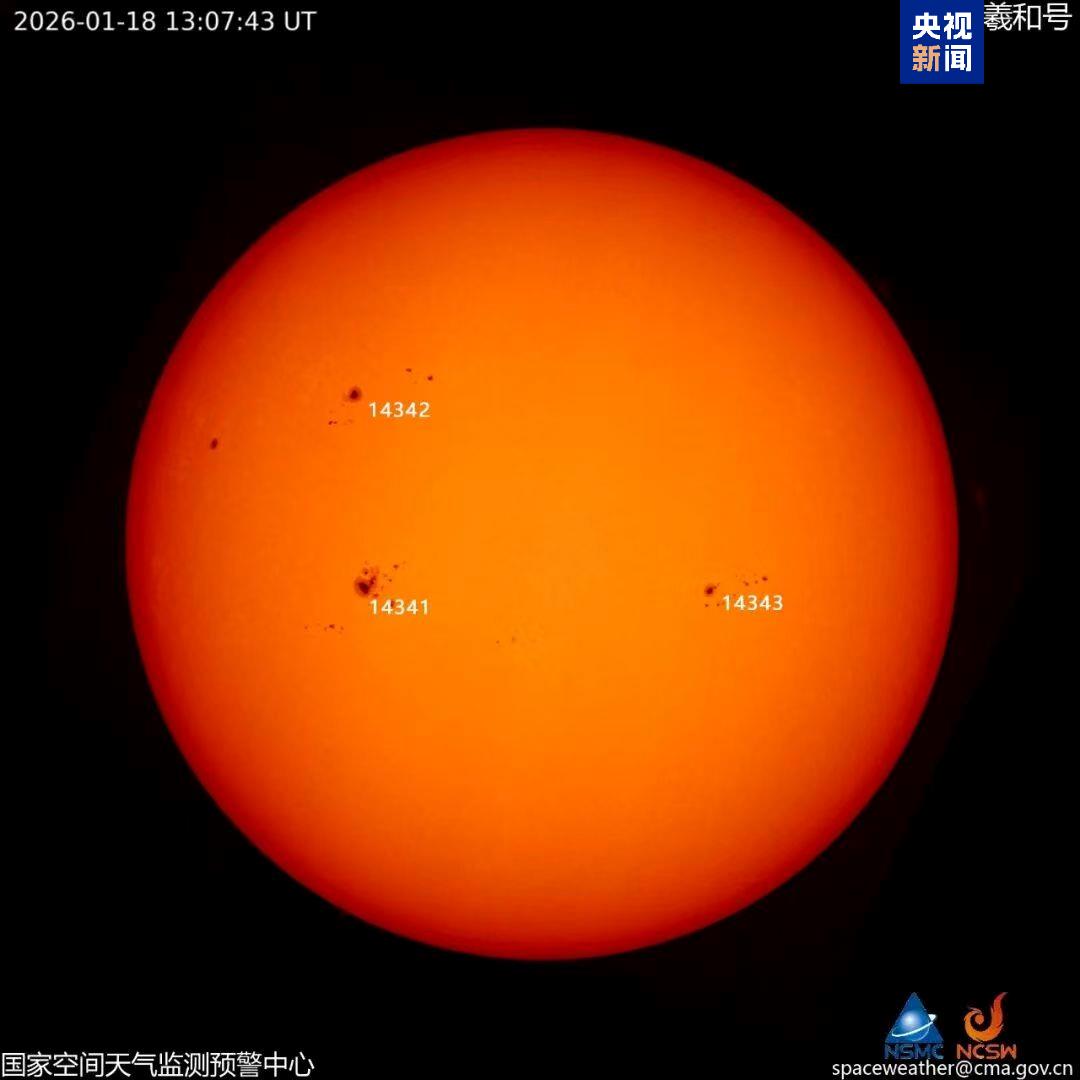
太阳X级耀斑爆发,20至21日可能出现较强地磁活动
Bei Jing Ri Bao Ke Hu Duan· 2026-01-19 03:52
Core Viewpoint - The article reports the occurrence of an X1.9-class solar flare from solar active region 14341, marking the first X-class flare of the sun in 2026 [2][8]. Group 1: Solar Flare Details - The solar flare occurred on January 19 at 02:09 Beijing time [2][8]. - The flare was accompanied by coronal mass ejection (CME), which was full halo due to the favorable position of the eruption area relative to Earth [4][10]. Group 2: Impact and Observations - The X-ray flux has since decreased, indicating the end of the flare event [4][10]. - The flare did not affect the ionosphere or shortwave radio communications in the corresponding regions as it occurred during nighttime in China [4][10]. - Strong geomagnetic activity is expected on January 20-21, coinciding with favorable conditions for aurora photography due to the snowy landscape and the moon's phase [6][12].
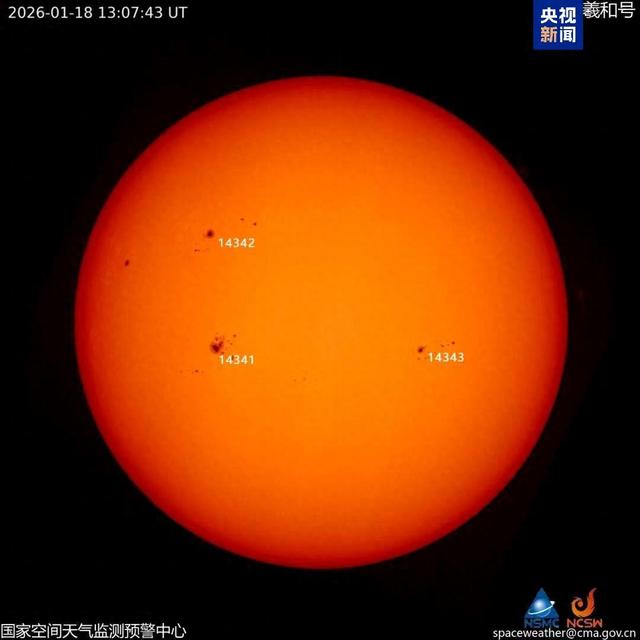
太阳X级耀斑爆发 20至21日可能出现较强地磁活动
Yang Shi Xin Wen· 2026-01-19 03:02
Core Viewpoint - The article discusses the occurrence of an X1.9-class solar flare from sunspot region 14341, marking the first X-class flare since 2026, and its potential impacts on geomagnetic activity and auroras on Earth [2][4][6] Group 1: Solar Flare Details - The solar flare occurred on January 19 at 02:09 Beijing time, classified as X1.9, indicating significant solar activity [2] - Sunspot region 14341 is located in the eastern central part of the sun, covering an area of 500 microhectares, with a complex magnetic field of the β-γ type [4] - The flare was accompanied by a coronal mass ejection (CME), which is expected to lead to geomagnetic activity on January 20-21 [4][6] Group 2: Impact and Observations - The solar flare did not affect the ionosphere or shortwave radio communications in China due to its occurrence during nighttime [4] - The conditions are favorable for capturing stunning aurora photographs, particularly on the night of January 20, coinciding with a slender crescent moon [6] - The National Space Weather Monitoring and Warning Center will closely monitor solar dynamics to provide timely services [6]