地磁活动

Search documents
太阳爆发X级耀斑!明后两天可能出现较强地磁活动
Yang Shi Xin Wen· 2026-01-19 07:31
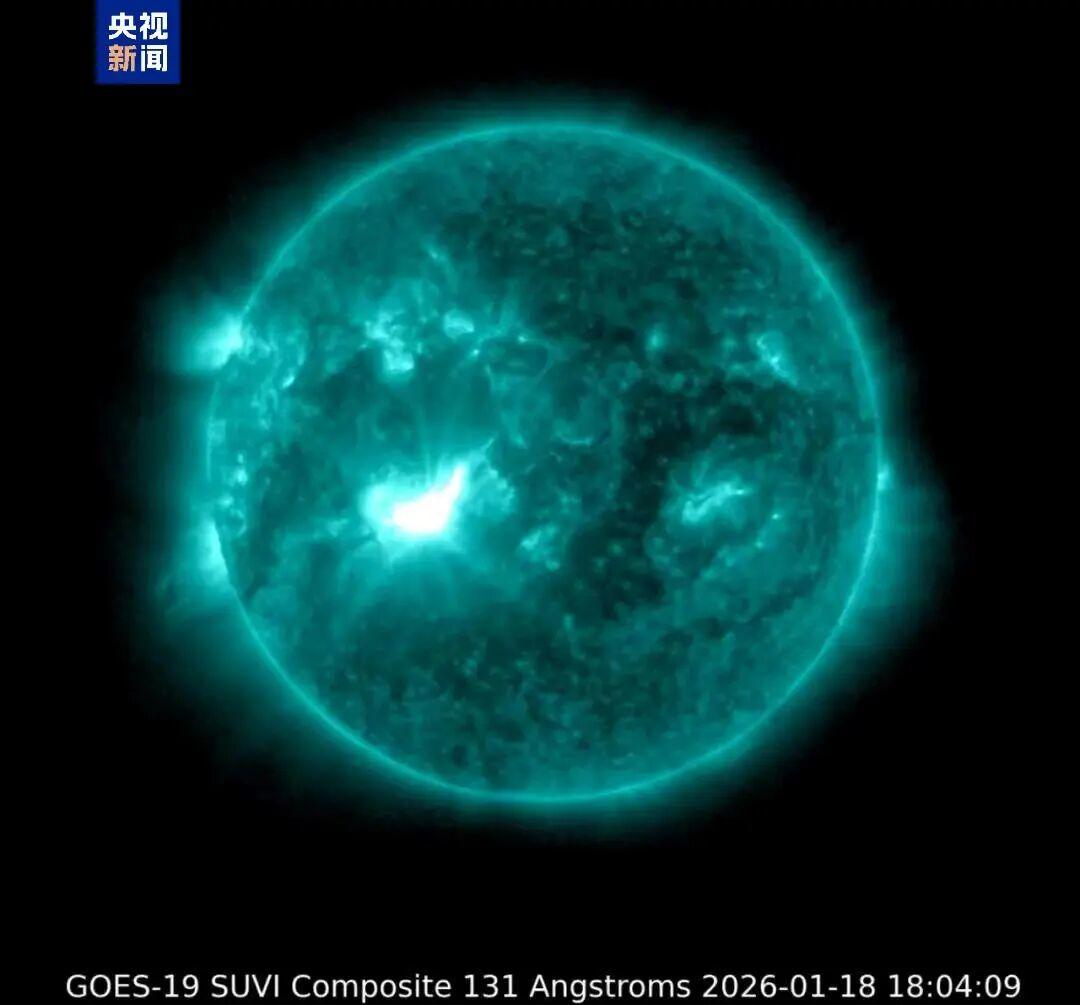
Core Viewpoint - The article reports on the occurrence of an X1.9-class solar flare from sunspot region 14341, marking the first X-class flare of 2026, with potential implications for geomagnetic activity on Earth [1][3]. Group 1: Solar Activity - The solar flare occurred at 02:09 UTC on January 19, 2026, and is classified as an X1.9 event, indicating significant solar activity [1]. - Sunspot region 14341 is located in the eastern-central part of the sun, covering an area of 500 microhectares and exhibiting a complex β-γ magnetic field type [3]. Group 2: Impact on Earth - The flare was accompanied by a coronal mass ejection (CME), which is expected to lead to strong geomagnetic activity on January 20-21 [5]. - Due to the timing of the flare occurring during nighttime in China, there was no immediate impact on the ionosphere or shortwave radio communications [3].

太阳X级耀斑爆发 明后天可能出现较强地磁活动
Xin Lang Cai Jing· 2026-01-19 05:48
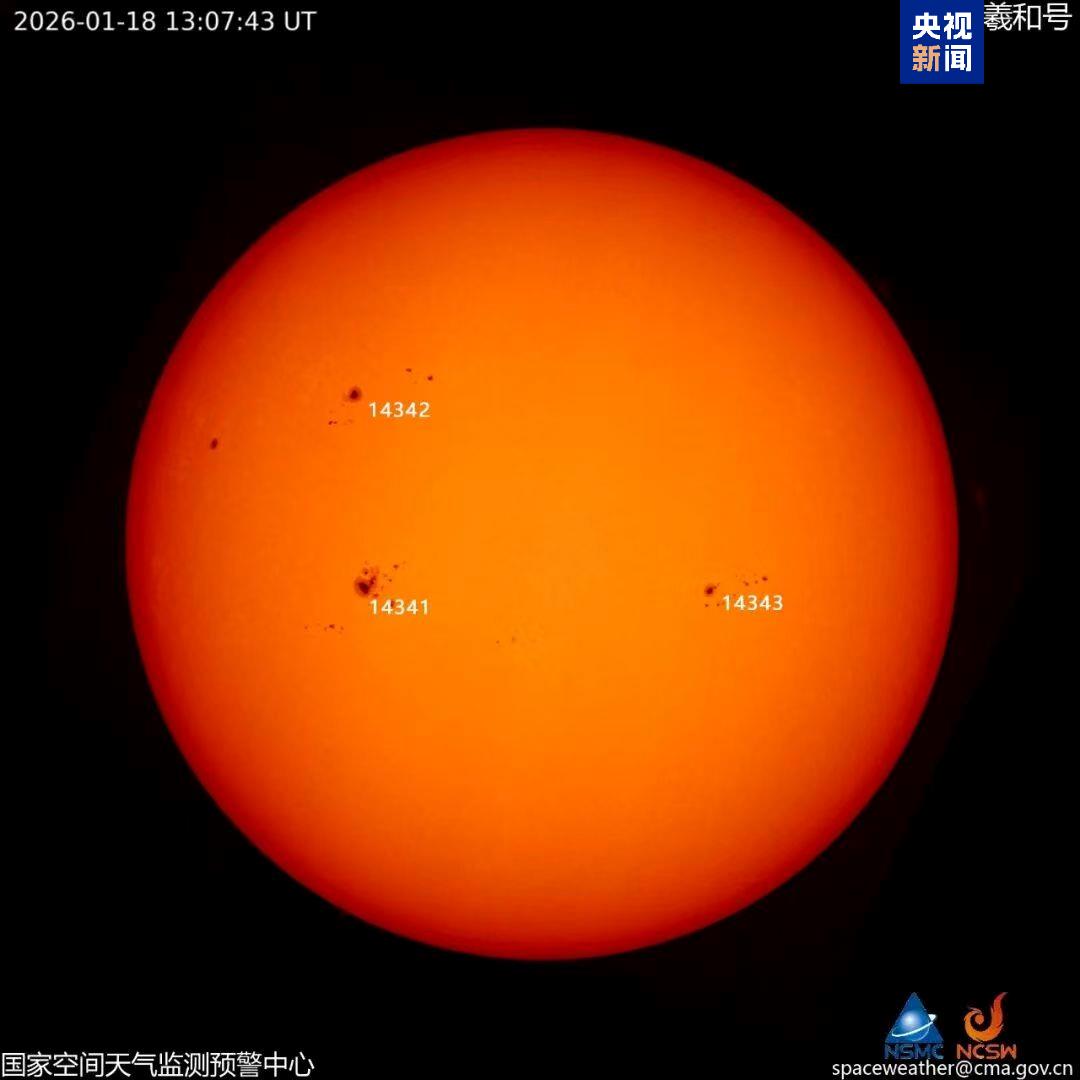
Core Viewpoint - The article discusses the occurrence of an X1.9-class solar flare from solar activity region 14341, marking the first X-class flare of 2026, with potential implications for geomagnetic activity on Earth [3][5]. Group 1: Solar Activity - The solar flare occurred on January 19 at 02:09 Beijing time, classified as X1.9, indicating a significant level of solar activity [3]. - The solar activity region 14341 is located in the eastern central part of the sun, covering an area of 500 microhectares and exhibiting a complex β-γ magnetic field type [5]. - Accompanying the flare was a coronal mass ejection (CME), which is expected to lead to strong geomagnetic activity on January 20-21 [5]. Group 2: Impact and Monitoring - The flare did not affect the ionosphere or shortwave radio communications in China due to its occurrence during nighttime [5]. - The current winter conditions in northern regions, combined with the moon's phase on the evening of January 20, are favorable for capturing beautiful aurora photographs [7]. - The National Space Weather Monitoring and Warning Center will closely monitor solar dynamics and provide timely services related to the solar activity [7].
太阳X级耀斑爆发,20至21日可能出现较强地磁活动
Bei Jing Ri Bao Ke Hu Duan· 2026-01-19 03:52
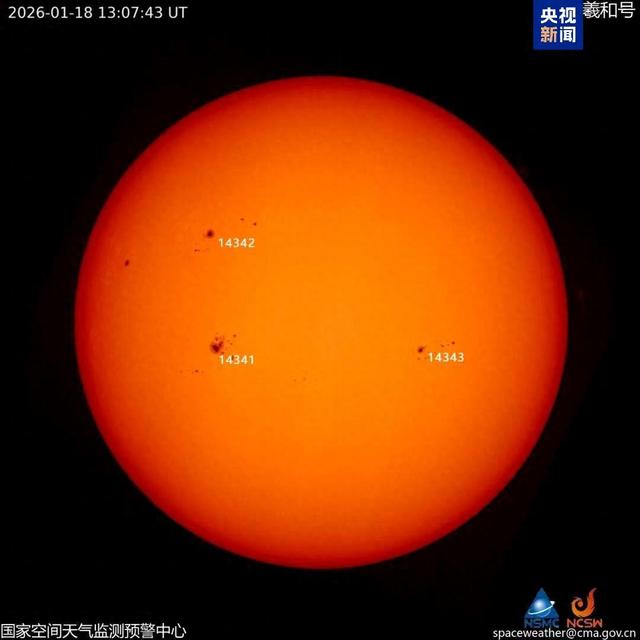
Core Viewpoint - The article reports the occurrence of an X1.9-class solar flare from solar active region 14341, marking the first X-class flare of the sun in 2026 [2][8]. Group 1: Solar Flare Details - The solar flare occurred on January 19 at 02:09 Beijing time [2][8]. - The flare was accompanied by coronal mass ejection (CME), which was full halo due to the favorable position of the eruption area relative to Earth [4][10]. Group 2: Impact and Observations - The X-ray flux has since decreased, indicating the end of the flare event [4][10]. - The flare did not affect the ionosphere or shortwave radio communications in the corresponding regions as it occurred during nighttime in China [4][10]. - Strong geomagnetic activity is expected on January 20-21, coinciding with favorable conditions for aurora photography due to the snowy landscape and the moon's phase [6][12].
太阳X级耀斑爆发 20至21日可能出现较强地磁活动
Yang Shi Xin Wen· 2026-01-19 03:02
Core Viewpoint - The article discusses the occurrence of an X1.9-class solar flare from sunspot region 14341, marking the first X-class flare since 2026, and its potential impacts on geomagnetic activity and auroras on Earth [2][4][6] Group 1: Solar Flare Details - The solar flare occurred on January 19 at 02:09 Beijing time, classified as X1.9, indicating significant solar activity [2] - Sunspot region 14341 is located in the eastern central part of the sun, covering an area of 500 microhectares, with a complex magnetic field of the β-γ type [4] - The flare was accompanied by a coronal mass ejection (CME), which is expected to lead to geomagnetic activity on January 20-21 [4][6] Group 2: Impact and Observations - The solar flare did not affect the ionosphere or shortwave radio communications in China due to its occurrence during nighttime [4] - The conditions are favorable for capturing stunning aurora photographs, particularly on the night of January 20, coinciding with a slender crescent moon [6] - The National Space Weather Monitoring and Warning Center will closely monitor solar dynamics to provide timely services [6]
今明两天!北方多地或出现极光
Zhong Guo Ji Jin Bao· 2025-11-11 10:24
Group 1 - The National Space Weather Monitoring and Warning Center of China Meteorological Administration predicts moderate geomagnetic activity in the next two days [1][3] - Northern regions of China, such as Mohe in Heilongjiang, Xinjiang, and Inner Mongolia, may witness auroras tonight to early tomorrow morning, primarily featuring weak red auroras with a small chance of red-green composite auroras [1] - Public interested in viewing the auroras should look for clear skies and low light pollution areas [1] Group 2 - The occurrence of auroras is linked to solar activities such as solar flares and coronal mass ejections, which release high-speed charged particle streams [2] - These particles interact with the Earth's magnetic field, leading to geomagnetic activity and resulting in the beautiful display of auroras when they collide with atmospheric gas atoms [2]
今明两天!北方多地或出现极光
中国基金报· 2025-11-11 09:44
Core Points - The article discusses the expected moderate geomagnetic activity in China over the next two days, which may lead to the appearance of auroras in northern regions such as Heilongjiang, Xinjiang, and Inner Mongolia [2][4] - The auroras are anticipated to primarily exhibit red weak auroras, with a small chance of red-green composite auroras [2] - The phenomenon is attributed to the interaction between solar activities, such as solar flares and coronal mass ejections, and the Earth's magnetic field, resulting in high-energy particles colliding with atmospheric gases to create auroras [3]

中国气象局国家空间天气监测预警中心:太阳爆发活动持续,我国北方大部都有机会看到极光
Ge Long Hui· 2025-11-06 05:01
Core Viewpoint - The article reports on two significant solar flares that occurred on November 5 and November 6, with magnitudes of M7.4 and M8.6, respectively, and mentions the potential for strong geomagnetic activity in the coming days [1] Group 1: Solar Activity - Two solar flares were recorded, with maximum intensities of M7.4 and M8.6 [1] - The solar flares were accompanied by noticeable coronal mass ejections (CME) [1] Group 2: Geomagnetic Impact - Strong geomagnetic activity is expected over the next three days as a result of the solar flares [1] - Northern regions of China, including Heilongjiang, Xinjiang, and Inner Mongolia, may have opportunities to observe auroras, including red-green composite auroras [1]
未来三天可能发生较强地磁活动,我国北方大部有机会看到极光
Xin Jing Bao· 2025-11-06 04:00
Core Points - The article reports two significant solar flares occurring on November 5 and 6, with maximum intensities of M7.4 and M8.6, accompanied by coronal mass ejections (CME) [1][5] - The solar activity is expected to lead to strong geomagnetic activity over the next three days, with potential auroras visible in northern regions of China, including Heilongjiang, Xinjiang, and Inner Mongolia [5][6] Group 1: Solar Activity - The solar flares are characterized by high-energy releases and are associated with CME, which can impact Earth's magnetic field [5][6] - The magnetic field strength of the sun is significantly higher than that of Earth, which contributes to the geomagnetic effects observed during solar events [6][11] Group 2: Geomagnetic Effects - Geomagnetic storms can affect high-tech equipment, particularly satellites and navigation systems, due to atmospheric drag and ionospheric instability [11] - Wildlife that relies on magnetic fields for navigation, such as homing pigeons, may experience difficulties during geomagnetic storms [11] Group 3: Solar Activity Monitoring - The article highlights the importance of monitoring solar activity, particularly the sunspot group 14274, which has a complex magnetic structure and potential for further eruptions [13][14] - The presence of another sunspot group, 14275, is also noted, which could pose additional challenges if it becomes active [14]
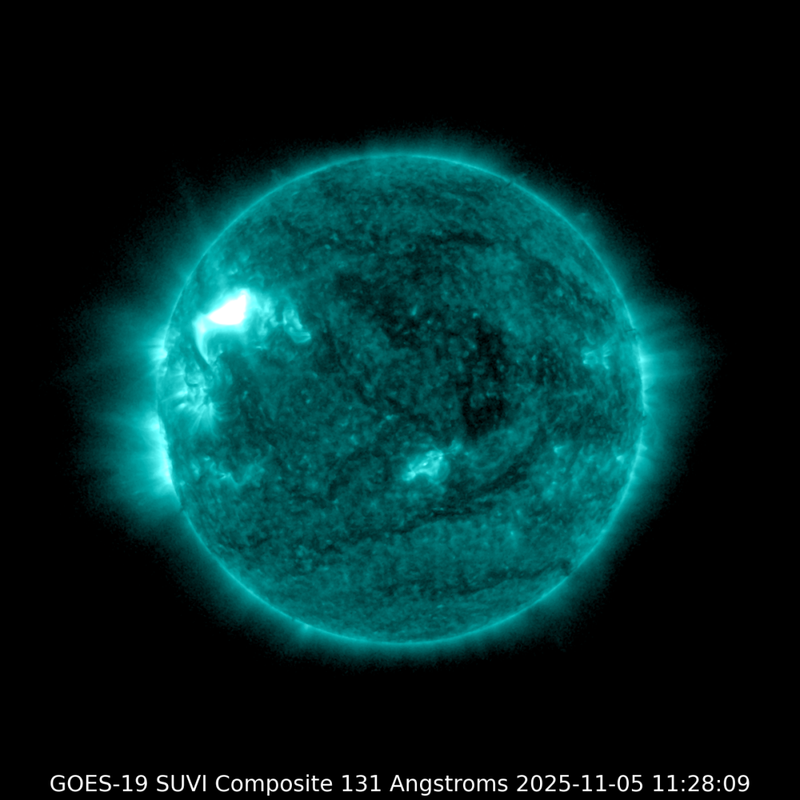
太阳爆发活动持续,我国这些地方可能出现红绿极光
Yang Shi Wang· 2025-11-06 03:59
Core Viewpoint - The article reports on two significant solar flares that occurred on November 5, with intensities of X1.8 and X1.1, indicating heightened solar activity and potential impacts on space weather [1] Group 1: Solar Activity - Two solar flares occurred on November 5, peaking at 01:34 and 06:01, with intensities of X1.8 and X1.1 respectively [1] - The National Space Weather Monitoring and Warning Center of China forecasts medium to high solar activity over the next three days, with a significant likelihood of M-class flares or higher [1] Group 2: Geomagnetic Effects - The article warns of potential moderate to strong geomagnetic activity due to coronal mass ejections (CME) in the coming days [1] - There is a possibility for the northern regions of China to witness auroras, with specific locations like Mohe in Heilongjiang, Xinjiang, and Inner Mongolia having chances to see red-green composite auroras [1]
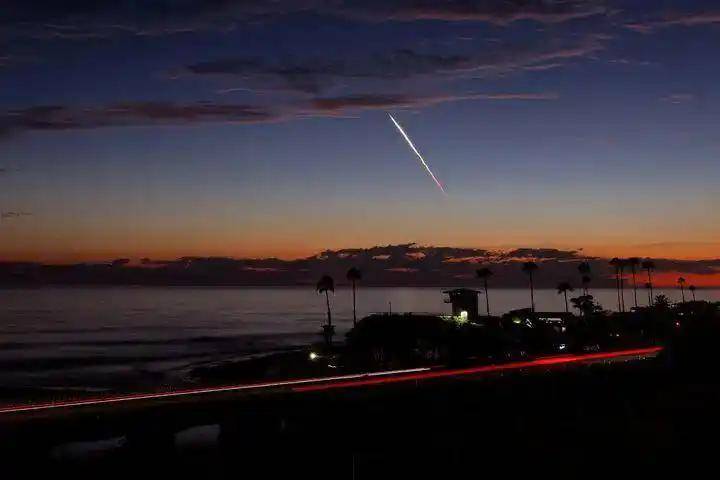
马斯克“星链”卫星突然大批坠落,发生了什么
Sou Hu Cai Jing· 2025-06-12 14:17
Core Viewpoint - The increasing frequency of Starlink satellite re-entries raises concerns about space environment safety and satellite operational stability, with a significant number of satellites falling from orbit in recent years [3][5][11]. Group 1: Starlink Satellite Re-Entry Data - From 2020 to 2024, a total of 583 Starlink satellites have fallen from orbit, with 316 of these occurring in 2024 alone [3][5]. - The number of Starlink satellites re-entering the atmosphere has escalated dramatically, with over 120 satellites falling in January 2024, averaging more than 4 per day [3][5]. - The design lifespan of Starlink satellites is approximately 5 years, and increased geomagnetic activity has been shown to significantly reduce their operational lifespan by about 20% [11][12]. Group 2: Solar Activity Impact - The current solar cycle (Cycle 25) is characterized by heightened solar activity, which is expected to peak around 2025, posing unprecedented challenges for low Earth orbit satellites [6][7]. - Increased solar activity leads to the expansion of the Earth's upper atmosphere, resulting in greater atmospheric density and resistance, which affects satellite trajectories [9][10]. - During periods of intense geomagnetic storms, satellites can re-enter the atmosphere 10 to 12 days earlier than during quiet geomagnetic periods [11]. Group 3: Environmental and Safety Concerns - The rapid re-entry of Starlink satellites raises environmental concerns, including the potential release of metals like aluminum, which can contribute to ozone depletion [15]. - There is a risk that some satellite debris may not completely burn up during re-entry, posing a danger to people and property on the ground [15]. - Monitoring and predictive measures are recommended to mitigate the risks associated with increased satellite numbers and their potential impacts during periods of high solar and geomagnetic activity [15].