日军暴行

Search documents
铁蹄踏琼岛 血泪鉴山河
Hai Nan Ri Bao· 2025-09-04 01:53
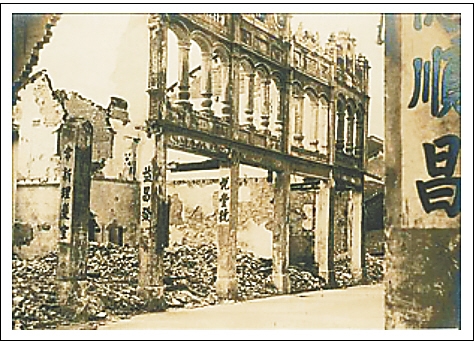
Core Viewpoint - The article highlights the historical atrocities committed by Japanese forces during their occupation of Hainan Island, emphasizing the immense suffering and loss experienced by the local population over 80 years ago [14][19]. Historical Atrocities - Japanese forces invaded Hainan Island in February 1939, leading to widespread violence, including the bombing of towns and the execution of civilians [15][16]. - The occupation resulted in numerous massacres, with over 200 villagers killed in the "Three-One Massacre" and a total of 566,174 casualties recorded during the occupation [20][23]. - The Japanese military employed brutal tactics, including the "Three Alls" policy (burn all, kill all, loot all), leading to the destruction of entire villages and communities [20][21]. Cultural and Economic Exploitation - The Japanese implemented a cultural invasion through education, establishing 73 Japanese language schools and promoting propaganda to indoctrinate the local population [21][22]. - Economically, Japan exploited Hainan's natural resources, particularly iron ore, with significant quantities extracted and shipped back to Japan, including 41,000 tons from Shiluo Iron Mine and 241,000 tons from Tiandu Iron Mine [22][23]. - The total financial loss due to the occupation was estimated at 80,907,270 yuan (1937 currency), alongside the forced labor of over 200,000 local workers, with a high casualty rate of 60% among them [23].

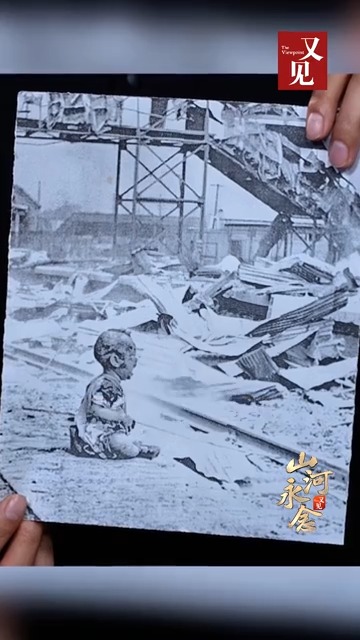
又见丨一张照片背后的血色记忆
Yang Shi Xin Wen Ke Hu Duan· 2025-08-06 05:26
Core Viewpoint - The article emphasizes the importance of remembering historical atrocities committed by the Japanese military during the Second Sino-Japanese War, particularly through the lens of impactful photographs like "The Chinese Baby" taken by Wang Xiaoting, which reveal the brutal reality faced by civilians [1][5]. Group 1: Historical Context - The photograph "The Chinese Baby" captures the aftermath of the bombing of Shanghai South Railway Station on August 28, 1937, showing a one-year-old child, Wang Jiasheng, crying amidst the devastation [3]. - The Japanese military's bombing targeted civilians, as the area was far from any military installations, contradicting their claims of accidental bombing [5]. Group 2: Impact of Photography - Wang Xiaoting's determination to publish the photograph led to its appearance in the American magazine "Life," where it was seen by over 100 million people, highlighting the power of visual media in raising awareness [5]. - The emotional impact of the photograph is profound, as it portrays a living child in distress, symbolizing the suffering of countless civilians during the war [6]. Group 3: Personal Stories - Wang Jiasheng, the child in the photograph, lost his parents in the bombing but was later adopted and grew up, representing the resilience of individuals affected by war [9]. - The narratives of Wang Xiaoting and Wang Jiasheng illustrate the silent struggles and bravery of ordinary people during the war, emphasizing that their stories deserve to be remembered [9].