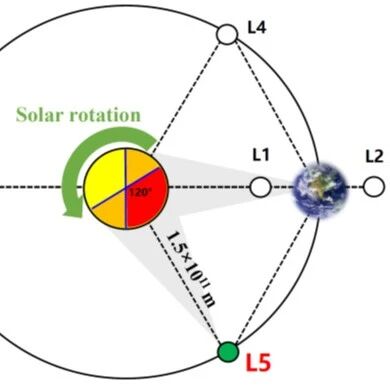
日地L5点

Search documents
我国计划向日地L5点发射“羲和二号”
Xin Lang Cai Jing· 2026-01-31 22:37
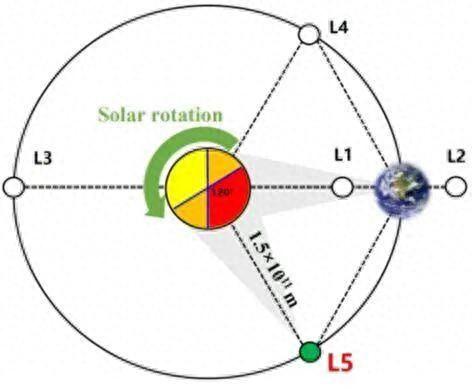
Core Viewpoint - China plans to launch the "Xihe-2" solar probe to the Sun-Earth L5 point between 2028 and 2029, marking a significant advancement in solar observation technology [1][2] Group 1: Project Overview - The "Xihe-2" project was officially launched at a scientific seminar, following the successful deployment of the first solar probe, "Xihe-1," in October 2021 [1] - "Xihe-1" has exceeded its expected operational lifespan and is currently functioning well, paving the way for the new mission [1] Group 2: Technical Aspects - "Xihe-2" will conduct three-dimensional observations of the Sun from a new wavelength and perspective, unlike "Xihe-1," which orbits the Earth [1] - The L5 point, where "Xihe-2" will be stationed, is one of five gravitational balance points between the Earth and the Sun, allowing for stable orbit maintenance with minimal energy consumption [2] - The design lifespan of "Xihe-2" is projected to be seven years, providing a long-term observational capability [2] Group 3: Scientific Significance - With over 70 solar probes launched to date, most are located along the Sun-Earth line, making "Xihe-2" the first probe to reside at the L5 point, offering a new observational perspective for solar research [2]
“探日”新篇!我国计划向日地引力平衡L5点发射“羲和二号”
Xin Lang Cai Jing· 2026-01-31 12:15
Core Viewpoint - The "Xihe-2" solar exploration project is set to launch between 2028 and 2029, marking a significant advancement in China's solar observation capabilities, following the successful deployment of the "Xihe-1" satellite in 2021 [1][2]. Group 1: Project Overview - The "Xihe-2" project is a collaborative initiative led by Nanjing University and the Eighth Academy of Aerospace, aimed at addressing national space security needs [1]. - The project is named after "Xihe," a figure from ancient Chinese texts symbolizing the sun, reflecting the cultural significance of solar observation in China [1]. Group 2: Technical Aspects - "Xihe-2" will operate from the L5 point, one of five gravitational balance points between the Earth and the Sun, allowing for stable orbit with minimal energy consumption and a design lifespan of up to 7 years [2][3]. - The satellite will provide a new observational perspective, enabling detailed measurements of solar magnetic fields and activities, and contributing to the establishment of a comprehensive three-dimensional physical model of solar eruptions [3]. Group 3: Scientific Contributions - The satellite's location at the L5 point will allow it to observe solar activities, such as solar flares and coronal mass ejections, up to four to five days in advance compared to Earth-based observations, enhancing space weather forecasting capabilities [3]. - This advance warning will provide more preparation time for Earth in response to potentially hazardous solar events [3].

探日”新篇!我国计划向日地引力平衡L5点发射“羲和二号
Yang Zi Wan Bao Wang· 2026-01-31 11:38
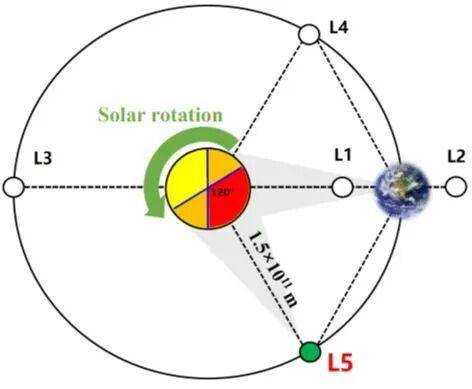
Core Viewpoint - The "Xihe II" solar exploration project is set to launch between 2028 and 2029, aiming to position itself at the Sun-Earth L5 point, providing a new observational perspective on solar activities [1][3]. Group 1: Project Overview - The "Xihe II" project is initiated by Nanjing University in collaboration with the Eighth Academy of Aerospace, addressing national space security needs [1]. - The project follows the successful launch of the first solar exploration satellite, "Xihe," in October 2021, marking China's entry into solar exploration [1]. - "Xihe II" will conduct three-dimensional observations of the Sun from a new wavelength and perspective, differing from "Xihe," which orbits Earth [1][3]. Group 2: Technical Aspects - "Xihe II" will be stationed at the L5 point, one of five gravitational balance points between the Earth and the Sun, allowing for stable orbit maintenance with minimal energy consumption [3]. - The design lifespan of "Xihe II" is projected to be seven years, enabling detailed measurements of solar magnetic fields and activities [3]. - The satellite aims to establish a comprehensive three-dimensional physical model of solar eruptions and enhance China's space weather forecasting capabilities [3]. Group 3: Scientific Significance - "Xihe II" will provide a new observational perspective, allowing for advanced warnings of solar activities such as solar flares and coronal mass ejections, potentially offering four to five days of lead time for Earth’s emergency responses [3].
我国计划向日地引力平衡L5点发射“羲和二号”
证券时报· 2026-01-31 05:06
Core Viewpoint - The article discusses the launch plan for China's solar exploration satellite "Xihe-2," which is scheduled to be sent to the Sun-Earth L5 point between 2028 and 2029, marking a significant advancement in solar observation technology [1]. Group 1: Project Overview - "Xihe" is named after the mother of the sun in ancient Chinese texts, and the first satellite "Xihe-1" was successfully launched in October 2021, initiating China's solar exploration era [2]. - "Xihe-2" will provide a new perspective for solar observation, operating from the L5 point, which is different from "Xihe-1" that orbits the Earth [2][3]. Group 2: Technical Capabilities - "Xihe-2" will enable precise measurements of solar magnetic fields and activities, contributing to the establishment of a comprehensive three-dimensional physical model of solar eruptions [5]. - The satellite will enhance China's space weather forecasting capabilities, allowing for early detection of solar activities such as solar flares and coronal mass ejections, providing an advance warning of four to five days compared to Earth-based observations [5]. Group 3: Operational Advantages - Positioned at the L5 point, "Xihe-2" will maintain stable orbit with minimal energy consumption, with a designed operational lifespan of up to seven years [3]. - The satellite's unique location will offer a new observational perspective, as no other solar probes have been stationed at the L5 point, thus providing valuable data for solar research [3].