羲和二号

Search documents
首款、首个、首次!本周,我国多领域解锁新成就
Yang Shi Xin Wen Ke Hu Duan· 2026-02-07 01:48
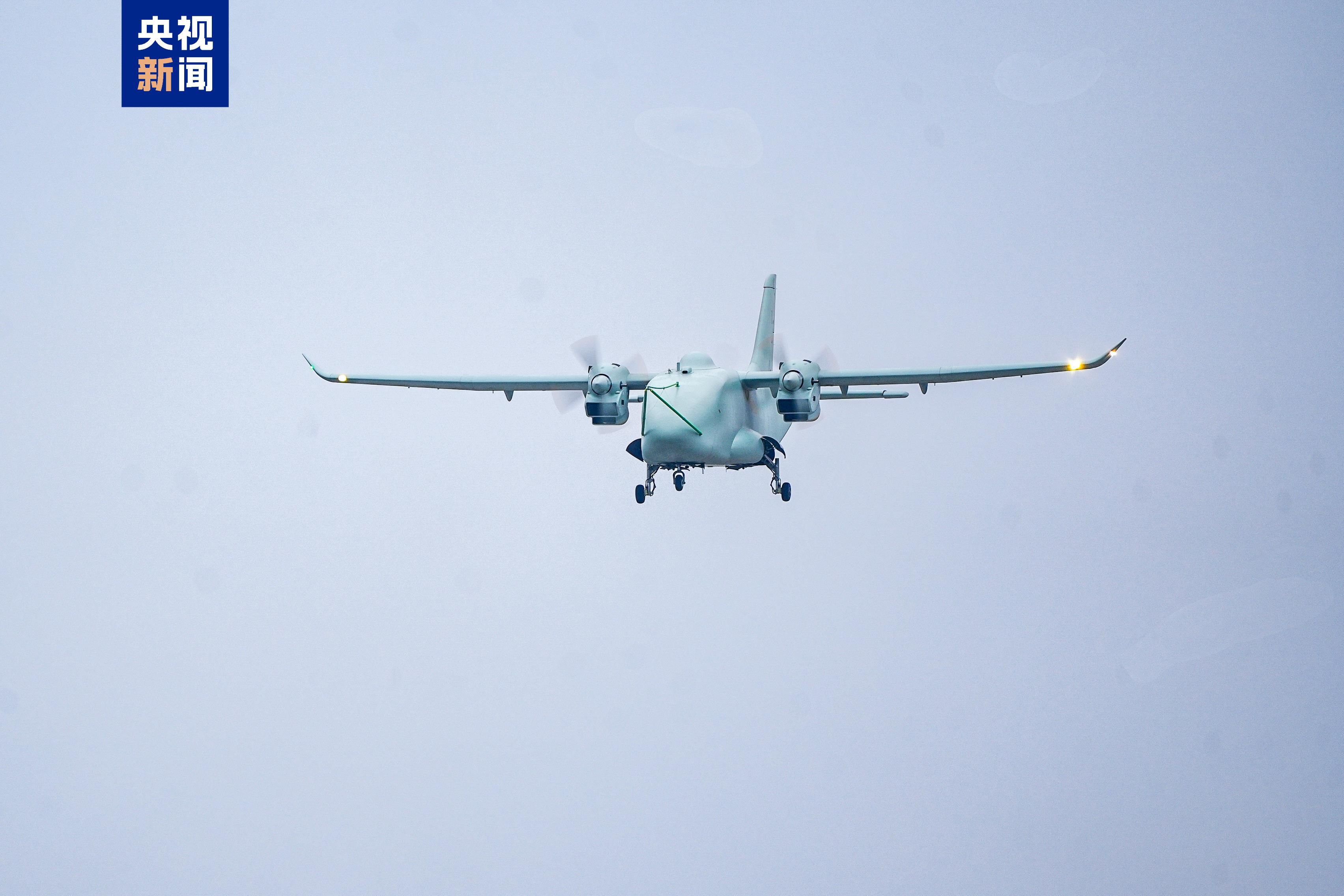
Group 1: Breakthroughs in Transportation and Communication Technologies - The world's first hybrid unmanned transport aircraft, the Rainbow YH-1000S, successfully completed its maiden flight on February 1, developed by China Aerospace Science and Technology Corporation's 11th Academy. This aircraft is designed for various applications including international logistics, emergency rescue, and ocean monitoring [1] - The first domestically produced electric vertical take-off and landing aircraft, developed by the 9th Academy of China Aerospace Science and Technology Corporation, successfully completed its maiden flight on February 6. This multifunctional low-altitude vehicle is expected to play a significant role in transportation and logistics [3] - China has made a significant advancement in quantum communication by constructing the first truly scalable quantum network relay unit, achieving secure communication over 11 kilometers of fiber and extending the secure distance to 100 kilometers, marking a decisive step towards practical long-distance quantum communication [17] Group 2: Renewable Energy and Carbon Management - The world's first 20-megawatt offshore wind turbine successfully connected to the grid in Fujian, marking a significant milestone in China's capabilities in manufacturing and operating large-capacity offshore wind turbines [8][10] - The first field trial of a long-distance pipeline for carbon dioxide transportation was successfully completed in Puyang, Henan, representing a key leap from theoretical research to engineering practice in the resource utilization of existing long-distance pipelines [11][14] Group 3: Advancements in Medical Technology - The IP-SAFE project, which focuses on the development of a medical isotope drug research platform based on accelerators, has made significant progress with the successful installation of the main accelerator device, marking a crucial step towards the construction of the world's first alpha medical isotope mass production demonstration facility [18][20]


视频丨首款、首个、首次!本周,我国多领域解锁新成就
Huan Qiu Wang Zi Xun· 2026-02-07 00:18
Group 1 - The first global hybrid unmanned transport aircraft, the Rainbow YH-1000S, successfully completed its maiden flight in Chongqing Liangping on February 1, marking a significant breakthrough in key technologies [1][3] - The YH-1000S is designed for various applications including international logistics, emergency rescue, weather modification, ocean monitoring, and maritime supervision [3] - The first domestically developed electric vertical take-off and landing aircraft successfully completed its maiden flight on February 6 in Chongqing Yongchuan, achieving all performance validations [5][7] Group 2 - The "Xihe No. 2" solar exploration project has officially launched, aiming to deploy to the fifth Lagrange point (L5) between the Earth and the Sun, with a planned launch window between 2028 and 2029 [9][10] - The fifth Lagrange point is an ideal location for deep space observation due to its gravitational stability, allowing spacecraft to maintain a stable position with minimal fuel consumption [11] Group 3 - The world's first 20-megawatt offshore wind turbine successfully connected to the grid in Fujian, marking a new milestone in the development and manufacturing of large-capacity wind turbines [12][14] - This wind turbine features domestically developed blades with a lightweight design, reducing the weight per megawatt by over 20% compared to industry averages, enhancing wind capture and power generation efficiency [14] Group 4 - The first field test of a long-distance pipeline for carbon dioxide transportation was successfully completed in Puyang, Henan, representing a key advancement in the resource utilization of existing pipelines [16][18] - This success paves the way for the large-scale development of carbon capture, utilization, and storage (CCUS) technologies, supporting the transition to a greener energy industry [18] Group 5 - Chinese scientists have achieved a significant breakthrough in quantum communication by constructing the first truly scalable quantum network relay unit, enhancing secure communication capabilities over distances of up to 100 kilometers [20][22] - This advancement indicates that fiber-based quantum networks are moving from theoretical concepts to practical applications, further solidifying China's international leadership in this field [22] Group 6 - The accelerator-based medical isotope drug research platform has made progress, with the main accelerator device successfully installed, marking a crucial step towards the construction of the world's first alpha medical isotope mass production demonstration facility [23][25] - Once fully operational, this platform is expected to significantly enhance China's nuclear medicine diagnostic and therapeutic capabilities, injecting new momentum into the biopharmaceutical industry [25]
中国航天科技集团:“羲和二号”项目启动,目标日地L5点
Bei Jing Shang Bao· 2026-02-03 13:01
Core Viewpoint - The China Aerospace Science and Technology Corporation announced the initiation of the "Xihe-2" solar probe project, with plans to launch the probe to the Sun-Earth L5 point between 2028 and 2029 [1] Group 1 - The project kickoff meeting and scientific discussion for the "Xihe-2" solar probe were recently held [1] - The "Xihe-2" mission aims to enhance solar observation capabilities [1]

晚报 | 2月2日主题前瞻
Xuan Gu Bao· 2026-02-01 14:34
Group 1: Energy Storage - The National Development and Reform Commission and the National Energy Administration have issued a notice to improve the capacity pricing mechanism for power generation, including coal, gas, pumped storage, and new energy storage [1] - Experts indicate that energy storage is a bottleneck in the current power system, and independent energy storage construction can effectively address this issue [1] - Dongguan Securities believes that the flexible adjustment capabilities of new energy storage in China are increasingly prominent, enhancing the development of renewable energy and improving the stability of the power system [1] Group 2: Transformers - Research in Guangdong and Jiangsu shows that many transformer factories are operating at full capacity, with some orders for data center-related transformers extending to 2027 [2] - The global demand for AI computing power is driving the transformer industry, with delivery times in the U.S. increasing from 50 weeks to 127 weeks [2] - By 2025, China's transformer export value is expected to reach 64.6 billion yuan, a nearly 36% increase from 2024 [2] Group 3: AI Applications - Tencent's AI assistant product, Yuanbao, has topped the free app rankings in the Apple Store, indicating strong competition in the AI social networking space [3] - Open-source securities suggest that domestic large model manufacturers are enhancing user and revenue scales through frequent model iterations and leveraging social effects from the Spring Festival [3] Group 4: Space Computing - SpaceX is applying to launch and operate a constellation of up to 1 million satellites with unprecedented computing capabilities to support advanced AI [4] - The satellite deployment aims to operate in narrow orbital shells and will utilize solar power and optical links to connect with existing networks [4] Group 5: Quantum Computing - A team from Germany has successfully demonstrated a high-quality single-photon source operating in the communication C-band, achieving a nearly 92% visibility in two-photon interference [5] - The global quantum technology financing is projected to reach approximately 34.9 billion yuan by Q3 2025, surpassing the total of the previous two years [5] - The quantum computing market is expected to grow from $5 billion in 2024 to over $800 billion by 2035, with a compound annual growth rate exceeding 55% [5] Group 6: Macro and Industry News - The manufacturing purchasing managers' index in China for January 2026 is reported at 49.3%, a decrease of 0.8 percentage points from the previous month [6] - The Beijing Economic and Technological Development Zone has issued a plan to accelerate the construction of an AI city from 2026 to 2027 [6] - The National Health Commission has approved a pilot program for internet diagnosis and treatment in Beijing [6] Group 7: Market Performance - Several companies have reached historical highs, including Zhishang Technology (20% increase), Sikan Technology (20% increase), and Kexin Technology (19.99% increase) [10][11] - The performance of companies in sectors such as optical communication, 3D printing, and storage has shown significant growth, indicating strong market interest [10][11]
我国计划向日地L5点发射“羲和二号”
Xin Lang Cai Jing· 2026-01-31 22:37
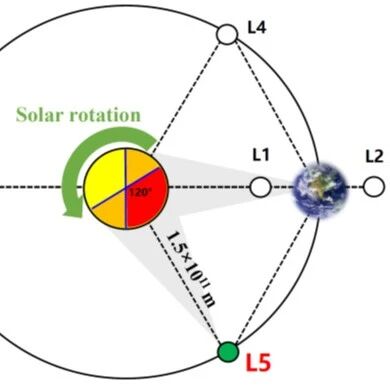
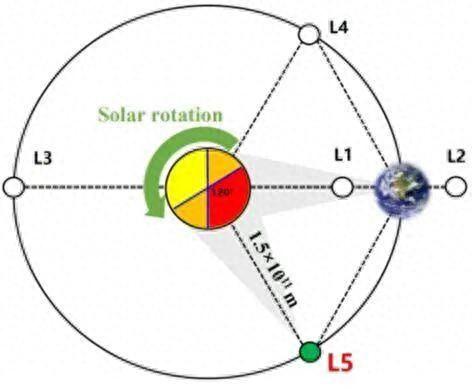
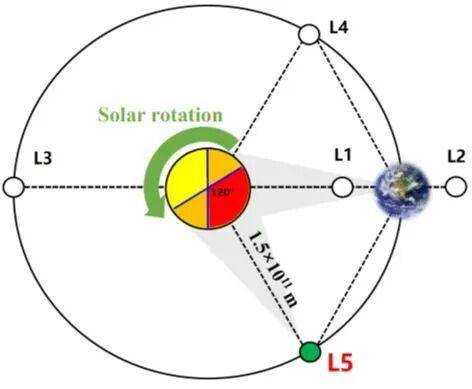
Core Viewpoint - China plans to launch the "Xihe-2" solar probe to the Sun-Earth L5 point between 2028 and 2029, marking a significant advancement in solar observation technology [1][2] Group 1: Project Overview - The "Xihe-2" project was officially launched at a scientific seminar, following the successful deployment of the first solar probe, "Xihe-1," in October 2021 [1] - "Xihe-1" has exceeded its expected operational lifespan and is currently functioning well, paving the way for the new mission [1] Group 2: Technical Aspects - "Xihe-2" will conduct three-dimensional observations of the Sun from a new wavelength and perspective, unlike "Xihe-1," which orbits the Earth [1] - The L5 point, where "Xihe-2" will be stationed, is one of five gravitational balance points between the Earth and the Sun, allowing for stable orbit maintenance with minimal energy consumption [2] - The design lifespan of "Xihe-2" is projected to be seven years, providing a long-term observational capability [2] Group 3: Scientific Significance - With over 70 solar probes launched to date, most are located along the Sun-Earth line, making "Xihe-2" the first probe to reside at the L5 point, offering a new observational perspective for solar research [2]
我国计划发射“羲和二号”
Xin Lang Cai Jing· 2026-01-31 18:30
Core Viewpoint - China plans to launch the "Xihe-2" solar probe to the Sun-Earth L5 point between 2028 and 2029, marking a significant advancement in solar observation technology [1][2] Group 1: Project Overview - The "Xihe-2" project was announced during a scientific seminar, following the successful launch of the first solar probe, "Xihe," in October 2021 [1] - Unlike "Xihe," which orbits Earth, "Xihe-2" will provide a new perspective on solar observation from the L5 point, one of five gravitational balance points between the Earth and the Sun [1][2] Group 2: Technical Capabilities - "Xihe-2" is designed to conduct detailed measurements of solar magnetic fields and activities, aiming to establish a comprehensive three-dimensional physical model of solar eruptions [2] - The probe will enhance China's capabilities in space weather forecasting, allowing for advanced warnings of solar events such as solar flares and coronal mass ejections [2] Group 3: Strategic Importance - Positioned at the L5 point, "Xihe-2" can maintain a stable orbit with minimal energy consumption and has a design lifespan of up to seven years [2] - The probe's vantage point will enable it to observe solar activity four to five days in advance compared to Earth-based observations, providing critical preparation time for emergency responses to space weather events [2]
“羲和二号”,将择机发射
中国能源报· 2026-01-31 14:33
Core Viewpoint - China plans to launch the "Xihe II" solar probe to the Sun-Earth L5 point between 2028 and 2029, marking a significant advancement in solar observation technology [1][2]. Group 1: Project Overview - The "Xihe II" project was officially initiated at a scientific seminar on January 31, 2023, and follows the successful launch of the first solar probe, "Xihe," in October 2021 [1]. - "Xihe II" will conduct three-dimensional observations of the Sun from a new perspective and waveband, unlike its predecessor, which orbits Earth [1]. Group 2: Technical Specifications - The "Xihe II" is designed to have a long operational lifespan of 7 years and will maintain its stable orbit at the L5 point with minimal energy consumption [2]. - It will provide precise measurements of solar magnetic fields and activities, contributing to the establishment of a comprehensive three-dimensional physical model of solar eruptions [2]. Group 3: Scientific Significance - The probe will enhance China's capabilities in space weather forecasting, allowing for earlier detection of solar activities such as solar flares and coronal mass ejections, potentially providing an advance warning of 4 to 5 days [2].

“探日”新篇!我国计划向日地引力平衡L5点发射“羲和二号”
Xin Lang Cai Jing· 2026-01-31 12:15
Core Viewpoint - The "Xihe-2" solar exploration project is set to launch between 2028 and 2029, marking a significant advancement in China's solar observation capabilities, following the successful deployment of the "Xihe-1" satellite in 2021 [1][2]. Group 1: Project Overview - The "Xihe-2" project is a collaborative initiative led by Nanjing University and the Eighth Academy of Aerospace, aimed at addressing national space security needs [1]. - The project is named after "Xihe," a figure from ancient Chinese texts symbolizing the sun, reflecting the cultural significance of solar observation in China [1]. Group 2: Technical Aspects - "Xihe-2" will operate from the L5 point, one of five gravitational balance points between the Earth and the Sun, allowing for stable orbit with minimal energy consumption and a design lifespan of up to 7 years [2][3]. - The satellite will provide a new observational perspective, enabling detailed measurements of solar magnetic fields and activities, and contributing to the establishment of a comprehensive three-dimensional physical model of solar eruptions [3]. Group 3: Scientific Contributions - The satellite's location at the L5 point will allow it to observe solar activities, such as solar flares and coronal mass ejections, up to four to five days in advance compared to Earth-based observations, enhancing space weather forecasting capabilities [3]. - This advance warning will provide more preparation time for Earth in response to potentially hazardous solar events [3].
探日”新篇!我国计划向日地引力平衡L5点发射“羲和二号
Yang Zi Wan Bao Wang· 2026-01-31 11:38
Core Viewpoint - The "Xihe II" solar exploration project is set to launch between 2028 and 2029, aiming to position itself at the Sun-Earth L5 point, providing a new observational perspective on solar activities [1][3]. Group 1: Project Overview - The "Xihe II" project is initiated by Nanjing University in collaboration with the Eighth Academy of Aerospace, addressing national space security needs [1]. - The project follows the successful launch of the first solar exploration satellite, "Xihe," in October 2021, marking China's entry into solar exploration [1]. - "Xihe II" will conduct three-dimensional observations of the Sun from a new wavelength and perspective, differing from "Xihe," which orbits Earth [1][3]. Group 2: Technical Aspects - "Xihe II" will be stationed at the L5 point, one of five gravitational balance points between the Earth and the Sun, allowing for stable orbit maintenance with minimal energy consumption [3]. - The design lifespan of "Xihe II" is projected to be seven years, enabling detailed measurements of solar magnetic fields and activities [3]. - The satellite aims to establish a comprehensive three-dimensional physical model of solar eruptions and enhance China's space weather forecasting capabilities [3]. Group 3: Scientific Significance - "Xihe II" will provide a new observational perspective, allowing for advanced warnings of solar activities such as solar flares and coronal mass ejections, potentially offering four to five days of lead time for Earth’s emergency responses [3].
我国计划向日地引力平衡L5点发射“羲和二号”
证券时报· 2026-01-31 05:06
Core Viewpoint - The article discusses the launch plan for China's solar exploration satellite "Xihe-2," which is scheduled to be sent to the Sun-Earth L5 point between 2028 and 2029, marking a significant advancement in solar observation technology [1]. Group 1: Project Overview - "Xihe" is named after the mother of the sun in ancient Chinese texts, and the first satellite "Xihe-1" was successfully launched in October 2021, initiating China's solar exploration era [2]. - "Xihe-2" will provide a new perspective for solar observation, operating from the L5 point, which is different from "Xihe-1" that orbits the Earth [2][3]. Group 2: Technical Capabilities - "Xihe-2" will enable precise measurements of solar magnetic fields and activities, contributing to the establishment of a comprehensive three-dimensional physical model of solar eruptions [5]. - The satellite will enhance China's space weather forecasting capabilities, allowing for early detection of solar activities such as solar flares and coronal mass ejections, providing an advance warning of four to five days compared to Earth-based observations [5]. Group 3: Operational Advantages - Positioned at the L5 point, "Xihe-2" will maintain stable orbit with minimal energy consumption, with a designed operational lifespan of up to seven years [3]. - The satellite's unique location will offer a new observational perspective, as no other solar probes have been stationed at the L5 point, thus providing valuable data for solar research [3].