
太阳探测

Search documents
首款、首个、首次!本周,我国多领域解锁新成就
Yang Shi Xin Wen Ke Hu Duan· 2026-02-07 01:48
Group 1: Breakthroughs in Transportation and Communication Technologies - The world's first hybrid unmanned transport aircraft, the Rainbow YH-1000S, successfully completed its maiden flight on February 1, developed by China Aerospace Science and Technology Corporation's 11th Academy. This aircraft is designed for various applications including international logistics, emergency rescue, and ocean monitoring [1] - The first domestically produced electric vertical take-off and landing aircraft, developed by the 9th Academy of China Aerospace Science and Technology Corporation, successfully completed its maiden flight on February 6. This multifunctional low-altitude vehicle is expected to play a significant role in transportation and logistics [3] - China has made a significant advancement in quantum communication by constructing the first truly scalable quantum network relay unit, achieving secure communication over 11 kilometers of fiber and extending the secure distance to 100 kilometers, marking a decisive step towards practical long-distance quantum communication [17] Group 2: Renewable Energy and Carbon Management - The world's first 20-megawatt offshore wind turbine successfully connected to the grid in Fujian, marking a significant milestone in China's capabilities in manufacturing and operating large-capacity offshore wind turbines [8][10] - The first field trial of a long-distance pipeline for carbon dioxide transportation was successfully completed in Puyang, Henan, representing a key leap from theoretical research to engineering practice in the resource utilization of existing long-distance pipelines [11][14] Group 3: Advancements in Medical Technology - The IP-SAFE project, which focuses on the development of a medical isotope drug research platform based on accelerators, has made significant progress with the successful installation of the main accelerator device, marking a crucial step towards the construction of the world's first alpha medical isotope mass production demonstration facility [18][20]



我国计划向日地L5点发射“羲和二号”探测器
Huan Qiu Wang Zi Xun· 2026-02-04 01:28
Group 1 - The core point of the article is that China plans to launch the "Xihe-2" solar probe to the Sun-Earth L5 point between 2028 and 2029, which will enhance solar observation capabilities [1][2] - The "Xihe-2" probe is designed with a launch mass of approximately 1600 kilograms and will carry multiple payloads including a spectral magnetometer and high-energy solar telescope [1] - The probe will have a design life of 7 years, allowing it to remain at the L5 point with minimal fuel consumption, providing a stable platform for long-term solar observation [1] Group 2 - Currently, over 70 solar probes have been launched by humanity, with most located along the Sun-Earth line, and none have been stationed at the Sun-Earth L5 point [2] - The "Xihe-2" probe will take about 800 days to reach the L5 point, where it will provide a new perspective for measuring solar magnetic fields and activities [2] - The mission aims to establish a complete three-dimensional physical model of solar eruptions and improve China's space weather forecasting capabilities [2]
我国计划发射“羲和二号”
Xin Lang Cai Jing· 2026-01-31 18:30
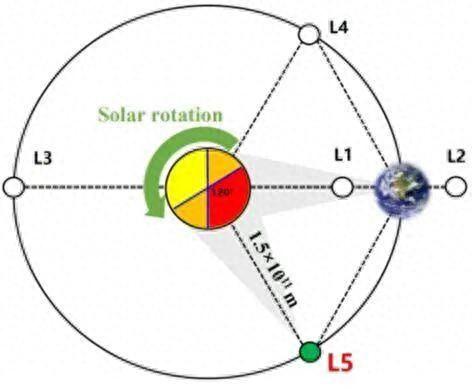
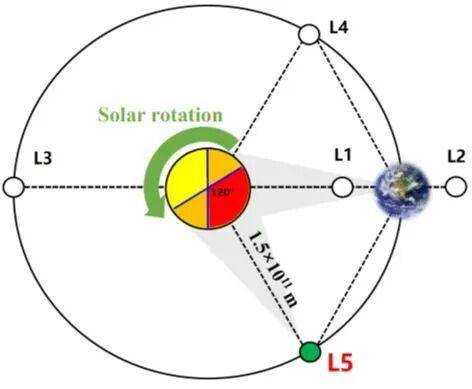
Core Viewpoint - China plans to launch the "Xihe-2" solar probe to the Sun-Earth L5 point between 2028 and 2029, marking a significant advancement in solar observation technology [1][2] Group 1: Project Overview - The "Xihe-2" project was announced during a scientific seminar, following the successful launch of the first solar probe, "Xihe," in October 2021 [1] - Unlike "Xihe," which orbits Earth, "Xihe-2" will provide a new perspective on solar observation from the L5 point, one of five gravitational balance points between the Earth and the Sun [1][2] Group 2: Technical Capabilities - "Xihe-2" is designed to conduct detailed measurements of solar magnetic fields and activities, aiming to establish a comprehensive three-dimensional physical model of solar eruptions [2] - The probe will enhance China's capabilities in space weather forecasting, allowing for advanced warnings of solar events such as solar flares and coronal mass ejections [2] Group 3: Strategic Importance - Positioned at the L5 point, "Xihe-2" can maintain a stable orbit with minimal energy consumption and has a design lifespan of up to seven years [2] - The probe's vantage point will enable it to observe solar activity four to five days in advance compared to Earth-based observations, providing critical preparation time for emergency responses to space weather events [2]
“探日”新篇!我国计划向日地引力平衡L5点发射“羲和二号”
Xin Lang Cai Jing· 2026-01-31 12:15
Core Viewpoint - The "Xihe-2" solar exploration project is set to launch between 2028 and 2029, marking a significant advancement in China's solar observation capabilities, following the successful deployment of the "Xihe-1" satellite in 2021 [1][2]. Group 1: Project Overview - The "Xihe-2" project is a collaborative initiative led by Nanjing University and the Eighth Academy of Aerospace, aimed at addressing national space security needs [1]. - The project is named after "Xihe," a figure from ancient Chinese texts symbolizing the sun, reflecting the cultural significance of solar observation in China [1]. Group 2: Technical Aspects - "Xihe-2" will operate from the L5 point, one of five gravitational balance points between the Earth and the Sun, allowing for stable orbit with minimal energy consumption and a design lifespan of up to 7 years [2][3]. - The satellite will provide a new observational perspective, enabling detailed measurements of solar magnetic fields and activities, and contributing to the establishment of a comprehensive three-dimensional physical model of solar eruptions [3]. Group 3: Scientific Contributions - The satellite's location at the L5 point will allow it to observe solar activities, such as solar flares and coronal mass ejections, up to four to five days in advance compared to Earth-based observations, enhancing space weather forecasting capabilities [3]. - This advance warning will provide more preparation time for Earth in response to potentially hazardous solar events [3].
探日”新篇!我国计划向日地引力平衡L5点发射“羲和二号
Yang Zi Wan Bao Wang· 2026-01-31 11:38
Core Viewpoint - The "Xihe II" solar exploration project is set to launch between 2028 and 2029, aiming to position itself at the Sun-Earth L5 point, providing a new observational perspective on solar activities [1][3]. Group 1: Project Overview - The "Xihe II" project is initiated by Nanjing University in collaboration with the Eighth Academy of Aerospace, addressing national space security needs [1]. - The project follows the successful launch of the first solar exploration satellite, "Xihe," in October 2021, marking China's entry into solar exploration [1]. - "Xihe II" will conduct three-dimensional observations of the Sun from a new wavelength and perspective, differing from "Xihe," which orbits Earth [1][3]. Group 2: Technical Aspects - "Xihe II" will be stationed at the L5 point, one of five gravitational balance points between the Earth and the Sun, allowing for stable orbit maintenance with minimal energy consumption [3]. - The design lifespan of "Xihe II" is projected to be seven years, enabling detailed measurements of solar magnetic fields and activities [3]. - The satellite aims to establish a comprehensive three-dimensional physical model of solar eruptions and enhance China's space weather forecasting capabilities [3]. Group 3: Scientific Significance - "Xihe II" will provide a new observational perspective, allowing for advanced warnings of solar activities such as solar flares and coronal mass ejections, potentially offering four to five days of lead time for Earth’s emergency responses [3].
我国计划向日地引力平衡L5点发射“羲和二号”
财联社· 2026-01-31 04:10
Core Viewpoint - The "Xihe II" solar probe project is set to launch between 2028 and 2029, marking a significant advancement in China's solar observation capabilities, following the successful launch of the "Xihe I" satellite in 2021 [1][4]. Group 1: Project Overview - The "Xihe II" project was announced during a scientific seminar, indicating China's commitment to advancing solar research [1]. - "Xihe I" has exceeded its expected operational lifespan and continues to function well, paving the way for the new probe [1][4]. - The "Xihe II" will conduct three-dimensional observations of the sun from a unique perspective at the L5 point, which is not currently occupied by any other solar probes [3][4]. Group 2: Technical Capabilities - The "Xihe II" will enable precise measurements of solar magnetic fields and activities, contributing to the establishment of a comprehensive three-dimensional physical model of solar eruptions [4]. - It will enhance China's capabilities in space weather forecasting, allowing for earlier detection of solar activities such as solar flares and coronal mass ejections, providing an additional four to five days of preparation time for Earth [4].
专访中国首颗太阳探测科学技术试验卫星“羲和号”首席科学家:不到一分钟,就可给太阳“做次CT”
Huan Qiu Wang Zi Xun· 2025-12-02 23:14
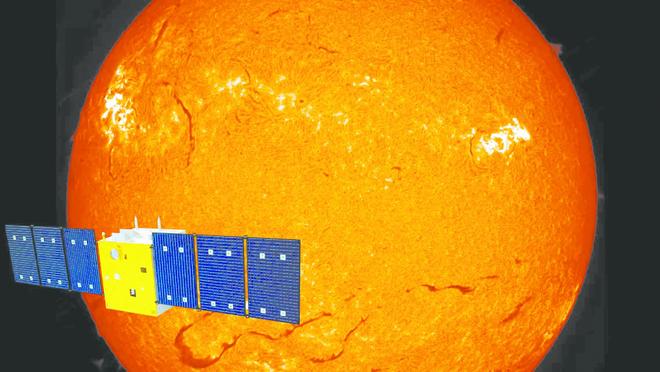
Core Viewpoint - The "Xihe" satellite, China's first dedicated solar observation satellite, has made significant advancements in solar research since its launch, generating approximately 1.2 Pbit of scientific data and achieving five international breakthroughs [1][5]. Group 1: Technological Innovations - The "Xihe" satellite employs a revolutionary design that utilizes magnetic levitation technology to eliminate micro-vibration issues, enhancing imaging quality and achieving a control precision and stability that is two orders of magnitude better than traditional satellite platforms [3][4]. - An atomic frequency navigation instrument onboard "Xihe" has achieved a measurement accuracy of better than 2 meters per second, marking the first use of atomic frequency principles in space [4]. Group 2: Scientific Discoveries - In 2023, "Xihe" produced a three-dimensional image of the solar atmosphere's rotation, revealing an anomalous increase in rotation speed from the interior to the exterior, challenging existing theories about solar dynamics [5][6]. - The satellite has also captured rare X1-class white light flares, which present new challenges for understanding their heating and radiation mechanisms, suggesting the possibility of new heating processes [5][6]. Group 3: Data Sharing and Collaboration - The data from "Xihe" is openly accessible to global researchers, with teams from 15 countries already utilizing the observational data, fostering international collaboration in solar physics [7]. - The satellite's data has led to over 70 research papers, contributing significantly to the understanding of solar phenomena and enhancing the capabilities of space weather monitoring [7]. Group 4: Future Prospects - Plans for future solar exploration include the "Xihe II" satellite and the "KuaFu II" solar observatory, aiming to advance China's position in solar research and compete with international efforts [8][9]. - The "Xihe" satellite is positioned to play a crucial role in monitoring solar activities, providing essential data for space weather forecasting and mitigating potential hazards to high-tech human activities [9].
探索太阳,飞得更近(科技大观)
Ren Min Ri Bao· 2025-07-15 22:10
Core Insights - The Parker Solar Probe has successfully completed another close flyby of the Sun, reaching a distance of approximately 6.2 million kilometers from the solar surface, and traveling at a speed of about 687,000 kilometers per hour, setting new distance records since late last year [1][3] - The probe aims to gather data on the solar atmosphere and solar wind, addressing scientific questions regarding the high temperature of the corona, the acceleration of solar wind, and the origins of high-energy solar particles [2][4] Group 1: Parker Solar Probe's Mission and Achievements - Since its launch in August 2018, the Parker Solar Probe has conducted 24 close flybys of the Sun, leading to significant discoveries such as the magnetic field reversal structure of solar wind and the confirmation of a dust-free zone near the Sun [3] - The probe is equipped with four advanced instruments designed to measure various physical parameters of solar wind and capture images of solar disturbances, ensuring its functionality under extreme solar radiation through a specially designed thermal protection system [2][3] Group 2: Solar Activity and Its Implications - The Sun exhibits an approximately 11-year cycle of activity, currently in its 25th solar cycle, characterized by an increase in sunspot numbers and complex magnetic structures, leading to frequent solar flares and coronal mass ejections that significantly impact the Earth's space environment [3][4] - Other international missions, including the European Solar Orbiter and China's Kuafu-1 and Xihe satellites, are also observing solar activity to enhance understanding of solar phenomena and improve predictive capabilities regarding solar storms, which can affect critical infrastructure on Earth [4]