日本政坛变动

Search documents
关键投票前成功“策反”在野党 高市早苗当日本首相又“稳”了?
Di Yi Cai Jing· 2025-10-20 04:38
Core Viewpoint - The upcoming prime ministerial election in Japan is marked by significant political shifts, particularly the potential collapse of the long-standing ruling coalition between the Liberal Democratic Party (LDP) and Komeito, which could alter the political landscape and impact the election outcome [2][3][4]. Group 1: Election Dynamics - The prime ministerial election is scheduled for the 21st, following the recent victory of former Economic Security Minister Sanae Takaichi as the LDP president [2]. - The initial election date was postponed due to Komeito's withdrawal from the ruling coalition, creating uncertainty around the election process [2][3]. - The election rules stipulate that a candidate must secure a majority of votes (233 seats) in the first round to win outright; otherwise, the top two candidates will proceed to a second round [2]. Group 2: Political Alliances and Challenges - The LDP currently holds 196 seats, while Komeito has 24 seats, and the main opposition party, the Constitutional Democratic Party (CDP), has 148 seats [3]. - The dissolution of the LDP-Komeito coalition means that the LDP now requires at least 48 additional votes to achieve a majority, complicating Takaichi's path to becoming prime minister [3][4]. - The CDP has proposed a unified candidate from the National Democratic Party, indicating a potential alliance among opposition parties to challenge the LDP [4]. Group 3: Shifts in Political Support - Reports indicate that the LDP is seeking to form an alliance with the Japan Innovation Party (JIP) to bolster its position, which could significantly impact the election outcome [5]. - The JIP has set forth 12 conditions for cooperation, including social security reforms and legislative proposals for establishing a "sub-capital" [6]. - The political landscape remains fluid, with potential for both collaboration and conflict among opposition parties, which could influence voter sentiment and election results [5][7].
日股,大涨!首相石破茂决定辞职
Zheng Quan Shi Bao Wang· 2025-09-08 00:53
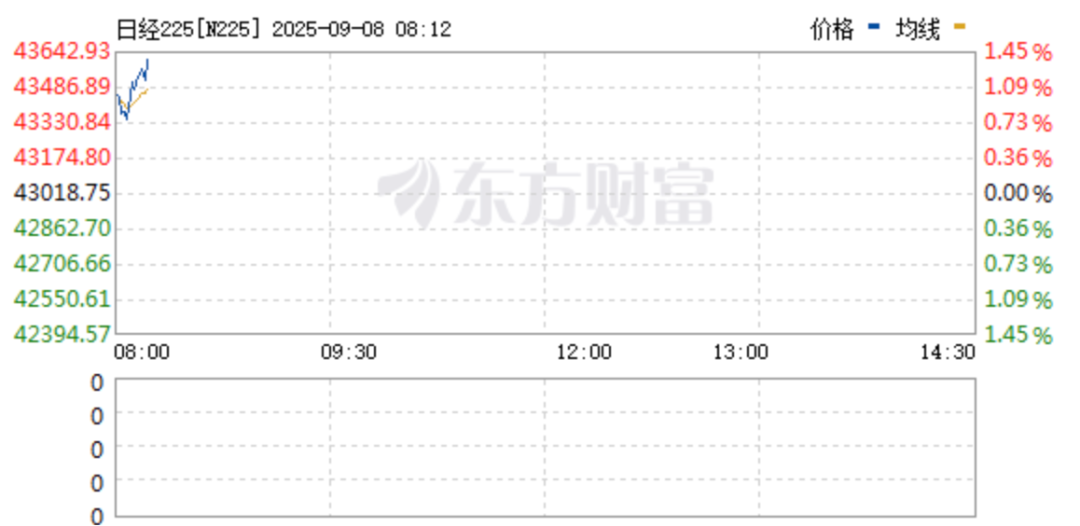
Group 1 - The Japanese stock market opened higher, with the Nikkei 225 index rising by 1% and reaching a peak increase of over 1.4% [1] - The Tokyo Stock Exchange index surpassed the previous high on August 18, reaching a historical peak of 3135.77 points, with an intraday increase of over 0.9% [8] Group 2 - Japanese Prime Minister and Liberal Democratic Party (LDP) President Shigeru Ishiba announced his resignation and will not run for re-election as LDP president [3][4] - Ishiba expressed his responsibility for the party's previous electoral failures and acknowledged the public's distrust in politics, particularly regarding the LDP's "black money" scandal [4] - Analysts suggest that Ishiba's resignation was influenced by significant internal party pressure to prevent further division within the LDP [5] - Potential candidates to succeed Ishiba include prominent figures such as Sanae Takaichi, Yoshihide Suga, and others who previously competed against him [5] - The LDP currently faces a "double minority" situation in both houses of parliament, complicating the selection of a new president and prime minister [6] - Even if a new LDP president is elected, they will encounter significant political challenges, particularly in regaining a majority in the House of Representatives and addressing ongoing issues related to U.S.-Japan tariff agreements [7][9]