
日落条款

Search documents
美伊关键谈判举行,和平的最后机会?
Xin Lang Cai Jing· 2026-02-26 12:29
Group 1 - The core focus of the negotiations between Iran and the U.S. is the nuclear issue, with the third round of indirect talks taking place in Geneva, Switzerland, on the 26th [3] - Both parties have expressed positive signals prior to the negotiations, with Iran stating that "an agreement is within reach" and U.S. officials expressing hope for the talks [4] - The U.S. has introduced a "hard requirement" for any future nuclear agreement, demanding that Iran accept an "indefinite" validity without sunset clauses, contrasting with the 2015 nuclear deal which included sunset provisions [4][5] Group 2 - Iran is expected to make concessions on its nuclear program, potentially reducing its uranium enrichment levels and stockpiles, and may propose a joint venture for civilian uranium enrichment with international oversight [5] - Analysts suggest that the current military buildup by the U.S. in the region, including the deployment of two aircraft carriers, adds pressure to the negotiations and indicates a critical juncture for both sides [6] - The outcome of the negotiations may hinge on three factors: U.S. domestic considerations regarding military action, Iran's resolve against perceived aggression, and the influence of Israel in the negotiations [7][8]

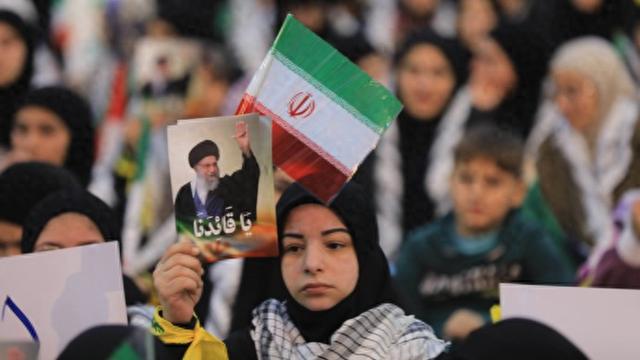
伊美第三轮谈判今启 美方硬性要求遭披露 万斯:伊朗试图重建核计划
Mei Ri Jing Ji Xin Wen· 2026-02-25 23:54
Core Viewpoint - The upcoming negotiations between the U.S. and Iran in Geneva are critical, with the U.S. demanding that any nuclear agreement be "indefinitely valid" without sunset clauses, which could significantly impact the future of Iran's nuclear program and regional stability [1][2]. Group 1: Negotiation Details - Iranian Foreign Minister Zarif and the Iranian negotiating team arrived in Geneva for talks, with U.S. representatives including Special Envoy Hook and Jared Kushner set to participate [1]. - A key U.S. demand is that Iran must accept an agreement that does not include sunset clauses, requiring long-term compliance with nuclear obligations [1]. - The negotiations will address whether Iran can enrich uranium domestically, the handling of existing enriched uranium stocks, and potential future discussions on Iran's missile program and support for regional proxy forces [1]. Group 2: Military Developments - The U.S. has increased military deployments in the Middle East, adding over 150 military aircraft to bases in Europe and the Middle East since the last round of indirect talks [2]. - The U.S. Navy's USS Ford aircraft carrier has been stationed in Souda Bay, Greece, indicating a significant military presence in the region [2]. - In response, Iran's Islamic Revolutionary Guard Corps conducted military exercises in southern coastal areas, showcasing new weaponry and joint tactical operations [2]. Group 3: Sanctions and Political Statements - The U.S. Treasury announced sanctions against over 30 entities, individuals, and oil tankers related to what it describes as Iran's illegal oil sales and missile production [3]. - President Trump reiterated that the U.S. will not allow Iran to possess nuclear weapons, claiming that Iran has developed missiles capable of threatening Europe and U.S. bases abroad [3]. - Iran's Foreign Ministry dismissed U.S. accusations regarding its nuclear program and missile capabilities as "outrageous lies" [3].

美政府给新伊核协议设限内容遭披露:不得设置到期条款
Yang Shi Xin Wen Ke Hu Duan· 2026-02-25 19:14
Core Viewpoint - The U.S. government, under the Trump administration, demands that Iran accept an "indefinite" nuclear agreement without expiration clauses in any future negotiations [1] Group 1: U.S. Position - U.S. Special Envoy for Iran, Wittekov, stated that the prerequisite for negotiations is the absence of "sunset clauses," requiring Iran to comply with the agreement obligations long-term [1] - The current focus of U.S.-Iran negotiations includes whether Iran can conduct uranium enrichment domestically and the handling of its enriched uranium stockpile [1] - U.S. Vice President Pence emphasized that the goal regarding Iran is clear: to prevent Iran from acquiring nuclear weapons, preferring diplomatic solutions while keeping other options available [1] Group 2: Iran's Response - Iranian Foreign Minister Zarif expressed willingness to sign a "better agreement" to ensure that Iran's nuclear program remains peaceful indefinitely, stating that the goal of the current negotiations is to avoid war [1] Group 3: Historical Context - The 2015 nuclear agreement included "sunset clauses," which allowed most restrictions on Iran's nuclear program to expire between 8 to 25 years [1] - Trump criticized these clauses as a significant flaw in the agreement and withdrew from it during his first term [1]
附加新条款后 欧洲议会更接近批准美欧贸易协议
Xin Lang Cai Jing· 2026-02-10 20:07
Core Points - The European Parliament is moving closer to approving a trade agreement with the United States, following adjustments agreed upon by senior lawmakers before a planned vote this month [1][2] Group 1: Trade Agreement Details - The European Parliament's Trade Committee confirmed a vote scheduled for February 24 [1][2] - A sunset clause will be included in the agreement, which states that the agreement will expire in March 2028 unless extended [1][2] - The U.S. will be given six months to reduce the current 50% tariffs on products made with steel and aluminum [1][2] Group 2: Potential Consequences - If the U.S. fails to lower the tariffs on these metal products to 15%, the EU will consider reinstating tariffs on U.S. industrial imports and certain agricultural food products [1][2] Group 3: Political Support - Major political groups, including the center-right European People's Party and the Social Democratic Progressive Alliance, support these amendments [1][2] - The full European Parliament will still need to vote on the amendments, and any changes must be agreed upon in negotiations with member states [1][2]