
美欧贸易协议

Search documents
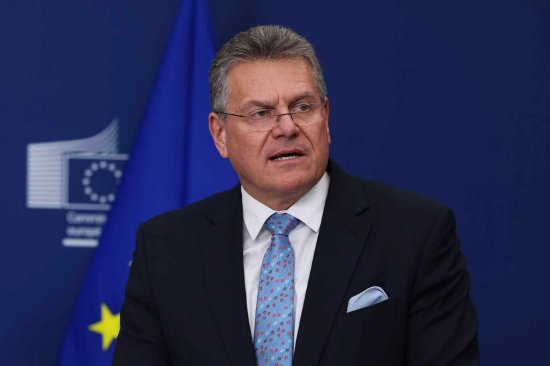
欧盟贸易专员寻求3月批准对美协议 要求美方明确关税安排
Xin Lang Cai Jing· 2026-02-24 17:04
Core Viewpoint - The European Union Trade Commissioner Maros Sefcovic urges EU lawmakers to approve the trade agreement with the United States in March, contingent on receiving clear information regarding President Donald Trump's new tariff plans [1][5]. Group 1 - Sefcovic emphasized that the goal remains to hold a vote at the plenary session in March, provided that more clarity is obtained from the U.S. [1][5]. - Following the U.S. Supreme Court's rejection of Trump's attempt to implement "reciprocal" tariffs globally, EU lawmakers froze the approval process for the EU-U.S. trade agreement [3][7]. - The court ruling and Trump's subsequent announcement of new global tariffs have caused confusion among trade partners and raised questions about existing agreements [3][7]. Group 2 - Sefcovic stated that the Trump administration is committed to maintaining the agreement, having kept close contact with U.S. officials who assured him of their intention to uphold the deal [4][7].

欧盟警告称特朗普的新关税政策破坏了双方贸易协定
Xin Lang Cai Jing· 2026-02-24 09:05
Group 1 - The EU assessment indicates that Trump's new tariff policy will result in higher tariff rates on certain EU export products, such as cheese and specific agricultural goods, exceeding the levels allowed by the US-EU trade agreement [1] - Following the US Supreme Court's rejection of Trump's attempt to impose "reciprocal" tariffs under emergency powers, he announced a new global tariff of 10%, with a threat to increase it to 15% [1] - The EU Trade Committee Chairman Bernd Lange stated that the new global tariffs will be added on top of existing tariffs, leading to cumulative rates that may surpass the agreed 15% cap in the trade agreement [1] Group 2 - Certain products, including butter, plastics, textiles, and chemicals, are expected to face tariffs exceeding the 15% limit under Trump's new tariff plan, which could last up to 150 days [1] - Last summer, Trump reached a trade agreement with EU Commission President Ursula von der Leyen, where most EU exports to the US would incur a 15% tariff, while several US exports to the EU would see tariff cancellations [1] - The EU agreed to this perceived unequal deal to avoid a full-scale trade war with Washington and to maintain US security support, particularly regarding the situation in Ukraine [1]
附加新条款后 欧洲议会更接近批准美欧贸易协议
Xin Lang Cai Jing· 2026-02-10 20:07
Core Points - The European Parliament is moving closer to approving a trade agreement with the United States, following adjustments agreed upon by senior lawmakers before a planned vote this month [1][2] Group 1: Trade Agreement Details - The European Parliament's Trade Committee confirmed a vote scheduled for February 24 [1][2] - A sunset clause will be included in the agreement, which states that the agreement will expire in March 2028 unless extended [1][2] - The U.S. will be given six months to reduce the current 50% tariffs on products made with steel and aluminum [1][2] Group 2: Potential Consequences - If the U.S. fails to lower the tariffs on these metal products to 15%, the EU will consider reinstating tariffs on U.S. industrial imports and certain agricultural food products [1][2] Group 3: Political Support - Major political groups, including the center-right European People's Party and the Social Democratic Progressive Alliance, support these amendments [1][2] - The full European Parliament will still need to vote on the amendments, and any changes must be agreed upon in negotiations with member states [1][2]
美欧日组建关键矿产供应链联盟,外交部:反对任何国家以“小圈子”规则破坏国际经贸秩序
第一财经· 2026-02-05 14:54
Core Viewpoint - The article discusses the establishment of a strategic partnership between the United States, the European Union, and Japan aimed at enhancing the resilience of critical mineral supply chains, thereby improving economic and national security [2][4]. Group 1: Strategic Partnership and Cooperation - The U.S. Trade Representative (USTR) announced that the U.S., EU, and Japan are taking significant steps to enhance the resilience of critical mineral supply chains [2]. - A memorandum of understanding is set to be signed within 30 days to identify cooperation areas, stimulate demand, and diversify supply chains [6][7]. - The partnership aims to prevent supply chain disruptions and promote research and development innovation [6][7]. Group 2: International Relations and Trade Agreements - The EU has proposed this cooperation, coinciding with the resumption of the U.S.-EU trade agreement approval process after previous tensions [4][12]. - The European Parliament is expected to vote on the trade agreement in the upcoming committee meeting on February 24 [15]. - The article highlights the complexity of U.S.-EU relations, emphasizing that despite trade frictions, both parties remain allied under NATO [13][17]. Group 3: Economic Initiatives and Plans - The U.S. has announced a $12 billion mineral reserve plan for domestic manufacturers during crises [11]. - A separate critical mineral action plan between the U.S. and Mexico will prioritize financing for specific mining and processing projects [10]. - The U.S. Department of Defense has signed a $12.5 million agreement to purchase 400 tons of indium for defense reserves [11].
特朗普缓和格陵兰争端后 欧盟重启对美贸易协议审批
Xin Lang Cai Jing· 2026-02-04 16:15
Core Points - The European Parliament has agreed to restart the approval process for the previously frozen US-EU trade agreement after President Donald Trump withdrew his tariff threats related to Greenland [2][4] - The Trade Committee has rescheduled a vote that was previously canceled, with the vote expected to take place on February 24 [5] - Despite the resumption of the approval process, there are still significant doubts among several key lawmakers regarding the trade agreement [5] Summary by Sections - **Trade Agreement Status** - The approval process for the US-EU trade agreement, which was reached last summer but never fully implemented, is being revived [5] - The approval process had been paused last month due to accusations against Trump of using "coercive" actions regarding Greenland [5] - **Political Reactions** - European Parliament President Roberta Metsola expressed hope for the restoration of the approval process following Trump's withdrawal of tariff threats [5] - The Trade Committee Chairman Bernd Lange announced the rescheduled vote on social media [5]
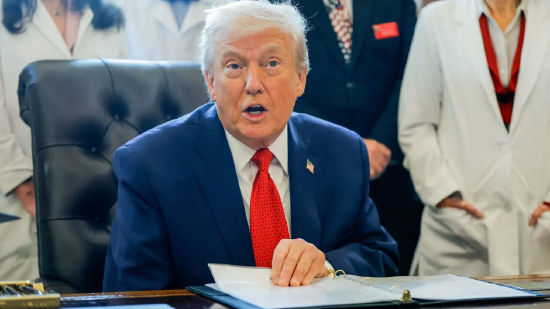
关税威胁突然撤回,欧洲内部陷入分歧:该对美国强硬还是妥协?
Sou Hu Cai Jing· 2026-01-27 14:19
Core Points - The European Parliament has postponed the decision on unfreezing the US-EU trade agreement but hinted that it may pass later [1] - There was a lack of consensus among senior trade lawmakers after a two-and-a-half-hour closed-door meeting regarding whether to put the transatlantic agreement to a vote [1] - The postponement follows President Trump's withdrawal of threats regarding Greenland, which led some EU countries to call for lifting the blockade [1] Group 1 - The Social Democratic Party member, Katharina van Brempt, emphasized the need for clarity on Trump's claims regarding NATO agreements before proceeding with the trade deal [1] - The approval process for the agreement was frozen after Trump threatened tariffs on European allies supporting Greenland [1] - The chair of the European Parliament's International Trade Committee, Bernd Lange, stated that chief negotiators will meet on February 4 to decide on the next steps [1] Group 2 - The center-right European People's Party is eager to "move forward as quickly as possible," believing it will create more stability for businesses [3] - The right-wing European Conservatives and Reformists group, along with the far-right Identity and Democracy group, also support continuing the agreement's progress [3] - In contrast, the Socialists, Renew Europe, and the Greens advocate for a tougher stance, seeking more details on the Greenland agreement due to concerns over Trump's unpredictability [3] Group 3 - Social Democratic member van Brempt expressed the need to understand the European Commission's position on using its strongest trade weapon, the anti-coercion tool [3] - There was discussion among lawmakers about formally requesting the European Commission to initiate the first phase of the anti-coercion tool, but no majority support was formed [3] - A senior trade official from the European Commission indicated a desire to accelerate the agreement's progress following Trump's change in stance [3]
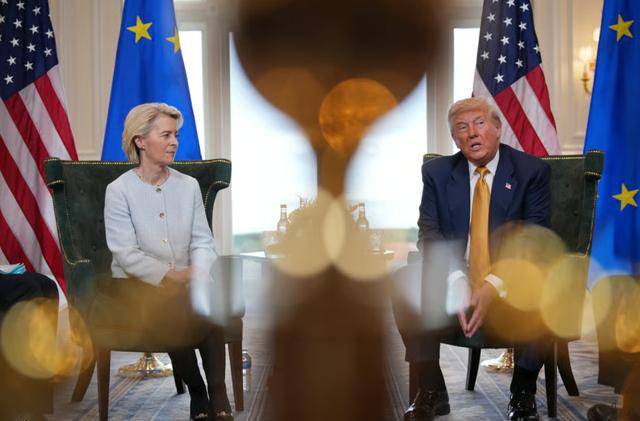
特朗普撤回关税威胁后,欧洲议会拟重启美欧贸易协议表决
Jin Rong Jie· 2026-01-22 19:11
Core Viewpoint - The European Parliament is expected to resume voting procedures on the US-EU trade agreement following President Trump's retraction of his recent tariff threats regarding Greenland [1] Group 1 - European Parliament President Roberta Metsola stated that Trump's change in stance is sufficient to support a vote on the trade agreement [1] - A preliminary vote on the agreement may take place in the coming days [1] - The approval from the Parliament is the final step required for the EU to implement the trade agreement [1]
牛弹琴:欧洲要报复了,开始神操作
Xin Lang Cai Jing· 2026-01-19 00:26
Group 1 - The core viewpoint of the article is that Europe is compelled to retaliate against the United States due to pressure, proposing three strong measures [3][36] - The first measure proposed by French President Macron is to activate the EU's "anti-coercion tool," which would restrict American goods from entering the EU market and potentially target American tech giants [3][36] - The second measure involves suspending the approval of a trade agreement reached last July, which was favorable to the U.S. as it included tariff reductions on U.S. industrial goods while maintaining a 15% tariff on EU products like cars and pharmaceuticals [3][36] - The third measure includes creating a retaliation list totaling approximately €93 billion, which would be implemented if the U.S. raises tariffs [3][36] Group 2 - The article suggests that while these measures appear strong, their execution remains uncertain, as the EU's response is primarily composed of statements, phone calls, and meetings [4][37] - European leaders have issued numerous statements calling for rationality from the U.S. and showcasing European unity, particularly in response to U.S. actions in the Arctic [4][37][39] - The article highlights that the EU's military response involved only 37 soldiers from seven countries participating in a military exercise in Greenland, indicating a lack of substantial military commitment [49][51][61] Group 3 - The article reflects on the internal divisions within Europe, noting that different countries have varying stances on how to respond to U.S. pressure, with some advocating for a strong defense of European sovereignty while others lean towards appeasement [55][59][60] - The commentary suggests that the current geopolitical situation has made Russian President Putin appear to be in a favorable position, as the tensions between the U.S. and Europe could legitimize his actions in Ukraine [55][56] - The article concludes by questioning whether Europe can effectively stand up to the U.S., given the apparent disunity and lack of decisive action among European nations [64][66]
八国被威胁加征关税,发声明警告“恶性循环”,欧洲愤怒回应美国“勒索”
Huan Qiu Shi Bao· 2026-01-18 22:51
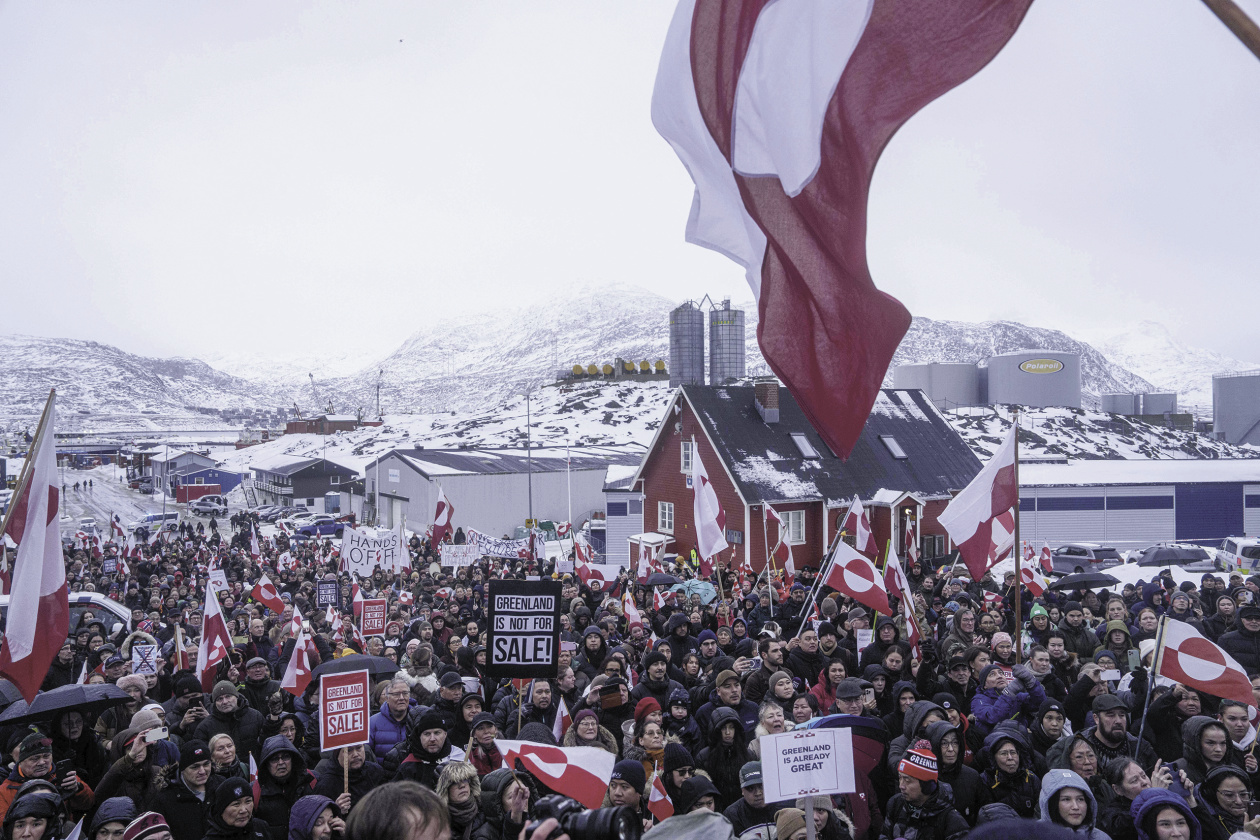
Core Viewpoint - The article discusses the escalating tensions between the United States and European countries over President Trump's threat to impose tariffs on imports from Denmark and seven other European nations, linked to the controversial idea of purchasing Greenland. This has led to widespread condemnation from European leaders and a potential shift in transatlantic relations. Group 1: U.S. Tariff Announcement - On February 1, the U.S. will impose a 10% tariff on imports from Denmark, Norway, Sweden, France, Germany, the UK, the Netherlands, and Finland, increasing to 25% on June 1 unless an agreement is reached regarding the purchase of Greenland [1][3] - Trump's actions are described as an attempt to "control" Greenland, significantly heightening existing transatlantic tensions [3][7] Group 2: European Leaders' Reactions - European leaders, including UK Prime Minister Starmer and French President Macron, have expressed strong opposition to the tariffs, labeling them as unacceptable and a form of coercion [1][4] - A joint statement from the eight affected European countries condemned the tariff threats as damaging to transatlantic relations and potentially leading to a dangerous cycle of retaliation [1][4] Group 3: Domestic U.S. Criticism - Trump's tariff threats have also drawn criticism from within the U.S., with Senate Democratic leader Schumer calling the actions "unbelievable" and suggesting legislative measures to counter them [5] - Some Republican senators have also expressed shock, indicating that the tariffs could alienate key European allies and undermine U.S. national security [5] Group 4: Public Protests in Denmark and Greenland - Protests erupted in Denmark and Greenland against the U.S. plans, with thousands demonstrating in Copenhagen and Nuuk, emphasizing their rejection of any sale of Greenland [6][7] Group 5: Potential for Trade War - Analysts suggest that the current situation could lead to a significant deterioration in U.S.-EU trade relations, with the possibility of a trade war looming if diplomatic solutions are not found [8][9] - The European Parliament is reportedly less inclined to support existing trade agreements with the U.S. due to the escalating tensions, indicating a shift in strategy towards a more confrontational approach [9][10]
欧洲指责特朗普引发“危险恶性循环”,将面临哪些艰难抉择?
Xin Lang Cai Jing· 2026-01-18 06:06
Core Viewpoint - The U.S. President Trump announced a 10% tariff on goods imported from Denmark, Norway, Sweden, France, Germany, the UK, the Netherlands, and Finland starting February 1, which will increase to 25% on June 1 unless an agreement is reached regarding the U.S. "complete and total purchase of Greenland" [1] Group 1: U.S. Tariff Announcement - The tariff is aimed at countries supporting Greenland, with a significant increase planned if negotiations do not proceed [1] - The European Commission and European Council leaders expressed that these tariffs could damage transatlantic relations and lead to a dangerous cycle [1][3] Group 2: European Response - European leaders, including the UK Prime Minister and French President, condemned the tariffs, emphasizing the sovereignty of Greenland and the inappropriateness of imposing tariffs on allies [3] - The European People's Party expressed doubts about the approval of the U.S.-EU trade agreement due to Trump's actions regarding Greenland [4] Group 3: Military and Political Implications - Several European countries have sent troops to Greenland for military exercises, signaling support for Denmark, although the troop numbers are limited [1] - Analysts suggest that if the U.S. pursues aggressive actions regarding Greenland, it could fracture NATO relations, forcing European nations into difficult choices [3][4] Group 4: Domestic U.S. Reactions - U.S. lawmakers from both parties criticized Trump's tariff decision, labeling it as "foolish policy" that could harm U.S. interests and alliances [5] - A poll indicated that less than 20% of Americans support Trump's plan to purchase Greenland, with only 4% favoring the use of force [5][6]