
智慧建造管理平台

Search documents
产经观察·收官之际看工程|为世界屋脊拓展新空港
Ren Min Ri Bao· 2025-11-19 03:22
Core Insights - The expansion of Xining Caojiabao International Airport significantly enhances its capacity and operational efficiency, addressing previous limitations in passenger and cargo transport [10][11]. Construction Challenges and Innovations - The construction faced extreme environmental conditions, including severe freeze-thaw cycles and temperature variations, leading to innovative engineering solutions [2][3]. - The airport's expansion area exceeds 440,000 square meters, with a fill volume of 25.2 million cubic meters, requiring advanced techniques to ensure stability and safety [3][4]. - The construction team utilized a "special slurry" method for pile foundation stability, addressing complex geological conditions [4]. Technological Integration - The project employed Building Information Modeling (BIM), Geographic Information Systems (GIS), and IoT technologies to streamline construction management and optimize project timelines [5]. - The smart management platform developed during the project is expected to aid in future airport maintenance and operations [5]. Environmental and Passenger Experience Enhancements - The new terminal incorporates sustainable design features, such as a 700-square-meter skylight and a rainwater collection system, promoting energy efficiency and green practices [7][8]. - Passenger experience is improved with advanced self-service technologies, including facial recognition for boarding, enhancing efficiency and convenience [8][9]. Economic Impact - The expansion is projected to increase the airport's annual passenger capacity to 21 million and daily flight operations by 300, meeting future transportation demands [10][12]. - The airport's role as a logistics hub is emphasized, with a significant increase in cargo capacity from 40,000 tons to 120,000 tons annually, facilitating the export of local agricultural products [12].
为世界屋脊拓展新空港(产经观察·收官之际看工程)
Ren Min Ri Bao· 2025-11-18 23:11
走进西宁曹家堡国际机场(以下简称"西宁机场")航站楼,来往旅客熙熙攘攘,80个值机柜台、26条安 检通道秩序井然。 今年8月,包括新建三号航站楼、综合交通中心、站坪和货站等在内的西宁机场三期扩建工程投运。这 座在世界屋脊上扩建的新空港攻克了哪些难题?为旅客带来哪些新体验?对推动经济发展有哪些重要意 义?记者进行了采访。 直面极度冻融、极端温差等严苛考验,工程建设取得一系列新突破 青海海东市青沙山一角,航空摄影爱好者马正伟时常端着相机远眺。透过镜头,西宁机场三期扩建工程 尽收眼底。"远看新建的三号航站楼,像展翅的'高原精灵'黑颈鹤,银白色屋顶如同耀眼的冰川,三条 指廊就像三江汇聚,十分壮观!"马正伟兴奋地说。从施工、建成到投运,他拍下的一帧帧影像吸引数 十万网友点赞。 机场扩建,工程繁琐。独特的自然环境、复杂的基建任务,加上不停航施工等要求,给西宁机场三期扩 建工程带来诸多挑战。建设团队直面极度冻融、极端温差等严苛考验,取得一系列新突破。 ——在"干透的海绵"上建道面。 机场飞行区扩建面积超44万平方米,难点在于大部分地方需要填土。青海省机场建设指挥部工程部副总 经理席昊指着平整的道面解释说,施工前,这里最大高 ...

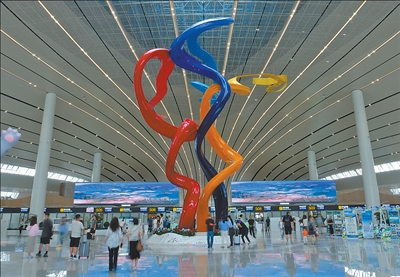
西宁机场三期扩建工程助推西北地区开放发展 为世界屋脊拓展新空港(产经观察·收官之际看工程)
Ren Min Ri Bao· 2025-11-18 23:01
Core Insights - The expansion of Xining Caojiabao International Airport, including the new Terminal 3, is aimed at enhancing passenger experience and boosting economic development in the region [1][10]. Engineering Challenges and Innovations - The construction faced severe challenges due to extreme temperature variations and complex geological conditions, leading to innovative solutions such as controlled water injection and vibration compaction techniques [2][3][4]. - The project involved the installation of approximately 2,300 piles, with depths exceeding 60 meters, utilizing specialized methods to ensure stability and safety [4][5]. Technological Integration - A smart construction management platform was developed, integrating BIM, GIS, and IoT technologies to optimize project management and resource allocation, resulting in significant time and cost savings [5]. Environmental and Service Enhancements - The new terminal emphasizes green development, featuring a large skylight for natural lighting, rainwater harvesting systems, and energy-efficient climate control [6][7]. - Passenger convenience has been significantly improved with the introduction of self-service verification gates and facial recognition boarding processes, enhancing the overall travel experience [8][9]. Capacity and Economic Impact - The expansion has increased the airport's annual passenger capacity to 21 million and daily flight operations by an average of 300, addressing previous limitations and supporting future growth [10][11]. - The airport's cargo capacity has also expanded from 40,000 tons to 120,000 tons annually, facilitating the export of local agricultural products and boosting regional economic development [12].