智能互联功能

Search documents
行业聚焦:全球无人机电池充电器行业头部生产商市场份额及排名调查
QYResearch· 2026-01-16 03:24
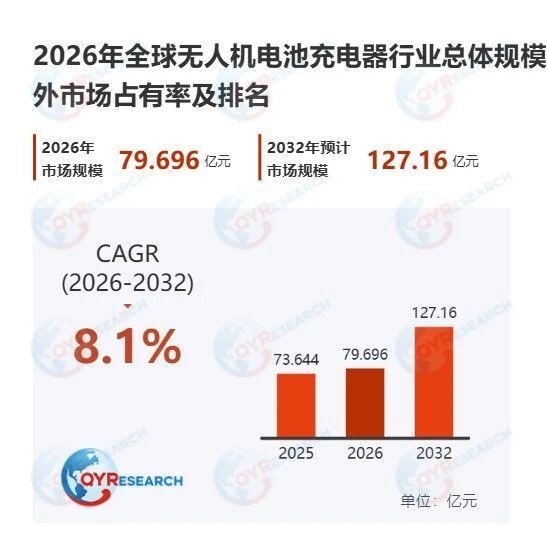
Core Viewpoint - The global drone battery charger market is projected to reach $1.87 billion by 2032, with a compound annual growth rate (CAGR) of 8.1% in the coming years [3]. Market Size and Industry Landscape - The global drone battery charger market is expected to grow significantly, reaching $1.87 billion by 2032, driven by increasing demand for drone applications [3]. - Major manufacturers in the drone battery charger market include DJI, YUNEEC, Shenzhen Grepow Battery Co., Ltd., and others, primarily concentrated in East Asia, North America, and Western Europe [5][6]. Industry Chain Analysis - The industry chain includes upstream component suppliers, midstream manufacturers, and downstream users, with specific roles such as charging control chip manufacturers and software developers [7]. - Upstream suppliers provide essential components like charging control chips and PCB circuit boards, while midstream manufacturers focus on charger assembly and integration [7]. Industry Policy Analysis - Recent regulations on lithium battery transport and safety compliance, such as the UN 38.3 rule, impact charger design and packaging to reduce logistics delays and compliance risks [8]. - The EU Battery Regulation (EU) 2023/1542 will be implemented in phases starting February 2024, emphasizing sustainability and compliance in the battery and charger ecosystem [8]. Industry Development Trends - There is a trend towards high-efficiency fast charging technology, aiming to reduce charging times by over 40% and optimize energy conversion efficiency [10]. - Customization for specific user needs is becoming prevalent, with designs focusing on portability for personal use and multi-port charging stations for commercial applications [10][11]. Industry Development Opportunities - Compliance-driven demand for certified chargers is increasing, particularly among commercial drone operators and search and rescue teams [12]. - The growth of niche markets driven by specific user needs, such as portable chargers for personal drones and robust chargers for emergency response, presents significant opportunities [12]. Challenges in the Industry - The lack of standardization in battery specifications leads to high R&D costs for manufacturers aiming for compatibility across various drone models [14]. - Cost pressures from low-cost, unregulated chargers challenge the market for compliant, high-quality products, impacting profit margins for established companies [14].