智能纺织

Search documents
慈星股份携多项前沿成果重磅登场第二十届上海国际纺织工业展览会 为纺织产业高质量发展注入新动能
Zheng Quan Ri Bao Zhi Sheng· 2025-12-17 11:12
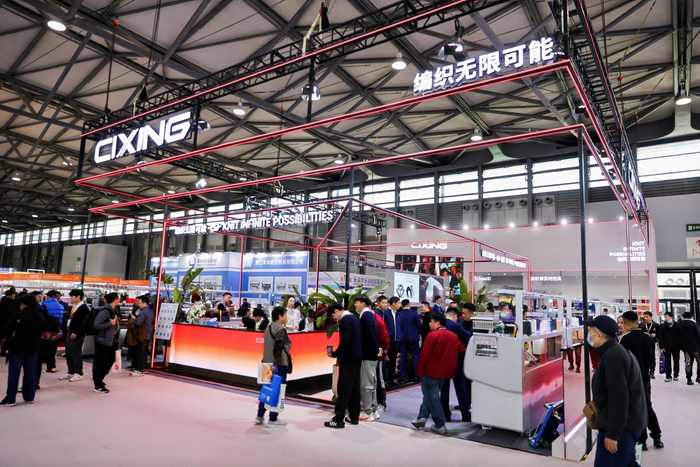
Core Viewpoint - The 20th Shanghai International Textile Industry Exhibition (ShanghaiTex2025) will open on December 16, 2025, in Shanghai, focusing on the deep integration of textile technology and digital innovation [1] Group 1: Company Highlights - Ningbo Cixing Co., Ltd. (Cixing) and its subsidiary STEIGER showcased their advanced knitting technology under the theme "Weaving Infinite Possibilities," attracting significant attention at the exhibition [1] - Cixing presented a complete range of knitting machine solutions, from large-scale production to high-end flexible manufacturing, emphasizing its leadership in traditional markets with innovative products [3] - The company demonstrated real-time equipment performance, showcasing over 30 years of expertise in computer knitting technology, providing a reliable manufacturing platform for various innovative applications [3] Group 2: Innovative Applications - The "Weaving Infinite Possibilities Innovation Knitting Zone" highlighted the company's forward-looking layout in cross-industry applications, extending from traditional clothing to high-tech applications [5][7] - Key innovations included lightweight 3D components for aerospace applications, smart health fabrics with sensing and temperature control functions, and industrial-grade fabrics for specialized protective and smart construction scenarios [8][10] - Functional fibers and fabrics for sports health were developed in collaboration with Qingdao University, expanding new application scenarios in sports knitting and technology knitting [12] Group 3: Market Engagement - The exhibition attracted international clients from Germany, Turkey, Bangladesh, and Vietnam, as well as representatives from major domestic textile regions, facilitating in-depth discussions on technology cooperation and market trends [12] - A representative from a knitwear company praised Cixing's innovation for opening new imaginative spaces within the industry, highlighting the company's impact beyond machine performance [12] Group 4: Future Development - Cixing's Chairman, Sun Pingfan, emphasized the company's commitment to increasing investment in R&D, particularly in application breakthroughs, as the range of knitted products continues to expand [14] - The company is actively penetrating niche markets such as automotive, medical, and smart wearable applications, with a focus on intelligent textiles as a core direction for future development [16] - Cixing plans to enhance its investment in AI and knitting technology to reduce labor in production processes and achieve greater automation, contributing to high-quality development in the textile industry [16]


趋势研判!2025年中国纺织面料行业发展现状及发展趋势分析:纺织面料的发展将更注重功能性和环保性,新型纤维和技术的应用将不断扩大[图]
Chan Ye Xin Xi Wang· 2025-06-30 01:28
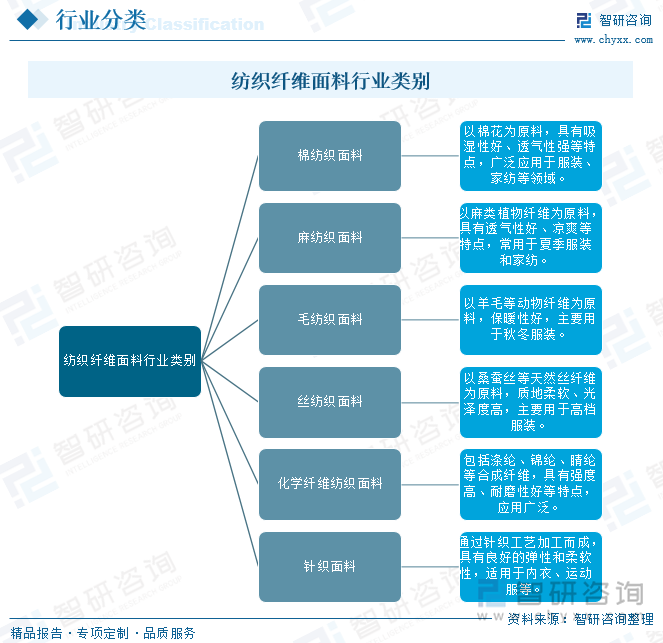
Core Insights - The textile fiber fabric industry is crucial for manufacturing fabrics and garments, divided into natural fiber fabrics and chemical fiber fabrics [3][5] - In 2024, China's cotton textile industry is projected to generate revenue of 1,141.86 billion yuan, accounting for 61.40% of the textile industry, while the chemical textile industry is expected to generate 247.88 billion yuan, representing 13.33% [6][8] - The development of the textile fabric industry is increasingly focused on functionality and environmental sustainability, with the application of new fibers and technologies expanding [22] Industry Definition and Classification - Textile fiber fabrics are elongated materials used for making fabrics and garments, categorized into natural fiber fabrics and chemical fiber fabrics [3] - Natural fibers are favored for their environmental friendliness and comfort, while chemical fibers are essential for their strength and durability [3] Current Development Status - The textile industry has evolved significantly since the Neolithic era, reflecting advancements in technology, art, culture, and economy [5] - The industrial revolution greatly enhanced production efficiency and quality, with cotton becoming a key textile raw material [5] - The 21st century presents new challenges and opportunities, emphasizing sustainable practices and the emergence of innovative materials like nanofibers and smart textiles [5] Industry Chain Structure - The textile fabric industry chain consists of upstream natural fibers (cotton, linen, silk, wool) and chemical fibers (polyester, nylon), midstream fabric production, and downstream applications in clothing, home textiles, and industrial textiles [10] Market Size and Growth - The market size for industrial textiles in China is projected to reach 332.44 billion yuan in 2024, with total industry output valued at 597.74 billion yuan [14] - The silk industry is expected to generate approximately 76.59 billion yuan in revenue in 2024, with a year-on-year growth of 5.75% [12] Competitive Landscape - The textile fabric industry in China is characterized by a diverse and fragmented competitive landscape, with key players including Zhejiang Xin'ao Textile Co., Ltd., Hengli Petrochemical Co., Ltd., and others [16] - Major companies are focusing on product innovation and sustainability, with significant investments in technology and brand development [18] Future Trends - The development of textile fabrics is increasingly influenced by new materials and technologies, emphasizing diversification, functionality, lightweight, and environmental sustainability [22] - The industry is expected to continue evolving to meet consumer demands for high-quality, eco-friendly products [22]