
最优饲草种植带精准识别

Search documents
【科技日报】“AI+遥感”精准量化北方干旱流域饲草种植潜力
Ke Ji Ri Bao· 2025-09-30 01:20
Core Insights - The research team from the Chinese Academy of Sciences has developed a new method that integrates artificial intelligence and remote sensing technology to identify optimal grass planting zones in arid and semi-arid regions of northern China, providing scientific support for ecological protection and high-quality agricultural development in the Yellow River basin [3][4] Group 1: Research Methodology - The new framework combines satellite remote sensing, ecological hydrological models, and ground measurement data, achieving over 90% accuracy in key indicators such as irrigation water usage, vegetation productivity, and soil organic carbon [3] - The method significantly reduces regional bias by over 40%, with the accuracy of optimal grass zone identification exceeding 85% [3] Group 2: Innovation and Application - The innovation lies in transforming grass planting decisions into a multi-dimensional spatial optimization problem, balancing water resource consumption, soil carbon sequestration benefits, and grass production output [4] - The system generates a visual map that clearly indicates the most suitable plots for grass planting, facilitating precise decision-making and resource allocation for management departments [4] - The technology is cost-effective and highly adaptable, with potential applications not only in the Yellow River region but also in other arid areas such as the Inner Mongolia-Ningxia ecological transition zone and the Hexi Corridor, offering valuable insights for similar ecological and agricultural challenges globally [4]

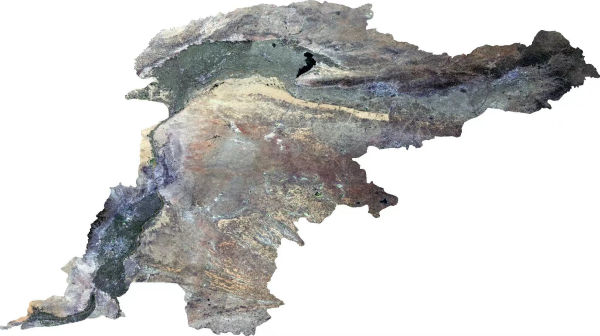
“AI+遥感”精准量化北方干旱流域饲草种植潜力
Ke Ji Ri Bao· 2025-09-29 05:57
Core Insights - The research team at the Chinese Academy of Sciences' Aerospace Information Innovation Research Institute has developed a new method that integrates artificial intelligence and remote sensing technology to identify optimal grass planting zones in northern China's arid and semi-arid regions, providing scientific support for ecological protection and high-quality agricultural development in the Yellow River basin [1][3] Group 1: Research and Methodology - The new method addresses the dual pressures of water resource scarcity and food security in northern China's arid regions, which have long struggled with ecological protection and land productivity enhancement [1] - Traditional assessment methods relied heavily on extensive ground sampling and focused on single indicators, making precise and efficient regional planning challenging [1] - The research team constructed a cross-data source integration framework that effectively combines satellite remote sensing, ecological hydrological models, and ground measurement data [1] - Advanced artificial intelligence techniques, such as ensemble learning, were employed to accurately reverse key indicators like irrigation water usage, vegetation productivity, and soil organic carbon, achieving a reversal accuracy exceeding 90% and eliminating over 40% of regional bias [1] Group 2: Practical Applications and Future Prospects - The system can automatically generate a visual representation indicating which plots are most suitable for grass planting and yield the highest input-output benefits, facilitating precise decision-making and resource allocation for management departments [3] - The technology is cost-effective and highly adaptable, not only applicable to the Yellow River middle reaches but also expected to be implemented in other typical arid areas such as the Inner Mongolia-Ningxia ecological transition zone and the Hexi Corridor [3] - The method holds significant reference value for other regions globally facing similar ecological and agricultural challenges [3]
