机器人嗅觉

Search documents
扫人类嗅觉盲区!机器人电子鼻已能嗅出生命、闻诊疾病|npj Robotics
机器人大讲堂· 2026-01-22 09:12
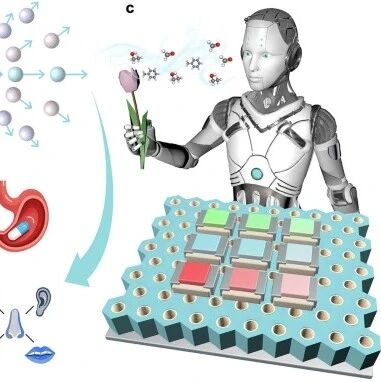
Core Insights - The integration of electronic noses with robotics is advancing, enabling robots to detect odors and enhancing their capabilities in various fields such as search and rescue, healthcare, environmental monitoring, and household services [1][21]. Group 1: Importance of Robotic Olfaction - Olfaction is one of the oldest senses and a sophisticated chemical detection system, with humans able to identify thousands of odors through approximately 400 types of olfactory receptors [3]. - Human olfaction has limitations, being subjective and influenced by physiological and psychological states, and unable to detect odorless but harmful gases [3]. - There is a pressing need for technology that can replicate or exceed human olfactory capabilities, particularly in complex environments for applications like search and rescue, environmental monitoring, and medical diagnostics [3]. Group 2: Mechanism of Electronic Noses - Electronic noses mimic the human nose's logic to capture odors and utilize complex algorithms to decode and identify chemical signals [4]. - Since its inception in 1982, electronic noses have employed various gas sensors, including metal oxide semiconductors, electrochemical sensors, optical sensors, and field-effect transistors, each suited for different applications [6]. Group 3: Types of Gas Sensors - Metal oxide semiconductor gas sensors are ideal for robotic electronic noses due to their sensitivity, cost-effectiveness, and compactness, although they face stability issues [7]. - Electrochemical gas sensors are crucial for high selectivity detection, suitable for portable systems, but their lifespan and environmental adaptability need improvement [8]. - Optical gas sensors are known for high selectivity and stability, with ongoing research aimed at miniaturization and multi-gas detection capabilities [11]. - Field-effect transistor sensors represent a step towards intelligent olfaction, with high sensitivity and seamless integration with robotic systems [12]. Group 4: Gas Source Localization Algorithms - Effective odor tracking requires advanced algorithms, inspired by natural behaviors, categorized into biomimetic methods, multi-robot collaboration, and Bayesian probability strategies [15]. - Biomimetic algorithms, such as those based on moths' flight patterns, have shown a success rate of 73.3% in low airflow environments [17]. - Multi-robot collaboration enhances efficiency and reliability in gas source localization through shared information and optimized search strategies [18]. - Bayesian models provide reasoning capabilities, allowing robots to infer the most likely location of odor sources based on incomplete sensory information [18]. Group 5: Applications of Robotic Olfaction - In search and rescue operations, robots equipped with electronic noses can detect human scents to locate trapped individuals, minimizing risks to rescuers [22]. - Drones and ground robots can create 3D maps of gas distributions, monitoring leaks and pollution in real-time [23]. - In healthcare, wearable devices and micro electronic noses can monitor respiratory conditions and assist in non-invasive diagnostics [26]. - Future household robots with electronic noses could detect gas leaks, food spoilage, and adjust home environments based on odor detection [28]. Group 6: Challenges and Future Directions - Despite advancements, robotic olfaction faces challenges in sensor sensitivity, selectivity, and stability, often presenting a trade-off [29]. - Real-world complexities such as temperature variations, humidity, and sensor aging can compromise system performance [29]. - Future breakthroughs may arise from interdisciplinary approaches, including nanomaterials for gas-sensitive materials, neuromorphic computing for information processing, and flexible electronics for sensor integration [29].