机场管理转型

Search documents
锡林浩特机场:翱翔草原天路 擘画空港新篇
Zhong Guo Min Hang Wang· 2026-01-26 07:58
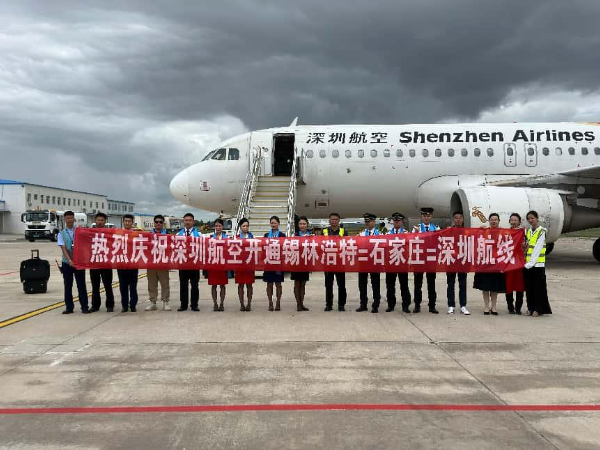
Core Viewpoint - The development of Xilin Hot Airport exemplifies the enhancement of air travel accessibility in Inner Mongolia, significantly improving the travel experience for local residents and contributing to the region's economic growth [1][3]. Group 1: Airport Development and Connectivity - Xilin Hot Airport has successfully established a "支支通" (branch-to-branch) air route network, addressing the long-standing travel challenges faced by local residents [3]. - The airport opened its first "支支通" route in September 2021, with a low ticket price of approximately 200 yuan, achieving an outbound passenger load factor exceeding 86% within the first ten days [3]. - By the end of 2023, the airport had opened a total of 21 "支支通" routes, accounting for 42.8% of the total routes in the region, solidifying its position as the leading branch airport in Inner Mongolia [3]. Group 2: Passenger Growth and Performance - In 2023, Xilin Hot Airport recorded a total of 81,181 transit passengers, representing a 956.42% increase compared to 2019, and successfully achieved the "百万空港" (million airport) target [3]. - The airport aims to handle 1.12 million passengers in 2024 and 1.185 million in 2025, with a projected growth rate of 5.8%, making it the fastest-growing million-level airport in the region [3][6]. Group 3: Safety and Service Enhancements - The airport has integrated safety and development, establishing a "党建+安全" (Party building + safety) model to enhance safety management [8]. - Service quality has been prioritized, with initiatives such as the "心心相锡" (Heart-to-Heart Service) brand, which empowers frontline staff to respond promptly to passenger needs [9]. - The airport achieved a passenger satisfaction score of over 4.75 for three consecutive years, reflecting its commitment to service excellence [9]. Group 4: Management Transformation - Xilin Hot Airport serves as a pilot for management transformation within the Inner Mongolia Airport Group, focusing on professional operations and market-oriented management [13]. - The airport has implemented a three-dimensional assessment mechanism that evaluates both hard and soft indicators, ensuring service quality while controlling labor costs [14]. - By 2025, the airport aims to improve labor productivity by 35.86% compared to 2020, while also reducing total losses by 5.6974 million yuan [14]. Group 5: Future Development Plans - The "十五五" (15th Five-Year Plan) outlines a clear path for high-quality development, emphasizing safety, service, innovation, and collaboration with other regional airports [16][17]. - The airport is set to expand its network further, connecting more regions and enhancing travel convenience for local residents [17].