机票“退改签”诈骗

Search documents
机票“退改签”诈骗,常见的陷阱套路有哪些?
Qi Lu Wan Bao· 2025-10-08 14:58
Core Viewpoint - The article highlights the rise of ticket refund and change scams during the holiday season, where fraudsters exploit travelers' urgency and anxiety to deceive them into providing personal and financial information, leading to significant financial losses [1][11]. Group 1: Scam Tactics - Fraudsters impersonate airport staff and provide accurate flight information to gain the victim's trust, claiming they can assist with refunds or compensation [3][5]. - Scammers create a sense of urgency by claiming flight delays or issues with travel insurance, prompting victims to act quickly without verifying the legitimacy of the call [10][11]. - Common tactics include using third-party booking platforms to create confusion, making it difficult for victims to verify the authenticity of the claims [11][13]. Group 2: Victim Experiences - A victim named Xu received a call from someone claiming to be an airport staff member, who guided him to provide sensitive information, resulting in a loss of over 29,000 yuan [5]. - Another victim, a recent graduate, was almost scammed when contacted by a fraudster who accurately recited her flight details and claimed there were issues with her travel insurance [6][10]. Group 3: Prevention and Response - The article emphasizes the importance of verifying the source of refund and change requests, advising travelers to contact the platform where they purchased their tickets for assistance [14][16]. - In case of suspected fraud, victims are urged to immediately stop communication with the scammer, freeze their bank accounts, and report the incident to the police with detailed information [14][16].

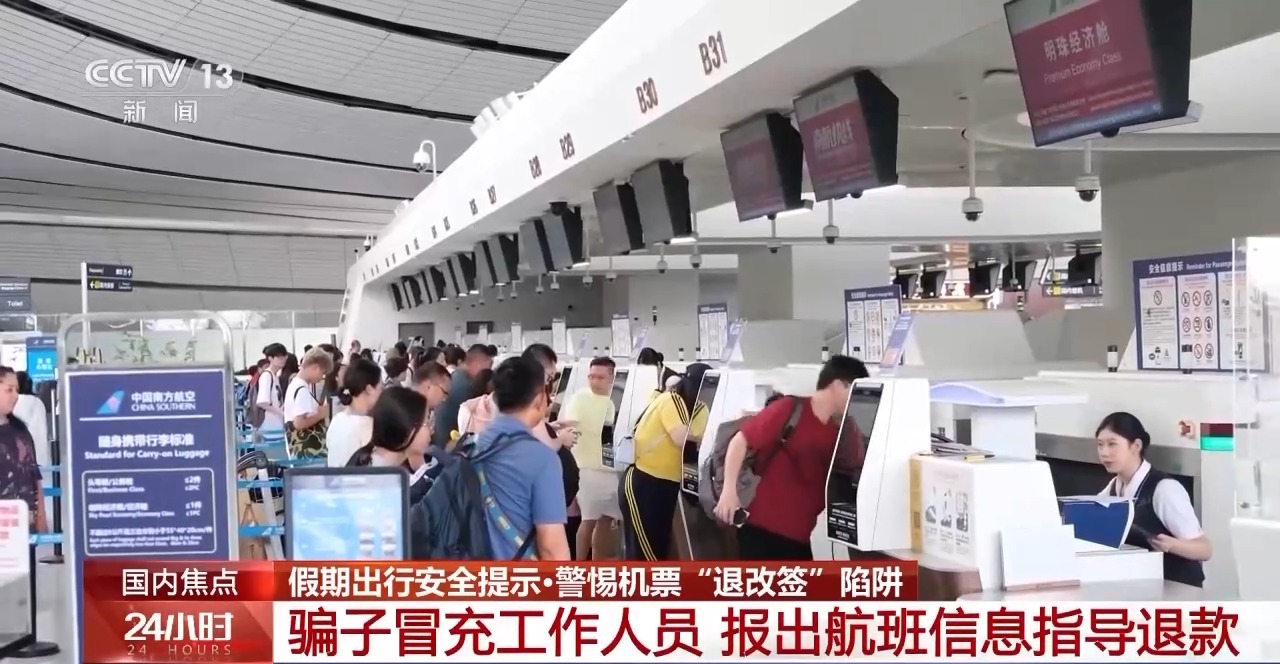
机票“退改签”诈骗 常见的陷阱套路有哪些?
Yang Shi Wang· 2025-10-07 22:33
Core Viewpoint - The article highlights the rise of ticket refund and change scams targeting travelers during the holiday season, emphasizing the tactics used by fraudsters to exploit travelers' urgency and anxiety [1][12]. Group 1: Scam Tactics - Fraudsters impersonate airport staff and provide accurate flight information to gain trust, claiming to assist with refunds and compensation [3][5]. - Scammers create a sense of urgency by claiming flight delays or cancellations, prompting travelers to act quickly without verifying the information [12][14]. - They often use psychological tactics, such as fear of credit score impacts or account freezes, to manipulate victims into compliance [10][12]. Group 2: Case Studies - A victim named Xu was scammed out of over 29,000 yuan after being misled into providing personal information and bank details through a fake website [5][6]. - Another individual, referred to as Xiao Tan, was nearly victimized when contacted by a scammer who accurately recited her flight details and claimed issues with her travel insurance [8][10]. Group 3: Prevention and Response - Authorities recommend that travelers verify refund and change requests through the original booking platform, as refunds should be processed back to the original payment method [15][17]. - In case of suspected fraud, immediate actions include freezing bank accounts and reporting to law enforcement with detailed information about the incident [17].
航班延误赔300?小心骗子“共享”你的存款!
Bei Jing Ri Bao Ke Hu Duan· 2025-08-13 08:18
Core Viewpoint - The article highlights the increasing prevalence of airline ticket "refund and change" scams, particularly during the summer travel season, where fraudsters exploit travelers' vulnerabilities by posing as airline staff and tricking them into providing sensitive information and money [1][12]. Group 1: Scam Techniques - The article outlines various methods used by scammers, including screen sharing to capture sensitive information, fake transfer requests, and phishing links that lead to fraudulent websites [14][15][19]. - Scammers often claim to assist with ticket changes or compensation, leading victims to download software for screen sharing, allowing the fraudsters to see and capture bank details [15][17]. - Another common tactic involves convincing victims to transfer money under the pretense of verifying their accounts, only to create further excuses for additional payments [19]. Group 2: Victim Experiences - The article describes specific cases, such as Mr. Xu, who lost over 29,000 yuan after being misled by a scammer posing as an airport staff member [6][12]. - Another victim, a recent graduate named Xiao Tan, was nearly scammed when contacted by someone who accurately knew his flight details, leading him to believe the call was legitimate [11][12]. - The police intervened in Xiao Tan's case, highlighting the importance of immediate action when potential scams are detected [9][11]. Group 3: Prevention and Response - Authorities emphasize the need for travelers to verify the legitimacy of refund and change services by contacting the platform where the ticket was purchased [20][22]. - If a scam is suspected, victims are advised to cease communication with the fraudster, exit any suspicious websites, and report the incident to the police [22][24]. - The article also mentions proactive measures taken by airport police to distribute anti-fraud materials and conduct awareness campaigns to educate travelers [26][28].