权力关系

Search documents
解释与分析隐于图下的事实
Xin Lang Cai Jing· 2026-02-08 21:39
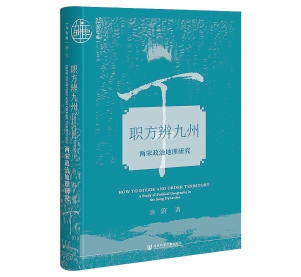
Core Insights - The article discusses the evolution of political geography in Chinese history, particularly focusing on the transition from historical geography to political geography, emphasizing the importance of accurately representing political divisions in historical maps [2][3]. Group 1: Historical Context and Methodology - The research on political geography began in the late 1970s, aiming to accurately depict the dynamic changes in administrative divisions during the Western Han dynasty, highlighting the relationship between central authority and local governance [3]. - The author, Yu Wei, emphasizes the significance of the Song dynasty as a critical period for understanding the complexities of administrative structures and power dynamics, particularly the transition back to a three-tier system from a two-tier system [4]. Group 2: Focus of Research - Yu Wei's work diverges from established studies on county-level administrative changes, instead concentrating on the powers and relationships of higher-level administrative regions and quasi-administrative entities, which play crucial roles in the flow of power between the court and local governance [5][6]. - The research highlights the intricate relationships and operational mechanisms within administrative organizations, such as the monitoring system of regional officials, which reflects a creative approach to understanding governance [5][6]. Group 3: Broader Implications - The author’s perspective encourages a comprehensive view of political geography, suggesting that future research could encompass a broader historical context, including various dynasties and their interrelations, to uncover more significant insights into historical political geography [7].