
权力监督制约

Search documents
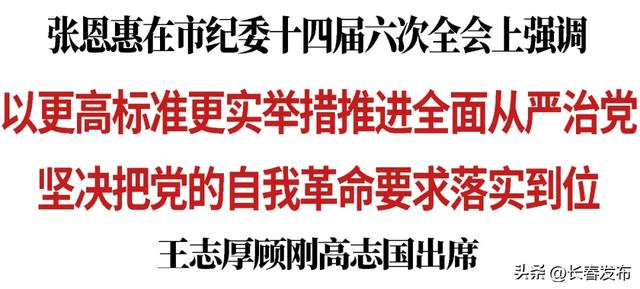
中国共产党长春市第十四届纪律检查委员会第六次全体会议召开
Xin Lang Cai Jing· 2026-01-21 11:18
Core Viewpoint - The meeting emphasized the importance of implementing the spirit of the 20th National Congress of the Communist Party of China and the decisions made by the Central Commission for Discipline Inspection, aiming to strengthen party governance and ensure high-quality development in Changchun [1][3]. Summary by Sections Meeting Overview - The 6th Plenary Session of the 14th Discipline Inspection Commission of Changchun was held via video, attended by key city leaders including the Mayor and the Chairman of the Municipal People's Congress [1][3][6]. Achievements and Goals - The meeting reviewed and acknowledged the achievements of the city's disciplinary inspection and supervision work over the past year, highlighting the strategic deployment made by General Secretary Xi Jinping during the 5th Plenary Session of the 20th Central Commission for Discipline Inspection [3][4]. Implementation of Policies - Emphasis was placed on aligning thoughts and actions with the decisions of the Central Committee and the provincial government, focusing on the significance of the "two establishments" and enhancing political consciousness among party members [3][4]. Strengthening Supervision - The need for a robust regulatory framework was highlighted, aiming to address bottlenecks in high-quality development and improve the effectiveness of governance, particularly in key areas such as major policy formulation and corruption prevention [4][5]. Anti-Corruption Efforts - A commitment to maintaining a high-pressure stance against corruption was reiterated, with a focus on utilizing technology and big data to enhance the effectiveness of supervision and enforcement [5]. Responsibilities and Collaboration - The meeting called for a collective effort in enforcing political responsibilities across all levels of party organizations, with a particular emphasis on the accountability of top leaders and the role of disciplinary inspection agencies [5].

踔厉奋发新征程丨坚持完善党和国家监督体系
Zhong Yang Ji Wei Guo Jia Jian Wei Wang Zhan· 2025-11-10 00:17
Core Points - The article emphasizes the importance of enhancing the supervision system of the Party and the state, focusing on the integration and coordination of various supervisory mechanisms to improve overall effectiveness [4][5][6][7][8][9]. Group 1: Supervision Mechanisms - The article discusses the continuous improvement of various supervisory mechanisms, including audit, statistics, and financial oversight, to form a cohesive supervisory force [2][13]. - It highlights the role of big data and information technology in enhancing the quality and effectiveness of specialized supervision [4][11]. - The need for a unified leadership and comprehensive coverage in the supervision system is stressed, with a focus on the Party's leading role [5][8][12]. Group 2: Party's Self-Supervision - The article outlines the necessity of self-supervision within the Party, emphasizing the integration of internal supervision with external oversight mechanisms [6][9][10]. - It mentions the importance of the Party's self-revolution and the enhancement of internal supervision systems to ensure accountability and transparency [7][11][16]. - The article notes that the Party's internal supervision is considered the primary form of oversight, with a call for comprehensive coverage through various supervisory bodies [9][16]. Group 3: Implementation and Coordination - The article describes the ongoing efforts to deepen the reform of the disciplinary inspection and supervision system, aiming for effective coordination among different supervisory entities [11][12][15]. - It highlights specific examples of local supervisory bodies implementing coordinated mechanisms to enhance oversight efficiency [13][14]. - The article emphasizes the importance of integrating supervision into the broader governance framework to ensure effective implementation of policies and accountability [15][17].

健全机制深化风腐同查同治
Zhong Yang Ji Wei Guo Jia Jian Wei Wang Zhan· 2025-08-14 00:10
Group 1 - The core viewpoint emphasizes the integration of anti-corruption and discipline enforcement, advocating for a systematic approach to address both misconduct and corruption simultaneously [1][2] - The need to break away from fragmented governance models and implement a comprehensive strategy targeting both common and individual issues is highlighted [3][4] - The establishment of a robust supervisory system that coordinates various forms of oversight is essential for enhancing the effectiveness of anti-corruption efforts [2][5] Group 2 - The article stresses the importance of a clear responsibility transmission mechanism to ensure accountability at all levels of governance [4][5] - It discusses the necessity of integrating anti-corruption measures into broader political and administrative frameworks to enhance governance efficiency [3][4] - The focus on leveraging data and technology to improve the detection and prevention of corruption is underscored, aiming for a proactive rather than reactive approach [2][5]