权责利模型

Search documents
团队冲突背后是权责利的博弈,你站哪边?
Hu Xiu· 2025-08-06 03:25
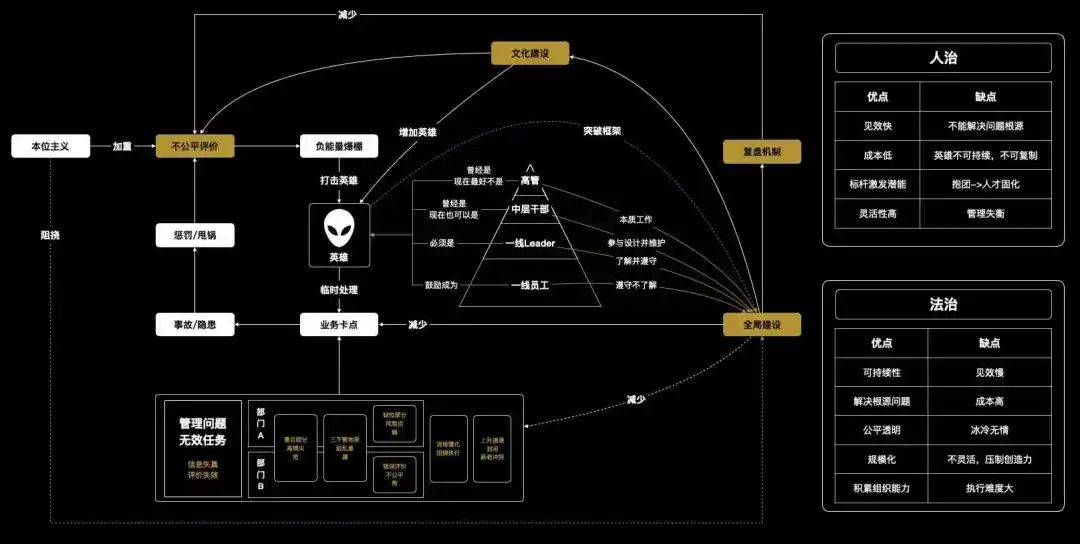
Core Insights - The article emphasizes the importance of conflict resolution in company governance, highlighting that addressing interpersonal issues is crucial for maintaining team cohesion and efficiency [6][10][52] Group 1: Conflict Origins - Conflicts often arise from competition for influence among employees, leading to a zero-sum game where one gains at the expense of another [6][10] - Ineffective communication and evaluation processes contribute to misunderstandings, as seen in the example of a disagreement between front-end and back-end teams over documentation clarity [10][12] - The lack of a fair evaluation system exacerbates conflicts, as employees may feel their contributions are undervalued or misinterpreted [10][12] Group 2: Management Approaches - Effective conflict management requires a shift from a person-centric approach to a system-oriented one, focusing on responsibilities and outcomes rather than personal disputes [45][52] - Establishing a clear evaluation framework can help mitigate conflicts by ensuring that all parties understand their roles and the standards expected of them [12][40] - Encouraging a culture that values problem exposure rather than avoidance can lead to more constructive conflict resolution [25][51] Group 3: Task Types and Management - Work can be categorized into certainty tasks, which have clear goals and standards, and uncertainty tasks, which involve creativity and decision-making [28][30] - The ability to manage uncertainty is a key indicator of a company's management quality, as it reflects the capability to provide objective evaluations in ambiguous situations [32][42] - High uncertainty roles often command higher compensation and loyalty requirements, indicating their critical nature in organizational success [33][34] Group 4: Conflict Resolution Techniques - Conflict resolution should focus on understanding the underlying issues, such as resource competition or task distribution inequities, rather than merely addressing surface-level disagreements [45][52] - Techniques for managing conflicts include prioritizing emotional responses, balancing interests, and fostering a culture that encourages open dialogue about issues [51][52] - The article suggests that conflicts, when managed correctly, can serve as opportunities for team growth and improvement, transforming misunderstandings into learning experiences [53][54]