
极右翼思想

Search documents
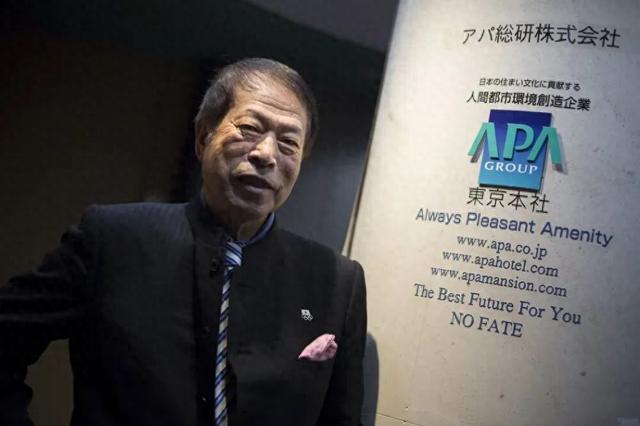
放书否认南京大屠杀的APA酒店老板,死了
Xin Lang Cai Jing· 2026-02-16 04:38
Group 1 - The founder and CEO of APA Group, Motoya Toshio, has passed away at the age of 82, with the specific cause of death not disclosed [2][3] - Motoya was known for his controversial actions in 2017, where he placed books in hotel rooms that denied historical events such as the Nanjing Massacre and the forced recruitment of comfort women, leading to global condemnation [2][5] - He was a significant financial supporter of Japan's far-right movements and had connections with prominent politicians, including former Prime Minister Shinzo Abe [5] Group 2 - Motoya established a network promoting far-right ideologies in Japan, utilizing his financial resources and media platforms [5] - He organized events such as the "Victory Soldiers' School" and awarded prizes to far-right politicians, indicating his influence in the political landscape [5] - Motoya expressed hopes that politicians like Takagi Sanae would continue Abe's legacy of constitutional revision and militarization of Japan [5]

AI少女形象成欧美极右翼仇恨符号
Huan Qiu Shi Bao· 2026-02-01 22:54
Core Viewpoint - The rise of the AI virtual character "Emilia" has gained significant traction among far-right groups in Europe and the U.S., despite originating from an educational game aimed at preventing extremist ideologies [1][2]. Group 1: Background and Origin - "Emilia" is derived from a computer educational game created two years ago as part of a UK government initiative to combat the spread of extremist thoughts among youth [1]. - The game features a storyline where players encounter Emilia, who attempts to spread anti-immigrant views and misinformation, ultimately trying to recruit players for anti-immigrant protests [1]. Group 2: Controversy and Reaction - The game has faced criticism for treating the perspective that "Western culture is threatened by mass immigration" as a form of "terrorist ideology" requiring intervention [2]. - Players making "incorrect choices" that support Emilia's views may face psychological counseling in real life, leading to accusations of thought control over youth political opinions [2]. - The game's developers have denied these claims, labeling them as "complete misinformation" and asserting that the educational purpose has been misinterpreted [2]. Group 3: Spread and Impact - The controversy surrounding Emilia has paradoxically increased her popularity among far-right circles, leading to a surge in user-generated content featuring her [2]. - A user on social media platform X expressed affection for Emilia, garnering over 5 million views, while another created an AI video depicting her alongside the U.S. President, calling for support to protect national purity [2]. - As of January 29, the social media community dedicated to Emilia has surpassed 11,000 members, with notable figures like Elon Musk sharing related memes [2]. Group 4: Analysis and Implications - Analysts have raised concerns about the rapid spread and internationalization of Emilia's image, noting that the entire far-right ecosystem in the West has embraced this viral meme [3]. - The character's seemingly innocent appearance belies underlying hate speech, which can be defended as "just a joke," highlighting the challenges in addressing such content [3]. - Advances in AI technology have accelerated the dissemination of this online persona, enabling far-right groups to produce content en masse across various internet platforms [3].
英媒:有右翼组织伪装成“搏击俱乐部”,成为潜在国家安全威胁
Huan Qiu Shi Bao· 2025-10-20 22:57
Core Viewpoint - A rise in far-right organizations, referred to as "Fight Clubs," is using mixed martial arts (MMA) training as a cover to spread neo-Nazi ideologies globally, posing potential national security threats according to Western intelligence agencies [1][2] Group 1: Organization and Ideology - These "Fight Clubs" promote white supremacy and extreme nationalism, advocating for "combat spirit" and "national purity" while packaging extremist ideas through combat training [1] - The movement traces back to far-right figure Rob Rundo, who led the "Rise Above Movement" and incited violence during the 2017 Charlottesville rally, promoting the idea of disguising extremism as "masculine self-reconstruction" [1] Group 2: Global Expansion and Structure - According to the "Global Project Against Hate and Extremism," these clubs have spread to 27 countries, with some establishing youth branches mimicking the "Hitler Youth" [2] - A report from the Canadian Security Intelligence Service (CSIS) highlights the local organization "Nationalist-13," which recently posted videos of masked members engaging in combat training, claiming "Canada needs all men of good white character" [2] Group 3: Cross-Border Activities and Threats - The CSIS report indicates that some Canadian members are traveling to the U.S. for extreme activities, establishing connections and training with like-minded individuals, which could enhance their capacity for violence and potentially lead to real attacks [2] - Active club members frequently travel between the U.S. and Canada, indicating that the new fascist networks are restructuring old extremist groups through sports and decentralized methods, making them harder to detect [2]