标准化备考

Search documents
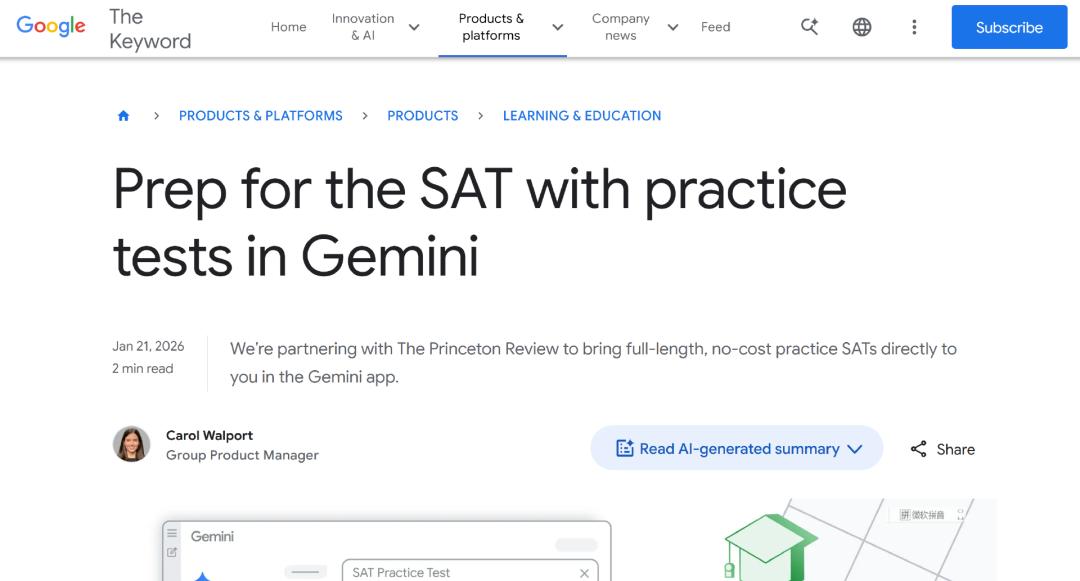
谷歌 Gemini 上线免费辅导,大厂集体押注「备考入口」
3 6 Ke· 2026-01-29 00:34
Core Insights - The SAT preparation market is experiencing a significant shift as Google's Gemini AI introduces a free full-length practice test feature, which allows users to generate complete mock exams and receive instant feedback, error analysis, and personalized learning suggestions [1][2] - This change indicates a potential revaluation of standardized tutoring services, as the most scalable and standardized parts of the preparation process are now accessible at a lower cost, impacting the pricing logic of traditional tutoring services [2][5] Group 1: Changes in SAT Preparation - The expensive components of SAT preparation are not just the answers to questions but the entire service chain that includes full-length mock exams, error diagnosis, and learning schedule management [2][4] - Gemini's free SAT feature integrates mock testing, feedback, and content supply into a unified platform, challenging traditional high-cost tutoring models [2][4] Group 2: Impact on the Tutoring Industry - The introduction of free AI tutoring tools is expected to pressure the mid-tier products in the SAT preparation market, such as subscription-based question banks and standardized explanation courses, which are highly standardized and easily replaceable [5][6] - Companies like Chegg are already feeling the impact of AI competition, leading to layoffs and business restructuring as students shift towards free AI tools for learning support [6] Group 3: Educational AI Competition - The competition in educational AI is intensifying, with other platforms like OpenAI and Khan Academy also enhancing their AI offerings to provide more integrated learning support [7] - The shift towards process-oriented learning support indicates that platforms are not just competing on AI capabilities but also on how they engage students in their learning journeys [7] Group 4: Future of Standardized Testing - The introduction of free AI tutors raises questions about how learning outcomes will be reliably measured, as the tools can provide extensive support but do not inherently validate student capabilities [11][12] - The educational system will need to redefine the boundaries of AI usage in testing and teaching, ensuring that certain aspects remain independent of AI tools to maintain the integrity of assessments [11][12]