
核动力武器

Search documents
俄罗斯新型核武器亮相 西方反导系统可能“报废”
Zhong Guo Xin Wen Wang· 2025-11-02 23:34
Core Viewpoint - Russia has successfully tested two new types of nuclear weapons: the "Zircon" nuclear-powered cruise missile and the "Poseidon" nuclear-powered unmanned underwater vehicle, which have garnered significant attention from Western military and media analysts [1][3]. Group 1: Zircon Missile - The "Zircon" missile is approximately 12 meters long and can carry a nuclear warhead with a yield of 50 kilotons, providing global strike capability [1]. - It can fly nearly 30,000 kilometers without interruption due to its nuclear power, operating at a cruising altitude of 25 to 100 meters, which allows it to evade enemy air defense systems [3]. - Analysts speculate that the "Zircon" could take a long route during operations, flying low over the Arctic valleys and then crossing the Atlantic Ocean to reach the North American West Coast [3]. - Despite concerns from the U.S. Air Force regarding the reliability of the nuclear engine, it is acknowledged that the "Zircon" will disrupt the current strategic balance and serve as a significant deterrent against NATO [3]. - Russian leadership has indicated that the nuclear technology used in the "Zircon" could also be applied to national economic and scientific activities, such as Arctic energy supply and space exploration [3]. Group 2: Poseidon Vehicle - The "Poseidon" is about 20 meters long and weighs approximately 100 tons, powered by a liquid metal-cooled reactor, capable of operating at depths of up to 1,000 meters and traveling over 10,000 kilometers [4]. - Its operational principle involves being launched from a nuclear submarine and autonomously conducting long-range attacks, potentially creating underwater nuclear explosions to generate massive tsunamis that could devastate coastal infrastructure [5]. - The "Poseidon" can carry a nuclear warhead with a yield of up to 1 megaton, sufficient to destroy enemy naval bases and warships, while also disrupting commercial shipping for an extended period [7]. - The current Strategic Arms Reduction Treaty does not impose restrictions on nuclear-powered unmanned underwater vehicles, making it difficult for the West to monitor them [7]. - The deployment of the "Poseidon" could enhance Russia's second-strike capability and compel the U.S. and its allies to invest heavily in developing underwater defenses [7]. - U.S. Navy research indicates that locating and intercepting a vehicle like the "Poseidon" in the vast ocean will be extremely challenging, potentially leading to a prolonged underwater cat-and-mouse game [7].

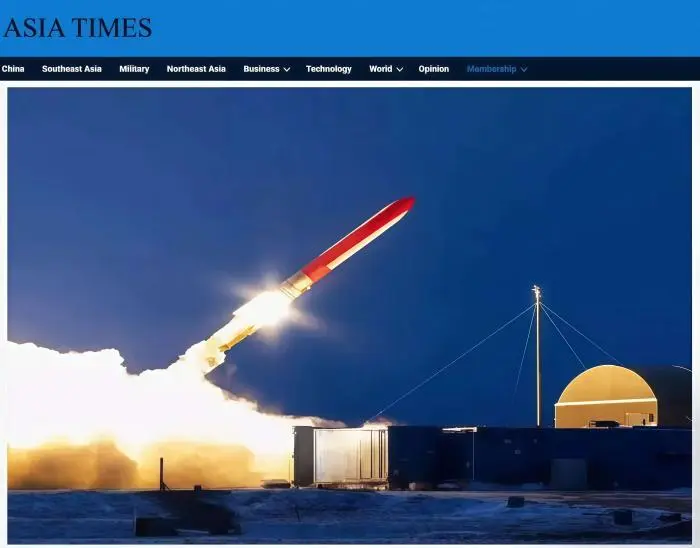
普京称“海燕”核动力巡航导弹完成“决定性试验”,特朗普发声
Huan Qiu Wang· 2025-10-27 08:55
【环球网报道 记者 闫珮云】据美国有线电视新闻网(CNN)报道,针对俄罗斯总统普京日前宣布"海燕"核动力巡航导弹已完成"决定性试验"的报道,美国 总统特朗普当地时间27日在"空军一号"上回应称"他这么说不合适",特朗普还说美国也在俄罗斯附近部署了核潜艇。 报道援引特朗普的话说,俄方知道美方有一艘核潜艇就在俄方海岸附近,"所以我的意思是,它('海燕'核动力巡航导弹)没必要飞8000英里(约1.28万公 里),他们不是在跟我们玩游戏,我们也不是在跟他们玩游戏。我们一直在试射导弹"。 特朗普还说,"顺便说一句,我认为普京这么说也不合适。"特朗普说,普京应该结束战争,"这才是他应该做的,而不是试验导弹"。 当记者问及美国是否会对俄罗斯采取进一步制裁措施时,特朗普回答说:"你会知道的。" 据俄罗斯塔斯社26日报道,普京日前在视察俄罗斯联合部队集群某指挥所时说,"海燕"核动力巡航导弹已完成"决定性试验"。报道说,普京在与俄罗斯武装 力量总参谋长格拉西莫夫及各集群指挥官举行会议时表示,"海燕"核动力巡航导弹是一款"世界上独一无二"的产品,要使该武器投入使用,还有许多工作要 做。此前,普京曾提及"海燕"核动力巡航导弹的试验情 ...
