
波塞冬核动力无人潜航器

Search documents
没有规则的核赛场,美国疯狂扩核,俄罗斯亮出致命反制
Feng Huang Wang Cai Jing· 2026-02-11 13:43
Group 1 - The expiration of the New START treaty on February 5 marks a significant shift in global nuclear disarmament, moving from a phase of reduction to one of potential escalation [1][2] - The U.S. plans to increase its nuclear arsenal, with a projected budget increase from $756 billion to $946 billion over the next decade, representing a growth of over 25% [2] - The U.S. is also pursuing the "Iron Dome" initiative to develop an unconstrained missile defense system, which could provoke a new arms race as other nations enhance their nuclear capabilities in response [2][3] Group 2 - The New START treaty, originally signed in 2010, limited both the U.S. and Russia to 1,550 deployed nuclear warheads and 700 delivery vehicles, but relations have deteriorated significantly since the Ukraine conflict [3][4] - Russia has shifted its nuclear policy from a no-first-use stance to a more aggressive posture, developing new strategic weapons like the "Zircon" and "Poseidon" to counter NATO's conventional advantages [5][6] - The U.S. has not committed to a no-first-use policy, which raises the nuclear threshold and complicates the strategic landscape [4][5] Group 3 - The U.S. is seeking to involve China in nuclear negotiations, but China maintains its position of a defensive nuclear strategy and will not participate in arms races [7][8] - The introduction of new technologies and high-survivability weapons complicates future arms control negotiations, as the U.S. continues to increase its nuclear capabilities [7][8] - The current state of nuclear relations reflects a breakdown of strategic trust and frameworks, leading to a more dangerous global environment than during the Cold War [8]


俄罗斯喊话美国,美国喊话中国,中国回应:表示遗憾
Xin Lang Cai Jing· 2026-02-07 16:40
Core Points - The expiration of the New START treaty marks the first time in over half a century that there are no treaties limiting the nuclear arsenals of the world's two largest nuclear powers, the US and Russia, raising concerns about a new arms race and nuclear proliferation [1][6] - The UN Secretary-General has stated that the risk of nuclear weapon use is at its highest level in decades, highlighting the urgency of the situation [1] Group 1: Nuclear Arsenal Overview - By 2025, Russia is projected to have 4,309 nuclear warheads, while the US will have 3,700, with approximately 1,770 of the US warheads deployed and 1,930 in reserve [1] - The US is undergoing a comprehensive modernization of its nuclear triad, including the replacement of the Minuteman III ICBM with the Sentinel ICBM, the replacement of Ohio-class submarines with Columbia-class submarines, and the procurement of the B-21 long-range bomber [2][4] Group 2: Treaty Implications - The New START treaty, which was signed in 2010 and extended in 2021, limited the number of deployed strategic nuclear warheads to 1,550 and established verification mechanisms, which are now no longer in effect [5][6] - With the treaty's expiration, both the US and Russia may increase their nuclear arsenals beyond 6,000 warheads in the next decade, as the constraints have been lifted [6] Group 3: Global Nuclear Dynamics - The absence of a nuclear arms control agreement may lead to an imbalance in global nuclear capabilities, prompting other nuclear-armed states to enhance their arsenals [9][10] - The potential for a nuclear arms race could escalate the quality and quantity of nuclear weapons, with implications for deployment in new domains such as space [10] Group 4: Future Negotiations - There is a call for a new nuclear arms control agreement that includes not only warhead numbers but also new delivery systems such as hypersonic missiles and nuclear-powered torpedoes [11] - The US has suggested that China should join nuclear disarmament talks, although China has expressed reluctance to participate, citing its nuclear capabilities as significantly lower than those of the US and Russia [13][14]
新华社:俄核威慑力量升级的战略意义
Xin Lang Cai Jing· 2025-12-21 17:38
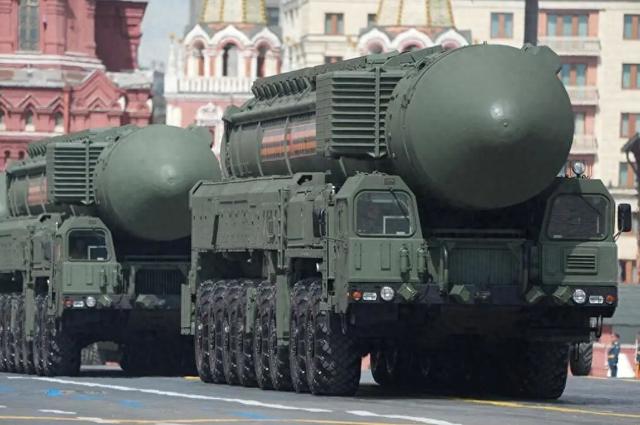
Core Viewpoint - Russia is advancing its nuclear deterrent capabilities with the development of the "Zircon" nuclear-powered cruise missile and the "Poseidon" nuclear-powered unmanned underwater vehicle, which may serve as significant bargaining chips in military negotiations with the U.S. as existing arms control treaties approach expiration [1][3][8] Group 1: Weapon Development and Testing - President Putin has publicly highlighted the successful testing of the "Zircon" and "Poseidon," emphasizing their advanced capabilities, including the "Zircon" having a range that exceeds all known missiles and the "Poseidon" being able to dive to depths of 1,000 meters [3][6] - The "Zircon" is reported to have a theoretical unlimited range due to its nuclear propulsion, capable of flying at speeds between 850 to 1,300 kilometers per hour and at ultra-low altitudes [6][8] - The "Poseidon" is described as a compact nuclear-powered underwater vehicle, approximately 20 meters long and weighing around 110 tons, designed to carry a nuclear warhead [6][8] Group 2: Strategic Implications - The introduction of the "Zircon" and "Poseidon" represents an upgrade to Russia's nuclear arsenal, which traditionally consisted of land-based intercontinental missiles, strategic submarines, and bombers, now categorized as the fourth and fifth types of strategic nuclear weapons [8] - These new weapons provide Russia with enhanced leverage in arms control discussions, as existing treaties do not cover such new weaponry, thus increasing Russia's negotiating power [8] - The development and demonstration of these weapons signal Russia's capability to maintain sovereignty despite internal and external challenges [8] Group 3: Perception and Analysis - Analysts suggest that while the technical specifications of the "Zircon" and "Poseidon" are impressive, their practical military value remains uncertain, as they do not represent a revolutionary advancement in military technology [9] - The effectiveness of these new weapons will depend on Russia's satellite navigation and electronic warfare capabilities, which are crucial for achieving operational effectiveness in real combat scenarios [9] - Western analysts view the "Zircon" and "Poseidon" primarily as political tools and psychological deterrents rather than immediate combat assets, indicating that their introduction is unlikely to significantly alter the motivations for first-use of nuclear weapons [9]
列国鉴·年终观察丨俄核威慑力量升级的战略意义
Xin Lang Cai Jing· 2025-12-21 09:22
Core Viewpoint - Russia's recent development of the "Zircon" nuclear-powered cruise missile and the "Poseidon" nuclear-powered unmanned underwater vehicle is seen as a strategic move to enhance its nuclear deterrent capabilities, prompting a response from the U.S. to initiate equivalent nuclear weapons testing [1][2]. Group 1: Weapon Development and Testing - President Putin has publicly highlighted the testing of the "Zircon" cruise missile and the "Poseidon" unmanned underwater vehicle, emphasizing their advanced capabilities [2]. - The "Zircon" missile is reported to have a range that exceeds all known missiles globally, while the "Poseidon" can reach depths of 1,000 meters and is significantly faster than modern vessels [2][4]. - Both weapons are characterized as "game-changing" by Russian media, with analysts suggesting they will alter the strategic deterrence landscape dominated by the U.S. [4][6]. Group 2: Strategic Significance - The introduction of the "Zircon" and "Poseidon" enhances Russia's nuclear arsenal, which traditionally consisted of land-based intercontinental missiles, strategic submarines, and bombers, now adding these new categories as the fourth and fifth types of strategic nuclear weapons [6]. - These new weapons serve as important bargaining chips in arms control discussions, particularly as existing treaties do not cover such new systems, thereby increasing Russia's negotiating power [6][7]. - The development and demonstration of these weapons signal Russia's capability to maintain sovereignty despite internal and external challenges [7]. Group 3: Operational Effectiveness and Perception - While the technical specifications of the "Zircon" and "Poseidon" are impressive, their actual combat value remains uncertain, as their effectiveness depends on Russia's satellite navigation and electronic warfare capabilities [8]. - Analysts suggest that these weapons are primarily viewed as political tools and psychological deterrents rather than immediate combat assets, with no intention of deploying them in active conflict [8].
俄核威慑力量升级的战略意义
Xin Lang Cai Jing· 2025-12-21 08:22
Core Viewpoint - Russia's recent development of the "Tsirkon" nuclear-powered cruise missile and the "Poseidon" nuclear-powered unmanned underwater vehicle is seen as a strategic move to enhance its nuclear deterrent capabilities, prompting a response from the U.S. to initiate equivalent nuclear weapons testing [1][3][5]. Group 1: Weapon Development and Testing - President Putin has publicly highlighted the successful tests of the "Tsirkon" and "Poseidon," emphasizing their advanced capabilities, including the "Tsirkon" having a range that exceeds all known missiles and the "Poseidon" being able to dive to depths of 1,000 meters [3][5]. - The "Tsirkon" is reported to have a theoretical unlimited range due to its nuclear-powered engine, capable of flying at speeds between 850 to 1,300 kilometers per hour and at ultra-low altitudes [5][7]. - The "Poseidon" is described as a compact nuclear-powered underwater vehicle, approximately 20 meters long and weighing around 110 tons, with a maximum operational depth of 1,000 meters [5][7]. Group 2: Strategic Implications - The introduction of the "Tsirkon" and "Poseidon" represents an upgrade to Russia's nuclear arsenal, which traditionally consisted of land-based intercontinental missiles, strategic submarines, and bombers, now categorized as the fourth and fifth types of strategic nuclear weapons [7][8]. - These new weapons serve as significant bargaining chips in arms control discussions, particularly as existing treaties do not cover such new weaponry, thereby enhancing Russia's negotiating position [7][8]. - The development and demonstration of these weapons signal Russia's capability to maintain sovereignty despite internal and external challenges [8]. Group 3: Perception and Analysis - Analysts suggest that while the technical specifications of the "Tsirkon" and "Poseidon" are impressive, their practical military value remains uncertain, as they do not represent a revolutionary advancement in military technology [9]. - The effectiveness of these new weapons will depend on Russia's satellite navigation and electronic warfare capabilities, which are crucial for achieving operational success [9]. - Western perspectives generally view the "Tsirkon" and "Poseidon" as tools for political leverage and psychological deterrence rather than immediate combat deployment [9].
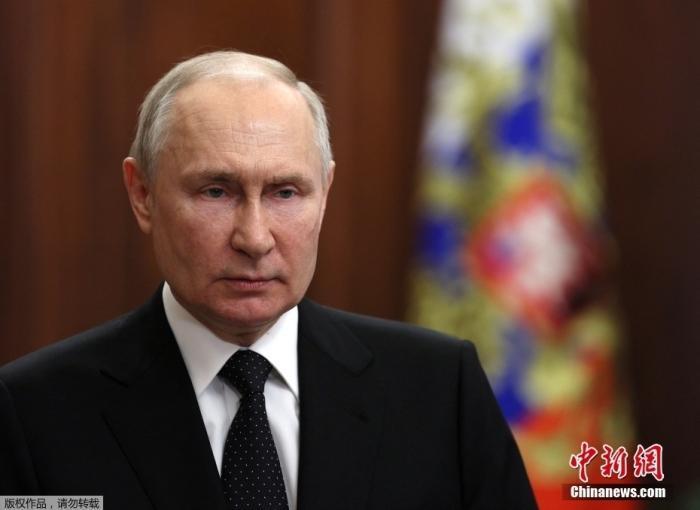
普京谈及俄乌冲突:俄军目前在前线掌握主动权
Zhong Guo Xin Wen Wang· 2025-12-18 00:04
Group 1 - President Putin stated that the Russian military currently holds the initiative on the front lines of the Russia-Ukraine conflict, having controlled over 300 settlements in the special military operation area by 2025 [1][2] - Putin emphasized that 2025 is a crucial year for completing the objectives of the special military operation, with plans to accelerate offensive actions and expand security buffer zones [2] - The Russian Navy is expected to incorporate multiple submarines and surface ships by 2025, with the "Hazel" medium-range ballistic missile set to begin combat duty by the end of 2025 [2] Group 2 - Ukrainian sources reported that Russian forces conducted three attacks on Zaporizhzhia, resulting in 26 injuries [3] - The attacks led to the destruction of residential buildings, infrastructure, and an educational institution, with no immediate response from the Russian side [5] - Belarusian President Lukashenko called for a swift end to the Russia-Ukraine conflict, warning of negative impacts on Europe and the world if the conflict escalates [6][8]
知情人士称美俄将于本周末在迈阿密举行会谈!普京重要讲话!泽连斯基最新消息
Mei Ri Jing Ji Xin Wen· 2025-12-17 23:57
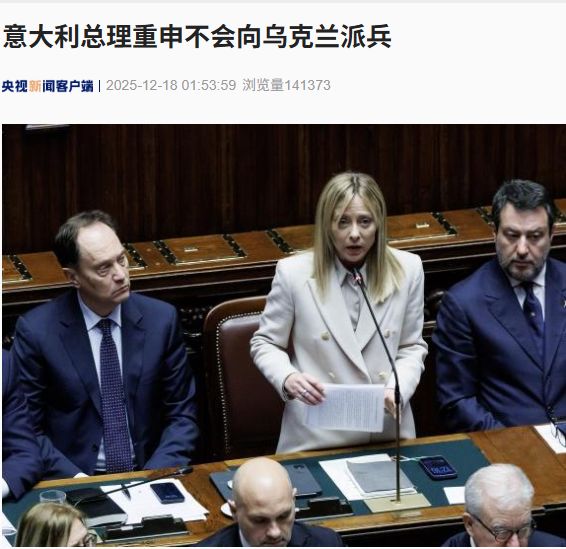
Group 1 - U.S. and Russian officials are expected to meet in Miami this weekend, with representatives including Dmitryev from the Russian Direct Investment Fund and U.S. Middle East envoy Witteker, along with Jared Kushner [1] - President Putin expressed readiness to negotiate and peacefully resolve issues arising in recent years, asserting that the West is responsible for the escalation of the Ukraine conflict [2][3] - Putin emphasized the need for the Russian military to maintain technological superiority, highlighting advancements in robotics, information technology, and artificial intelligence [2] Group 2 - Italian Prime Minister Meloni reiterated that Italy will not send troops to Ukraine, despite the formation of a multinational force, while continuing to support Ukraine to ensure European security [6] - Ukrainian President Zelensky is set to attend the EU summit on December 18, urging European leaders to agree on using frozen Russian assets to aid Ukraine [7] - The EU is discussing various options for financing Ukraine, with the most credible being a "compensation loan" scheme using frozen Russian assets as collateral, which Russia opposes [8]
普京宣布“重要消息”
中国基金报· 2025-12-17 16:16
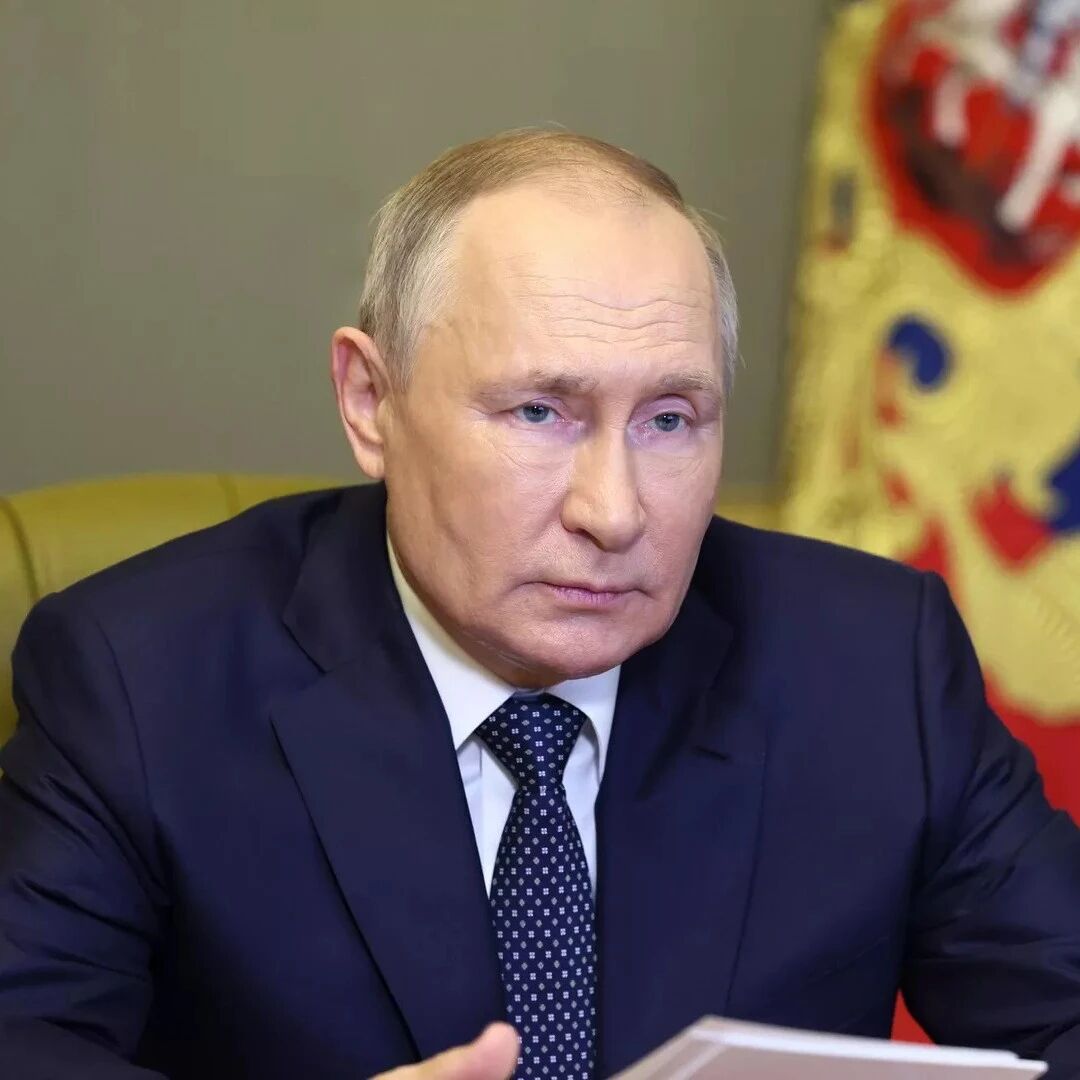
Group 1 - The core viewpoint of the article emphasizes that Russia currently holds the initiative in the Ukraine conflict, with President Putin stating that the Russian military is successfully defeating Ukrainian forces, including those trained by the West [1][2] - Putin highlighted that 2025 is a crucial year for Russia's military operations, with the goal of controlling over 300 settlements in the conflict area [1] - The Russian military's operational capabilities have reportedly improved, with an increase in the speed of advances by 50% to 100% compared to 2024 [2] Group 2 - The article mentions that the "Zircon" hypersonic missile system is expected to be operational by the end of the year, enhancing Russia's military capabilities [1] - The Russian Defense Minister stated that Ukrainian military casualties could reach approximately 500,000 by 2025, along with significant equipment losses [2] - The geopolitical tensions globally are increasing, with Russia advocating for equal relations with the US and European countries, countering claims of a "Russian threat to Europe" [2]
普京宣布“重要消息”
财联社· 2025-12-17 14:20
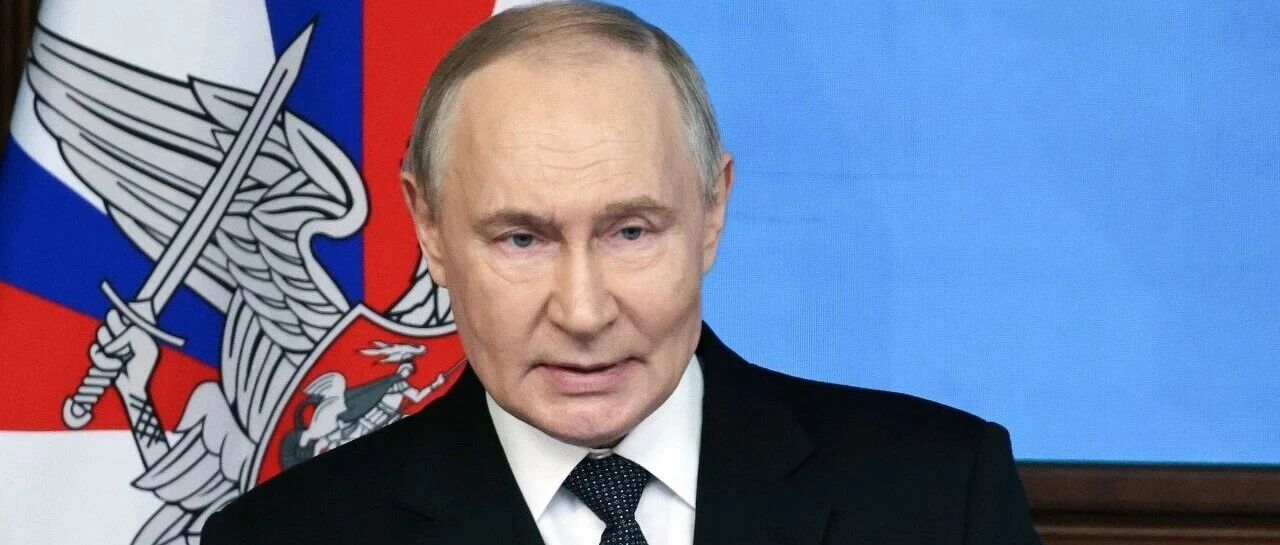
Core Points - Russian President Putin announced that the "Zircon" ballistic missile system will be operational by the end of this year, with preparations proceeding as planned [1] - Putin stated that the Russian military currently holds the initiative along the front lines of the Russia-Ukraine conflict, successfully defeating Ukrainian forces, including elite units trained by the West [1] - The year 2025 is highlighted as a crucial year for Russia to complete its special military operation objectives, with plans to accelerate offensive actions and expand security buffer zones [1] - Putin emphasized that by 2025, Russian forces will have controlled over 300 settlements in the special military operation area [1] - The Russian military has demonstrated high combat capability and training levels in the face of NATO support for Ukraine [2] - The "Zircon" hypersonic missile system is set to enter combat readiness by the end of the year, alongside the "Dagger" nuclear-powered cruise missile and "Poseidon" nuclear-powered unmanned underwater vehicle [2] - The Russian Defense Minister reported that Ukrainian military casualties could reach approximately 500,000 by 2025, with over 130,000 pieces of equipment lost [2] - The speed of Russian military advances has reportedly increased by 50% to 100% compared to 2024 [2]
特朗普称启动核武试验后,美国试射“民兵3”导弹!普京开会:若美进行核试验,将对等反制
Mei Ri Jing Ji Xin Wen· 2025-11-06 12:11
Group 1 - Ukraine is requesting the U.S. to provide "Tomahawk" missiles, emphasizing the need for long-range weaponry as a deterrent against Russia [2][4] - U.S. President Trump stated he has not seriously considered the provision of "Tomahawk" missiles to Ukraine, despite prior indications from the U.S. Department of Defense [2][4] - The situation reflects a broader strategic competition between Russia and the U.S. regarding nuclear capabilities, with Russia recently showcasing new nuclear-powered weapons [4][5] Group 2 - Russia has announced successful tests of new nuclear-powered weapons, including the "Zircon" cruise missile and the "Poseidon" underwater drone, which are intended to ensure strategic balance for decades [4][6] - In response to global nuclear testing developments, Trump announced the U.S. would restart nuclear tests, with the first test of the "Minuteman III" intercontinental ballistic missile occurring on November 5 [9][11] - Russian President Putin indicated that if the U.S. conducts nuclear tests, Russia will respond in kind, while also asserting that Russia will not participate in an arms race [11][12]
