格陵兰岛经济发展

Search documents
想要“格林兰岛”?给美国算一笔经济账
Guo Ji Jin Rong Bao· 2026-01-15 10:49
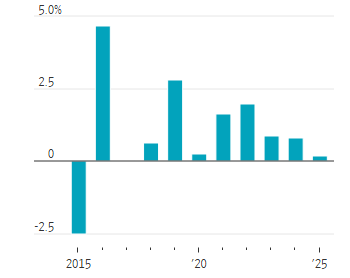
Core Viewpoint - The article discusses the complexities and challenges surrounding President Trump's interest in acquiring Greenland, highlighting its strategic importance and resource potential, while also noting its economic struggles and reliance on Danish subsidies [1][2]. Economic Overview - Greenland has a population of approximately 57,000, with about 80% of its land covered by ice, leading to a slow economic growth rate of 0.8% in 2024 and an expected 0.2% in 2025, primarily due to declining shrimp resources and prices [2]. - The economy is heavily reliant on fisheries, with 98% of export income coming from seafood, and recent economic activities have been driven by infrastructure investments, particularly a new international airport in Nuuk [2]. Financial Dependency - Denmark provides around 50% of Greenland's government revenue, equating to about 20% of the island's GDP, which translates to over $1 billion annually in support [3]. - If Denmark's financial support were to disappear, it would have catastrophic consequences for Greenland's economy, as acknowledged by local officials [3]. Public Sentiment and Political Dynamics - While some residents express hope that U.S. involvement could bring economic opportunities, public opinion polls indicate that most Greenlanders prioritize economic and social welfare over potential U.S. governance [3]. - Trump's administration considered direct financial incentives to Greenland residents to gain support, with comparisons drawn to U.S. aid to the Marshall Islands, which is significantly lower than what would be required to match Danish support [5]. Resource Development Challenges - The potential for mineral resource development in Greenland is complicated by high costs associated with infrastructure needs and severe weather conditions, along with the Greenland government’s complete control over mineral resources [6]. - Currently, only one mine is operational, but there are suggestions that Greenland could adopt a model similar to Iceland, integrating tourism, fisheries, and clean energy for growth [7]. Danish Investment - In response to U.S. interest, Denmark has announced an additional $250 million investment over the next three years for infrastructure projects, including a new regional airport and a deep-water port in eastern Greenland [7].

格陵兰岛催美欧增加投资:否则可能找中国
Guan Cha Zhe Wang· 2025-05-27 07:30
Core Viewpoint - Greenland is facing challenges in attracting investment from Western allies, prompting the need to consider partnerships with countries like China for economic development [1][2]. Investment and Economic Development - Greenland's Minister of Mineral Resources, Naaja Nathanielsen, emphasized the necessity of external investment for economic diversification and development [2]. - The island is currently seeking investment from Western mining companies but may have to look towards China if Western partners do not engage [3]. Current Investment Landscape - As of now, only two Chinese companies are involved in Greenland's mining projects, and both are non-controlling stakeholders with no active projects [3]. - Greenland has a mineral-rich landscape, particularly in gold and copper, but the extraction process is challenging due to geographical and strategic factors [7][8]. Political Context and Relations - The expiration of a mineral development memorandum with the U.S. is a concern, as it was initially signed during Trump's administration, and efforts to renew it under the Biden administration have not succeeded [3]. - Nathanielsen expressed disappointment over the U.S. response to Greenland's mining development discussions, indicating a desire for cooperation without becoming a U.S. territory [6]. Future Partnerships - Greenland views the European Union as an ideal partner due to its lack of necessary mineral resources and alignment with Greenland's environmental standards [11]. - The changing dynamics of Western alliances are prompting Greenland to reassess its position and the motivations behind potential U.S. investments [10][11].