框架化学

Search documents
创造金属有机框架 可捕获二氧化碳
Nan Fang Du Shi Bao· 2025-10-08 23:13
Core Viewpoint - The 2025 Nobel Prize in Chemistry has been awarded to three scientists for their contributions to the development of Metal-Organic Frameworks (MOFs), which have significant potential in various applications, including environmental and medical fields [2][4]. Group 1: Award Details - The Nobel Prize was awarded to Yoshinori Kitagawa, Richard Robson, and Omar M. Yaghi, recognizing their groundbreaking work in creating MOFs [2][4]. - The prize amount is 11 million Swedish Krona, approximately 1.17 million USD, which will be shared among the three laureates [4]. Group 2: Scientific Contributions - The awarded scientists developed MOFs characterized by large cavity structures that allow gases and other chemicals to flow, enabling applications such as water collection from desert air, CO2 capture, and toxic gas storage [2][3]. - MOFs are based on reticular chemistry, creating supermolecular structures with unprecedented chemical and structural strength, leading to innovative materials with high surface area and porosity [5][6]. Group 3: Applications and Impact - MOFs have significant applications in climate change mitigation, particularly in carbon capture technology, where they can reduce the separation cost of CO2 from other gases, which currently accounts for 70% of the total carbon capture cost [3]. - In the biomedical field, MOFs show promise in drug delivery and imaging, acting as "nano-trucks" to transport therapeutic agents directly to targeted areas, such as tumors [6].

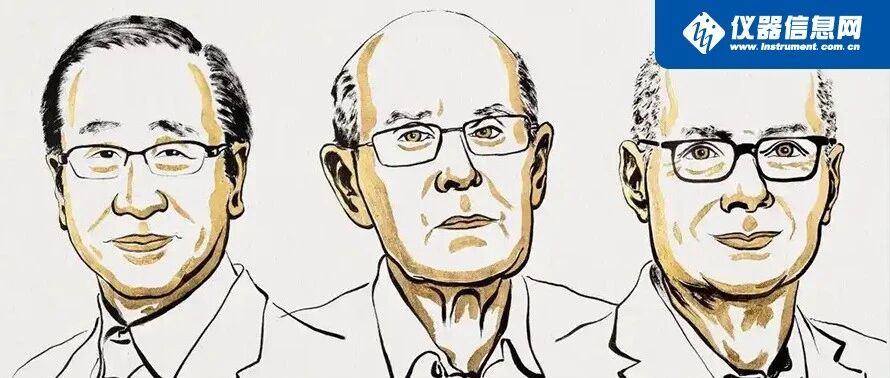
2025年诺贝尔化学奖公布,日、澳、美三位科学家获殊荣
仪器信息网· 2025-10-08 11:14
Core Insights - The Nobel Prize in Chemistry for 2025 was awarded to Japanese scientist Susumu Kitagawa, Australian scientist Richard Robson, and American scientist Omar M. Yaghi for their pioneering contributions in the field of Metal-Organic Frameworks (MOFs) [3][6] - The prize money of 11 million Swedish Krona (approximately 8.36 million RMB) will be shared among the three laureates [3] Group 1: Contributions of the Laureates - Susumu Kitagawa, a professor at Kyoto University, first realized the open-channel structure of MOFs in 1997 and discovered their gas adsorption properties, predicting the material's flexibility [6] - Richard Robson, a professor at the University of Melbourne, constructed porous crystals inspired by diamond structures in 1989, laying the early foundation for MOFs [6] - Omar M. Yaghi, a professor at the University of California, Berkeley, proposed the concept of "framework chemistry" and developed the highly stable MOF-5 material, advancing its applications in gas storage and catalysis [6] Group 2: Applications and Impact of MOFs - MOFs consist of metal ions and organic molecules that form porous structures with extremely high surface areas and porosity, enabling efficient adsorption and storage of specific substances [6] - Applications of MOFs include collecting water from desert air, capturing carbon dioxide, storing hydrogen, and separating pollutants, providing new solutions for energy and environmental issues [7] - The Nobel Committee recognized that MOFs represent a revolutionary breakthrough in materials science, with their design principles leading to the creation of thousands of new materials, with potential applications spanning clean energy, environmental protection, and medicine [7]