金属有机框架(MOF)

Search documents
再次见证!2025年诺奖得主在这本期刊发表过哪些论文?
生物世界· 2025-10-31 04:21
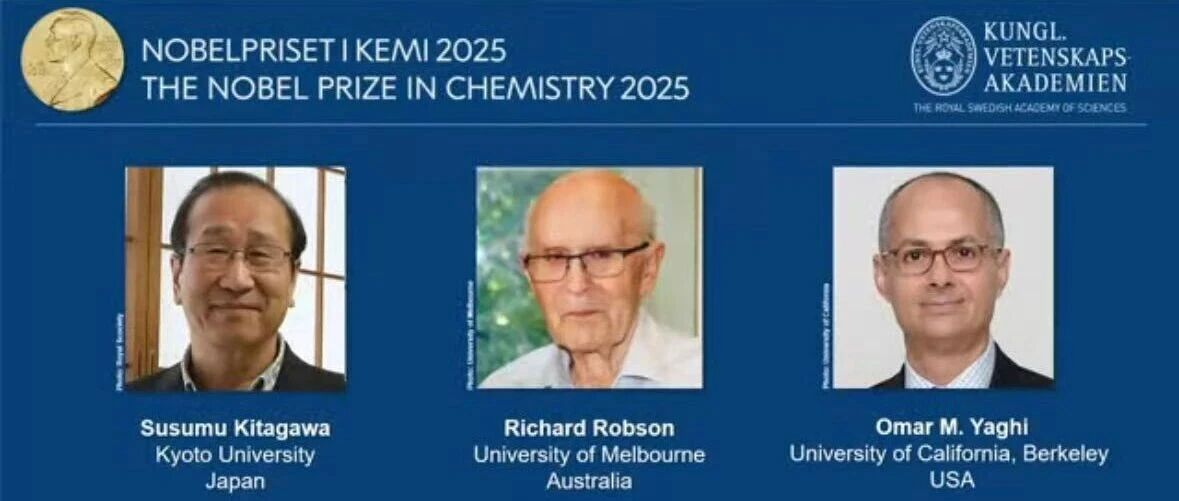
Core Insights - The article highlights the recognition of Nobel Prize winners in various fields and emphasizes the significance of the journal "Scientific Reports" in publishing their research contributions [1][2][26] Group 1: Nobel Prize Winners - The 2025 Nobel Prize in Physiology or Medicine was awarded to Mary Brunkow, Fred Ramsdell, and Shimon Sakaguchi for their discovery of immune cells that prevent the body from attacking its own tissues [8][10] - The 2025 Nobel Prize in Physics was awarded to John Clarke, Michel Devoret, and John Martinis for their work demonstrating quantum physics on a macroscopic scale, which underpins advanced quantum computing [16][18] - The 2025 Nobel Prize in Chemistry was awarded to Shin Kitagawa, Richard Robson, and Omar Yaghi for their pioneering work in creating metal-organic frameworks (MOFs) that can capture and store molecules like carbon dioxide [21][23] Group 2: Scientific Reports Journal - "Scientific Reports" is a multidisciplinary open-access journal under Nature Portfolio, known for its rigorous peer review and high visibility in the academic community [2][6] - The journal serves as a platform for groundbreaking research that transcends traditional disciplinary boundaries, covering fields such as natural sciences, psychology, medicine, and engineering [2][6] - According to Clarivate's 2024 Journal Citation Reports, "Scientific Reports" ranks third globally in citation volume among academic journals [2] Group 3: Research Contributions - Shimon Sakaguchi has published two significant papers in "Scientific Reports," one focusing on the roles of Gsdmd and Ripk3 in autoimmune arthritis, indicating that these molecules are not essential for IL-1β production or the progression of the disease [10][11] - John Martinis published a paper on resolving defect positions in superconducting quantum bits, which is crucial for improving the quality of quantum circuits [18] - Omar Yaghi's research on the adsorption enthalpy of water-stable zeolites and MOFs highlights the importance of understanding interactions in porous materials for applications in energy storage and water resource management [23][24]

奥马尔·亚吉:从“牛棚”里走出的诺贝尔奖得主
3 6 Ke· 2025-10-09 08:53
Core Points - Omar M. Yaghi, a Jordanian-American chemist, won the Nobel Prize in Chemistry for his groundbreaking contributions to metal-organic frameworks (MOFs) [1][20] - Yaghi's journey from a Palestinian refugee camp in Jordan to receiving the Nobel Prize highlights the transformative power of education and scientific innovation [21] Background and Early Life - Yaghi was born in 1965 in a Palestinian refugee area in Amman, Jordan, where he experienced extreme resource scarcity during his childhood [4] - His father's belief in education as the only way out of poverty motivated Yaghi to pursue knowledge despite their difficult living conditions [4][5] - At age 10, Yaghi discovered a chemistry book that ignited his passion for the subject, leading him to save money to borrow more chemistry books [5][6] Education and Career Development - At 15, Yaghi moved to the United States with limited resources and no knowledge of English, eventually earning a bachelor's degree from the State University of New York at Albany [6][9] - He pursued a Ph.D. at the University of Illinois, where he first encountered the field of porous materials, which later became his focus [9][10] - Yaghi chose an academic career over a lucrative industrial offer, valuing the freedom to explore scientific ideas [10] Breakthrough in Metal-Organic Frameworks - In 1995, Yaghi's team made a significant breakthrough by establishing conditions for creating stable MOFs, fundamentally changing the approach to solid structure preparation [13][15] - Despite initial skepticism from peers, Yaghi's persistence led to the successful synthesis of MOF-5, a highly stable material with a surface area comparable to a soccer field [15][17] - His work on MOFs has provided innovative solutions for global energy and environmental challenges, including water collection in arid regions [17] Recognition and Achievements - Yaghi's contributions have been recognized globally, earning him prestigious awards such as the Albert Einstein World Science Prize and the Wolf Prize in Chemistry [18] - He has expanded his research to include covalent organic frameworks (COFs), further advancing the field of porous materials [18] - Yaghi's story exemplifies the potential of scientific innovation to overcome adversity and create impactful solutions [21]
2025年诺贝尔化学奖公布,日、澳、美三位科学家获殊荣
仪器信息网· 2025-10-08 11:14
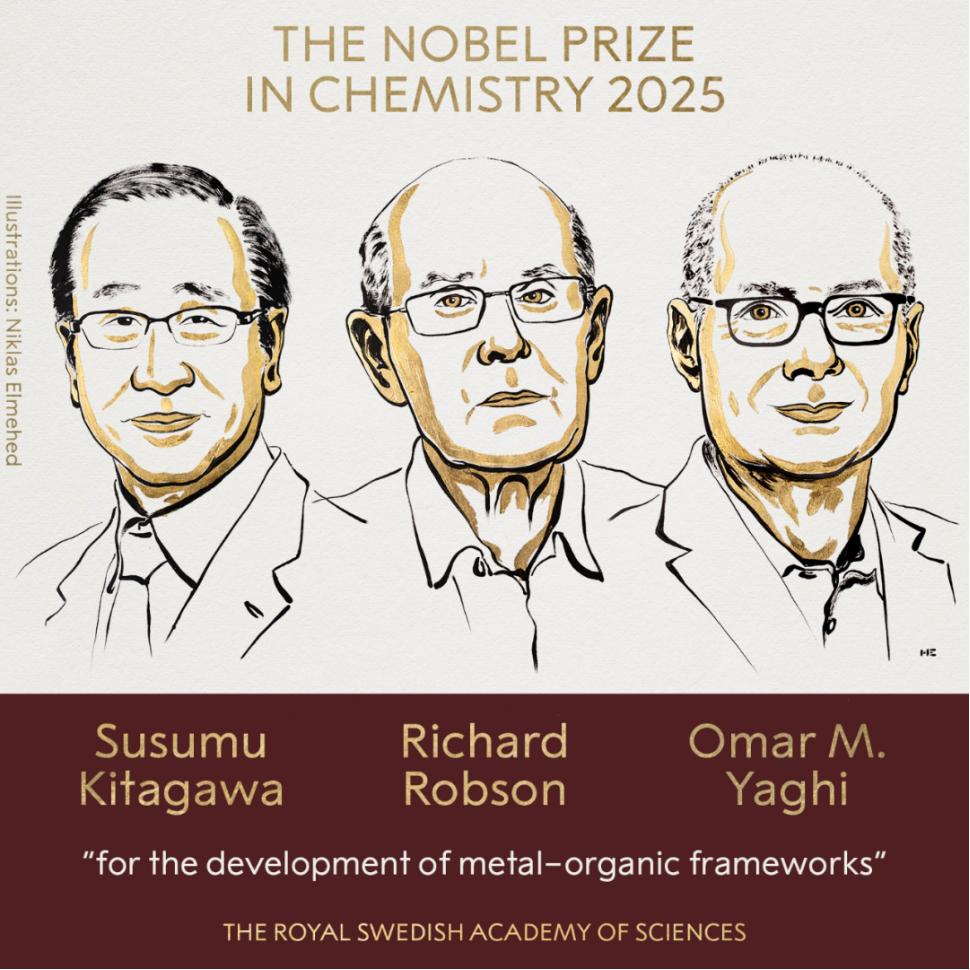
Core Insights - The Nobel Prize in Chemistry for 2025 was awarded to Japanese scientist Susumu Kitagawa, Australian scientist Richard Robson, and American scientist Omar M. Yaghi for their pioneering contributions in the field of Metal-Organic Frameworks (MOFs) [3][6] - The prize money of 11 million Swedish Krona (approximately 8.36 million RMB) will be shared among the three laureates [3] Group 1: Contributions of the Laureates - Susumu Kitagawa, a professor at Kyoto University, first realized the open-channel structure of MOFs in 1997 and discovered their gas adsorption properties, predicting the material's flexibility [6] - Richard Robson, a professor at the University of Melbourne, constructed porous crystals inspired by diamond structures in 1989, laying the early foundation for MOFs [6] - Omar M. Yaghi, a professor at the University of California, Berkeley, proposed the concept of "framework chemistry" and developed the highly stable MOF-5 material, advancing its applications in gas storage and catalysis [6] Group 2: Applications and Impact of MOFs - MOFs consist of metal ions and organic molecules that form porous structures with extremely high surface areas and porosity, enabling efficient adsorption and storage of specific substances [6] - Applications of MOFs include collecting water from desert air, capturing carbon dioxide, storing hydrogen, and separating pollutants, providing new solutions for energy and environmental issues [7] - The Nobel Committee recognized that MOFs represent a revolutionary breakthrough in materials science, with their design principles leading to the creation of thousands of new materials, with potential applications spanning clean energy, environmental protection, and medicine [7]
日本京都大学教授北川进等三人获诺贝尔化学奖
日经中文网· 2025-10-08 10:55
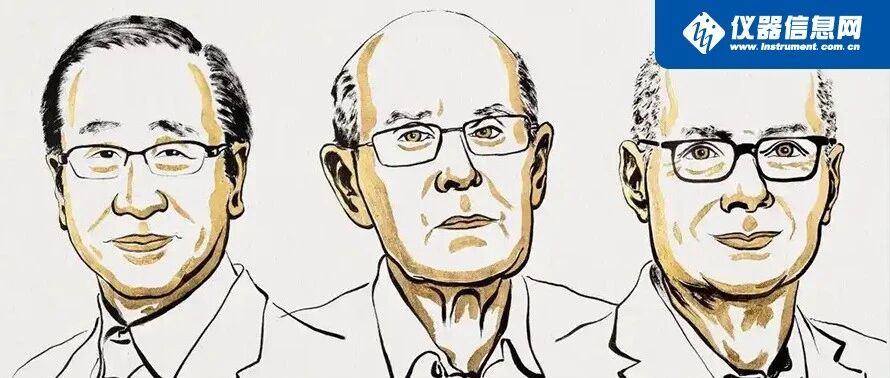
Group 1 - The 2025 Nobel Prize in Chemistry was awarded to Professor Shin Kitagawa from Kyoto University and two other scientists for their groundbreaking research on Metal-Organic Frameworks (MOFs) [2][3] - The evaluation committee highlighted that their work on MOFs has significant implications for various industries, including decarbonization, drug development, and chemistry [3]