
档案事业发展

Search documents
全省档案工作会议召开
Xin Lang Cai Jing· 2026-02-27 19:29
Group 1 - The meeting emphasized the importance of adhering to Xi Jinping's thoughts on socialism with Chinese characteristics for a new era, focusing on foundational work and innovation in the archives sector [1][2] - The meeting highlighted the achievements of the past five years in strengthening leadership over archival work, improving storage facilities, and enhancing the role of archives in historical documentation and education [1] - The meeting outlined key tasks for 2026, including the planning for the "15th Five-Year" development of the archives sector and the promotion of the "Four Systems" construction [2] Group 2 - The meeting called for the establishment of a high-quality, professional team of archival personnel and the acceleration of digital transformation in archival work [2] - The meeting stressed the need to improve the basic operational standards of archival services to better support the modernization efforts in Qinghai [2] - The meeting recognized the social impact and coverage of archival work, contributing to the narrative of Chinese-style modernization in Qinghai [1]
推动档案工作更好赋能现代化新青海建设
Xin Lang Cai Jing· 2026-01-12 19:03
Core Viewpoint - The newly passed Qinghai Province Archives Regulation aims to enhance the development of archival work in the province, aligning with national laws and addressing current challenges in the archival sector [3][8]. Background of the Regulation - The regulation is a response to the need for updated local laws that align with the current national Archives Law and its implementation regulations, which have undergone significant revisions [3][4]. - The previous local regulation from 2002 was deemed inadequate for the current state of archival work in Qinghai, prompting the need for a new legislative framework [3][4]. Overall Approach - The regulation emphasizes strengthening party leadership and implementing directives from national leadership regarding archival work [4]. - It aims to incorporate innovative practices and successful experiences from other provinces to enhance the effectiveness of the regulation [4]. - A systematic approach is taken to ensure coherence with existing laws and regulations [4]. Key Features of the Regulation - The regulation adopts a problem-oriented approach, addressing specific challenges faced by the archival sector in Qinghai, such as funding, workforce, and information technology [5]. - It focuses on precise legislation, avoiding redundancy with higher laws and ensuring practical applicability [5]. - The regulation incorporates local characteristics to better serve the province's strategic goals, such as ecological civilization and national unity [5]. Development Process - The regulation's development involved extensive research, including surveys and interviews with archival professionals, to gather input and ensure comprehensive coverage of relevant issues [6][7]. - Multiple rounds of consultations and revisions were conducted to refine the draft based on feedback from various stakeholders [7]. Main Content of the Regulation - The regulation consists of 8 chapters and 33 articles, covering areas such as the responsibilities of archival institutions, management and utilization of archives, and the promotion of archival information technology [8]. - It emphasizes the importance of government responsibility in archival work and outlines specific duties for various levels of government and institutions [8]. - Provisions are made for the management of key archives, the protection of valuable documents, and the promotion of archival resources for community development [8].
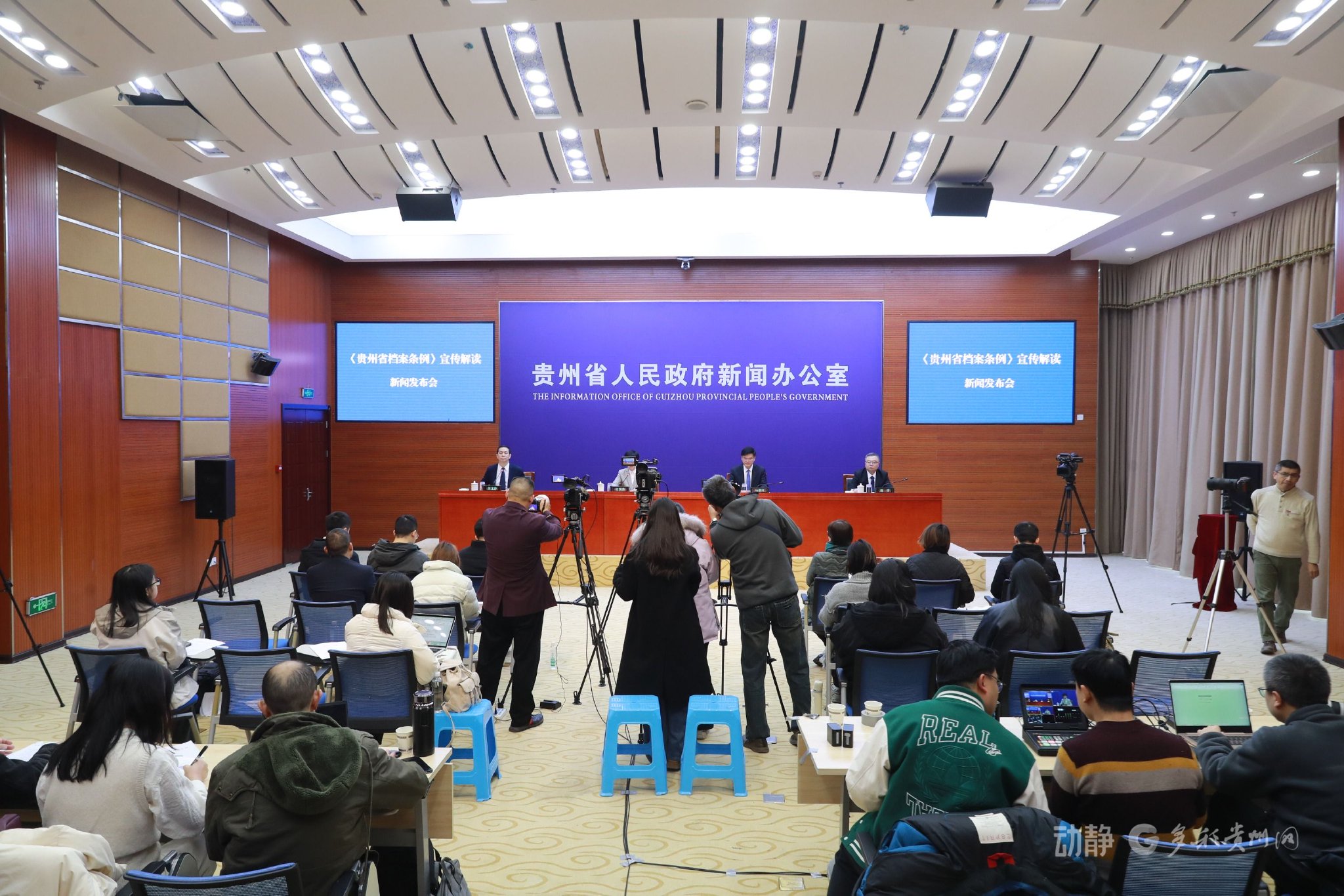
服务经济社会发展!《贵州省档案条例》修订版将于2026年1月15日起正式实施
Xin Lang Cai Jing· 2026-01-08 03:30
Group 1 - The core viewpoint of the news is the revision and implementation of the Guizhou Provincial Archives Regulations, which will take effect on January 15, 2026, aimed at enhancing the management and utilization of archives in the province [1][3][4]. Group 2 - The background of the revision emphasizes the importance of archives as a historical record and a valuable asset for the party and the state, highlighting the need for strong leadership in archives work [3][4]. - The revised regulations align with the national Archives Law and its implementation rules, which came into effect on January 1, 2021, and March 1, 2024, respectively, providing a legal framework for the innovative development of archives [4][6]. Group 3 - The main contents of the revised regulations include six key aspects: 1. Emphasizing the unique role of archives in supporting high-quality economic and social development [7]. 2. Clarifying the management structure of archives, establishing a clear responsibility system for archives work [7]. 3. Improving related management systems for archives, including specific regulations on archiving scope and quality requirements [8]. 4. Enhancing the capacity for open access and utilization of archives to better serve the public and state [8]. 5. Strengthening the construction of archives information technology, with specific requirements for digital resource management [8]. 6. Reinforcing supervision and legal responsibilities related to archives management [8]. Group 4 - The characteristics of the revised regulations include: 1. Adhering to the correct political direction, ensuring that archives work serves the party and the nation [9]. 2. Reflecting contemporary features by responding to the needs of modern governance and utilizing advanced technologies in archives work [9]. 3. Balancing normative and guiding aspects, with mandatory and encouraging provisions for archives management [10]. 4. Showcasing the unique cultural heritage of Guizhou, including red culture and ethnic diversity, to enhance the storytelling of local archives [10]. Group 5 - The implementation of the revised regulations will focus on promoting awareness and understanding among the public to ensure effective execution [11].

深入贯彻市委九届九次全会精神
Xin Lang Cai Jing· 2025-12-19 23:34
Group 1 - The meetings across various departments emphasize the importance of aligning with the spirit of the Ninth Plenary Session of the Municipal Party Committee to drive high-quality economic and social development during the "14th Five-Year Plan" period [1][2][3][4][5] - There is a focus on implementing significant reforms that enhance practical effectiveness, with an emphasis on the "1+3+X" model to plan and execute transformative initiatives [1] - The meetings highlight the need for a favorable business environment, promoting a friendly system for private enterprises, and conducting actions to benchmark and improve the business environment [1][2] Group 2 - The Municipal Taiwan Affairs Office aims to conduct forward-looking research on the "14th Five-Year Plan," focusing on green low-carbon development and the integration of the Yangtze River Delta [2] - There is a commitment to enhancing exchanges and cooperation between Lake and Taiwan in various fields, including trade and culture, by creating efficient platforms for interaction [2] - The Municipal Archives emphasizes the importance of political awareness in archival work, ensuring accurate and vibrant historical records of Lake's reform and development [3] Group 3 - The Municipal Federation of Industry and Commerce stresses the need for collective participation in promoting the spirit of the plenary session, particularly among private economic stakeholders [4] - There is a call to deepen the integration of the "Lake People Economy" with local economic development, focusing on cross-regional industrial collaboration and resource alignment [5] - The meetings advocate for optimizing service guarantees to address development challenges, including organizing events for private entrepreneurs and enhancing communication between government and businesses [5]