植物铁吸收机制

Search documents
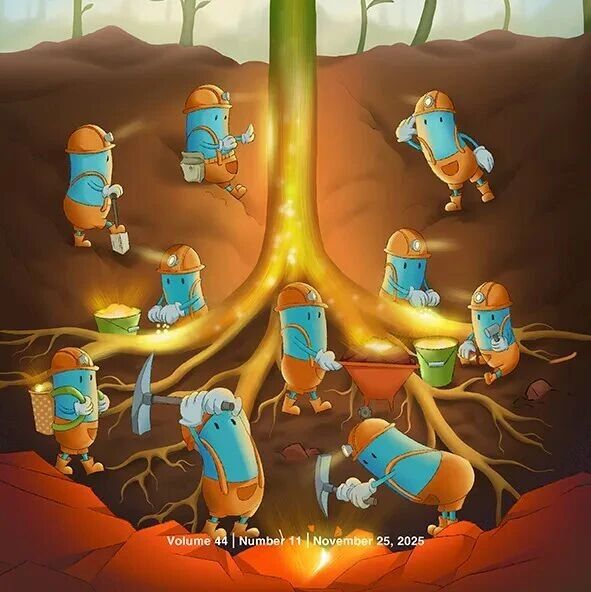
登上Cell子刊封面:南京农业大学沈其荣院士揭示根际细菌促进作物铁吸收的机制
生物世界· 2025-12-14 04:05
Core Viewpoint - The article discusses the challenge of iron deficiency in crops grown in alkaline soils and highlights a new research study that reveals a mechanism by which a specific bacterial strain can enhance iron absorption in plants, potentially improving crop yields in such conditions [1][2][9]. Group 1: Iron Deficiency in Agriculture - Approximately 30% of global arable land consists of alkaline soils, which negatively affect crop yield and quality due to poor iron bioavailability [1]. - Iron deficiency is a common micronutrient deficiency affecting over 2 billion people worldwide, leading to health issues such as anemia and impaired cognitive development in children [1]. Group 2: Research Findings - The research published in Cell Reports connects the synthesis of bacterial iron carriers with biofilm formation, demonstrating their synergistic effect on plant iron absorption [2][5]. - The bacterial strain Bacillus subtilis SQR9 significantly enhances crop growth in alkaline soils, with field trials showing an average yield increase of over 10% [2][6][7]. Group 3: Mechanism of Action - The study reveals that the biofilm produced by SQR9 accumulates iron at the plant roots, acting as an iron reservoir [7]. - The iron carrier Bacillibactin not only helps in iron accumulation within the biofilm but also activates the plant's iron uptake mechanisms [6][7]. Group 4: Implications for Agriculture - This research provides insights into microbial biofortification strategies aimed at addressing iron deficiency in crops, emphasizing the importance of root-associated bacteria in enhancing plant nutrition [9].