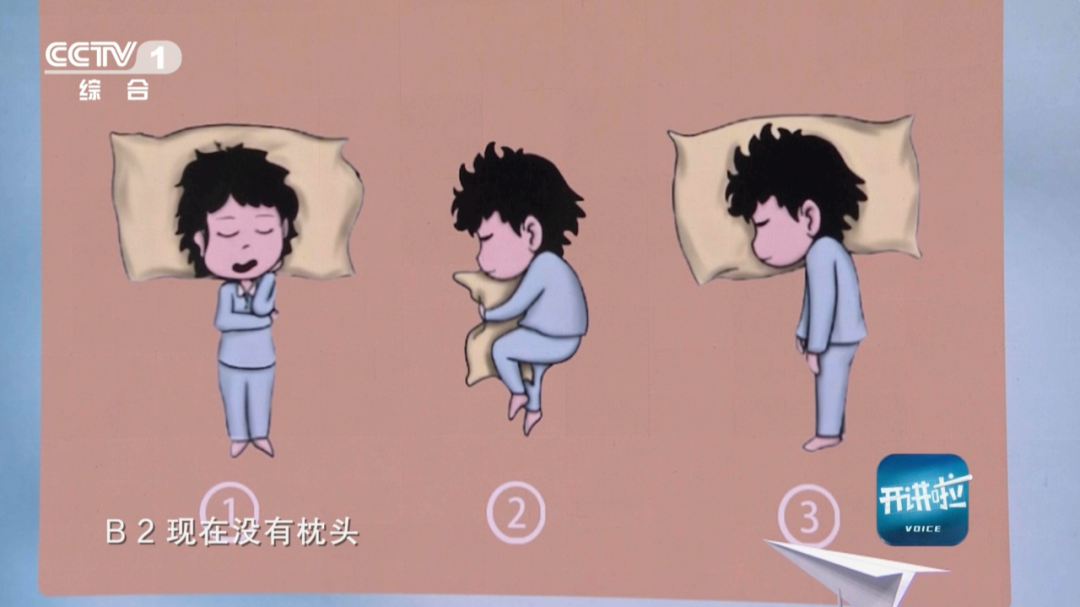
正确睡姿

Search documents
睡姿不正确脊柱早晚出问题!赶紧改
Zhong Guo Xin Wen Wang· 2025-12-02 01:55
Core Points - The article discusses the impact of sleep posture on spinal health and overall well-being, emphasizing the importance of proper sleeping positions to avoid discomfort and pain upon waking. Group 1: Recommended Sleeping Positions - Supine sleeping position is the most recommended as it exerts the least pressure on the spine and allows for better relaxation and recovery of muscles and joints [2] - For supine sleeping, it is crucial to maintain an appropriate pillow height to support the neck without causing strain [3][4] - A proper supine position can be achieved by placing a pillow under the thighs to reduce lumbar strain [6] Group 2: Issues with Supine and Side Sleeping - Common issues with supine sleeping include using pillows that are too high or too low, leading to neck and back pain [3][4] - Side sleeping can also lead to problems if the pillow height is not adequate, causing neck misalignment and potential pain [8] - Many individuals tend to cross their legs while side sleeping, which can lead to pelvic rotation and subsequent back pain [8] Group 3: Correct Side Sleeping Techniques - For side sleeping, it is important to use a pillow that fully supports the neck and head, keeping the cervical spine aligned with the ground [10] - Placing a pillow between the legs can help maintain pelvic neutrality and prevent excessive strain on the lower back [10] Group 4: Least Recommended Sleeping Position - Prone sleeping is the least recommended due to the strain it places on the neck and the restriction of chest and abdominal movement, which can hinder breathing and recovery [11] - This position can lead to significant neck pain and may contribute to long-term issues such as cervical spondylosis [11] Group 5: Importance of Mattress Quality - The firmness of the mattress significantly affects sleep quality; a mattress that is too hard can cause pressure points, while one that is too soft may not provide adequate support [12] - For pregnant women, specific sleeping positions are recommended during different trimesters to ensure comfort and safety [12]
再用这个姿势睡觉 脊柱早晚会出问题!
Yang Shi Xin Wen· 2025-09-26 06:48
Core Viewpoint - The article discusses the impact of sleeping positions on physical well-being, highlighting that improper sleeping postures can lead to discomfort and pain upon waking. Group 1: Recommended Sleeping Positions - Supine position is the most recommended as it minimizes spinal pressure and allows for better muscle relaxation and recovery [3] - In the supine position, the pillow height should be neither too high nor too low to avoid neck and back pain [5][6] - Side sleeping can be beneficial if the pillow supports the neck properly and prevents the pelvis from twisting [8] Group 2: Issues with Sleeping Positions - Side sleeping can lead to neck and back pain if the pillow is not at the correct height, causing an imbalance in the cervical spine [8] - Prone sleeping is the least recommended as it places excessive pressure on the neck, potentially leading to cervical issues [10] Group 3: Mattress Firmness - The firmness of the mattress significantly affects sleep quality; a mattress that is too hard can cause discomfort for thinner individuals, while one that is too soft may not provide adequate support for the spine [12] - For pregnant women, specific sleeping positions are recommended based on the trimester to ensure comfort and support [12]