武侠精神

Search documents
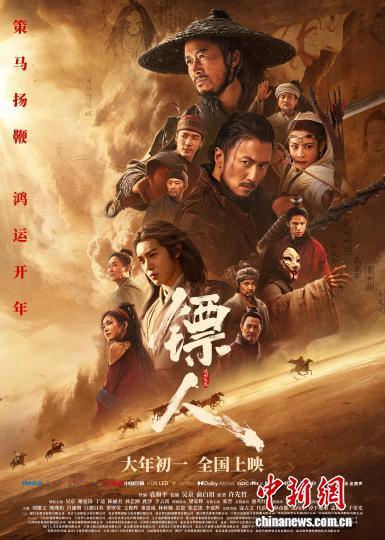
《镖人》、袁和平与渐远的江湖
3 6 Ke· 2026-02-20 02:57
Core Perspective - The film "Biao Ren" attempts to transform a comic story rooted in traditional chivalric spirit and Western film's desolate aesthetics into a visual presentation on the big screen, questioning how traditional martial arts aesthetics and chivalric essence can find new expression in modern times [1][2] Group 1: Film Production and Cast - Directed by 81-year-old Yuen Woo-ping, "Biao Ren" features a star-studded cast including Jet Li, Wu Jing, and Donnie Yen, representing nearly all active generations of Chinese action actors [1] - The film's essence is a blend of traditional martial arts ethics and modern storytelling, aiming to explore the continuity of martial arts spirit in contemporary society [1][2] Group 2: Industry Context and Challenges - The film reflects the current state of the martial arts film industry, where traditional elements are increasingly challenged by modern interpretations and technological advancements [2][12] - The decline of the traditional martial arts ecosystem is attributed to various factors, including market shrinkage and the loss of talent, leading to a disconnection from the foundational "jianghu" culture [8][11] Group 3: Artistic Direction and Aesthetic - Yuen Woo-ping's approach emphasizes physical authenticity and real action, contrasting with the trend of digital effects in modern filmmaking [12][15] - The film seeks to revive the "hard bridge, hard horse" aesthetic, showcasing genuine physicality and emotional depth in martial arts [14][15] Group 4: Cultural Significance and Future Prospects - "Biao Ren" serves as a reflection on the essence of chivalry in contemporary narratives, questioning how traditional values can be reinterpreted in today's context [17][18] - The film's release highlights the ongoing evolution of martial arts cinema, suggesting that while the traditional industry may be fading, the spirit of martial arts and its cultural significance can still resonate through new narratives and mediums [20][21][23]

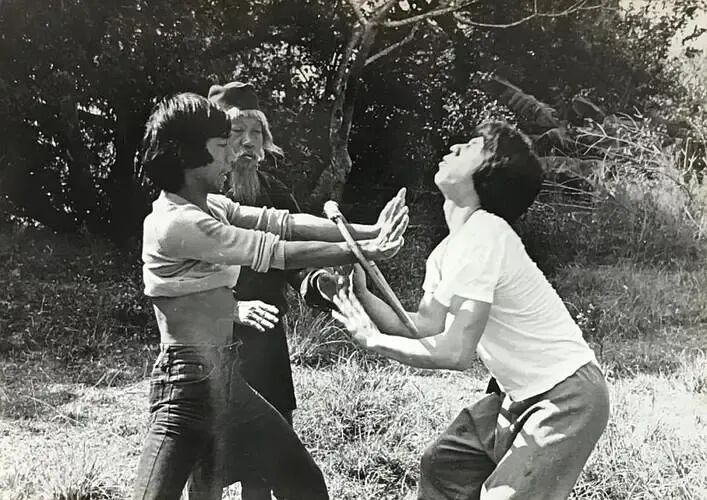
专访袁和平、吴京:电影《镖人》之真功夫与新侠韵
Xin Lang Cai Jing· 2026-02-18 09:02
Core Perspective - The film "Biao Ren: Wind Rises in the Desert" is a martial arts action movie adapted from a popular comic, showcasing innovative fight scenes and large-scale real location shooting to create a unique "Biao Ren world" filled with chivalry and martial spirit [1] Group 1: Film Production and Design - The film was shot on location in Xinjiang, utilizing distinctive regional features like sandstorms and deserts to enhance the fight choreography [1][3] - The action sequences are designed to integrate deeply with the environment, allowing for a logical and impactful representation of martial arts [3][4] - The director and lead actor emphasize the importance of "real kung fu" and authenticity in martial arts creation, striving to reflect the rawness and passion of the martial world [1][4] Group 2: Character and Emotional Depth - The climactic battle between the characters Dao Ma (played by Wu Jing) and Ti Ting (played by Xie Tingfeng) is designed to reflect their emotional struggles and long-standing grudges, rather than just showcasing fighting techniques [4][6] - The character of Dao Ma is crafted to embody a blend of toughness and emotional depth, with action sequences reflecting his personality and internal conflicts [4][6] Group 3: Historical Context and Audience Engagement - The film aims to balance the fantastical elements of the comic with the realism of live-action cinema, supported by extensive historical research to enhance audience immersion [6][7] - The creators believe that the core values of martial arts films—justice, protection, and perseverance—remain unchanged, and they seek to reinterpret these themes for modern audiences [7][8] Group 4: Legacy and Future of Martial Arts Cinema - The film represents an exploration of the evolution and future of martial arts cinema, emphasizing the need to maintain the essence of chivalry while innovating to meet contemporary audience expectations [7][8] - The film concludes with a tribute to past martial arts creators, symbolizing a generational connection and the ongoing legacy of the genre [8]
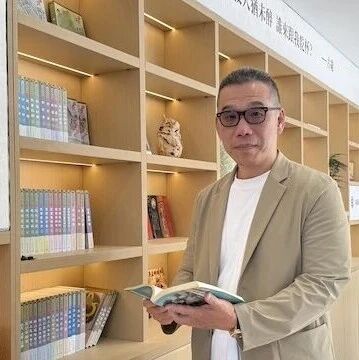
古龙研究中心落地杭州,当代年轻人还能爱上武侠吗
第一财经· 2025-11-25 06:29
Core Viewpoint - The establishment of the Gu Long Research Center in Hangzhou aims to revitalize and reinterpret Gu Long's works and the martial arts genre for modern audiences, emphasizing the timelessness of his themes and characters [4][10]. Group 1: Gu Long's Legacy - Gu Long, alongside Liang Yusheng and Jin Yong, is recognized for his significant contributions to martial arts literature, having authored nearly 70 novels that feature distinct characters like Li Xunhuan and Lu Xiaofeng [3]. - The Gu Long Research Center will serve as a hub for the authorization of Gu Long's works and will collaborate with the gaming and film industries to promote his literary legacy [4][10]. - Gu Long's writing reflects a deep understanding of human nature, aiming to portray not just conflict but also love, friendship, and the complexities of existence [6]. Group 2: Family Involvement - Zheng Xiaolong, Gu Long's eldest son, has taken an active role in managing the copyrights of his father's works, aiming to unify the family and preserve Gu Long's literary contributions [6]. - The family has experienced a renewed sense of cohesion over the past decade, focusing on how to connect Gu Long's works with contemporary youth through various media [6]. Group 3: Modern Relevance - Research indicates that traditional martial arts novels, including those by Gu Long, are less popular among contemporary youth, suggesting a need for adaptation to modern tastes [7]. - Gu Long's narratives often transcend the martial arts genre, exploring themes of power and desire, which resonate with current societal issues [9]. - The emotional depth of Gu Long's characters, reflecting loneliness and joy, aligns closely with the experiences of modern readers, making his work relevant today [9]. Group 4: Future Plans - The Gu Long Research Center plans to host academic discussions on martial arts literature and potentially open themed establishments like a tea house or restaurant to engage with fans [4][10]. - Upcoming adaptations of Gu Long's works, such as the series based on "The Earth Flying Eagle," aim to present his stories in formats appealing to younger audiences [10].
古龙研究中心落地杭州,当代年轻人还能爱上武侠吗
Di Yi Cai Jing· 2025-11-25 05:27
Core Viewpoint - The establishment of the Gu Long Research Center aims to revive and reinterpret Gu Long's martial arts legacy for younger generations, emphasizing the timelessness of his works and their relevance in contemporary culture [1][9]. Group 1: Gu Long's Legacy and Family Involvement - Gu Long, alongside Liang Yusheng and Jin Yong, is recognized as a major figure in martial arts literature, having authored nearly 70 novels that created iconic characters [1]. - The Gu Long Research Center, covering an area of 1,300 square meters, has been inaugurated in Hangzhou, close to Jin Yong's former residence, indicating a cultural connection between the two literary giants [1]. - Zheng Xiaolong, Gu Long's eldest son, has taken an active role in managing Gu Long's literary legacy, forming the "Gu Long Works Management and Development Committee" with his half-brothers [3]. Group 2: Future Plans for the Gu Long Research Center - The center will engage in licensing Gu Long's works and collaborate with the gaming and film industries, aiming to modernize the martial arts genre [3]. - Plans include hosting academic seminars on martial arts literature and potentially opening a tea house and restaurant themed around Gu Long's works, reflecting a desire to create a community around his legacy [3][9]. Group 3: Cultural Relevance and Modern Interpretation - Research indicates that traditional martial arts novels, including Gu Long's, are less popular among contemporary youth, suggesting a need for adaptation to modern tastes [6]. - Gu Long's narratives often explore deeper human emotions and societal structures, making them relevant to today's readers who seek connection with themes of individuality and existential inquiry [8]. - The adaptation of Gu Long's work into modern media, such as the upcoming series based on "The Earth Flying Eagle," demonstrates the ongoing relevance of his themes of loyalty and morality across generations [9].
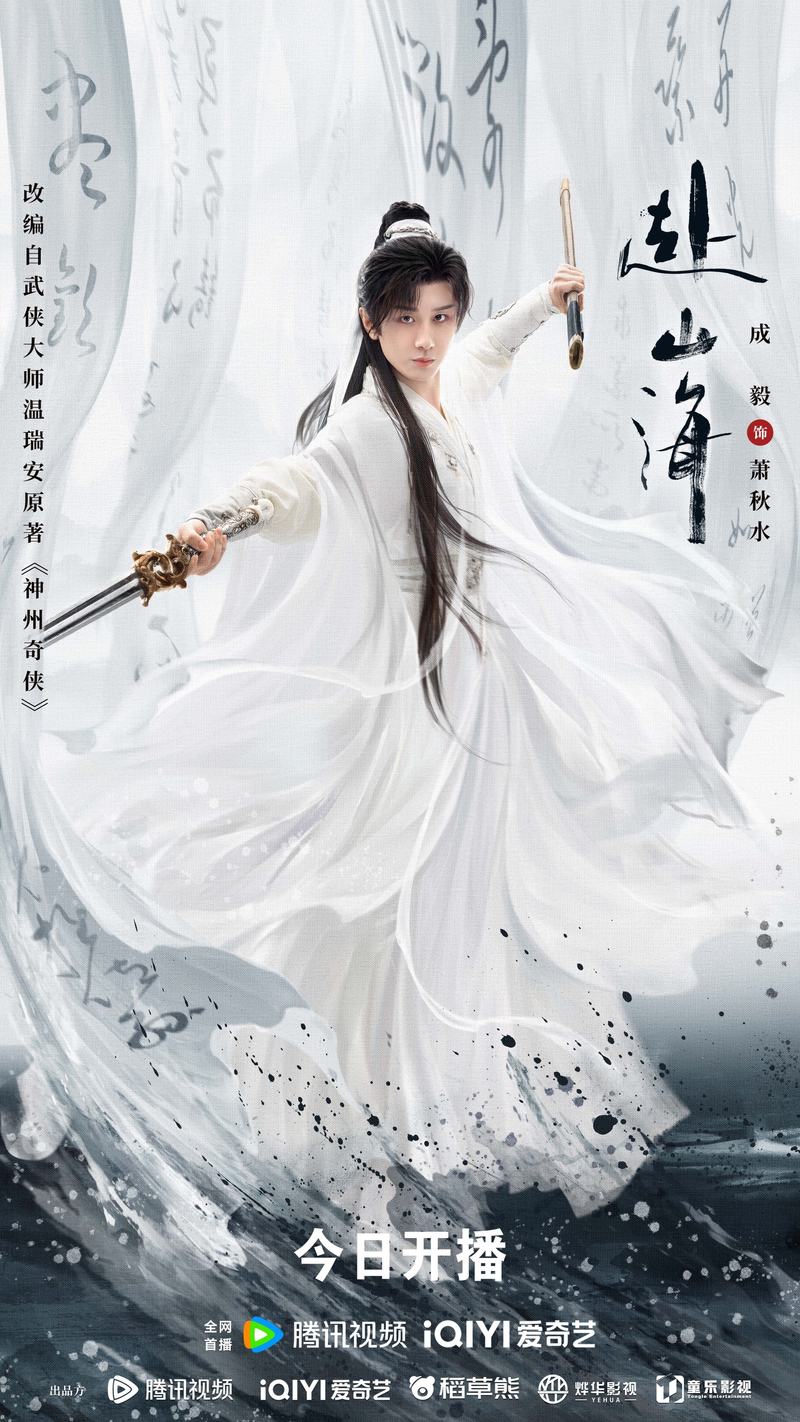
成毅领衔主演《赴山海》9月11日开播,用创新手法表达武侠精神
Xin Jing Bao· 2025-09-11 08:34
Core Viewpoint - The new martial arts drama "Journey to the Mountains and Seas" is set to premiere on September 11 on Tencent Video and iQIYI, featuring a fresh perspective on traditional martial arts while exploring themes of loyalty and heroism in a modern context [1][4]. Group 1: Production and Release - "Journey to the Mountains and Seas" is produced by Tencent Video, iQIYI, Straw Bear Pictures, Ye Hua Films, and Tong Le Films [1]. - The series is adapted from the original work "Shenzhou Qixia" by martial arts master Wen Ruian, aiming to blend classic elements with contemporary storytelling [1]. Group 2: Narrative and Character Development - The plot follows the character Xiao Mingming, played by Cheng Yi, who unexpectedly becomes the protagonist Xiao Qiushui, facing numerous challenges and betrayals that lead to personal growth [1][4]. - The character's journey is depicted as a gradual transformation from a self-preserving individual to a hero who prioritizes righteousness, providing a relatable narrative for viewers [4]. Group 3: Themes and Cultural Significance - The drama emphasizes the essence of martial arts culture, showcasing the camaraderie among different heroes and the fundamental values of loyalty and honor [4]. - It aims to resonate with the audience by presenting a rich tapestry of characters and their struggles, reflecting the enduring spirit of martial arts [4].
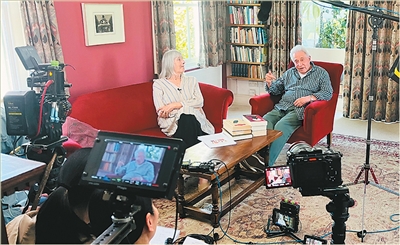
《大侠金庸》:展示武侠小说宗师的家国情怀
Ren Min Ri Bao Hai Wai Ban· 2025-06-27 04:49
Core Viewpoint - The documentary "The Great Hero Jin Yong" presents a multifaceted portrayal of Jin Yong, highlighting his contributions as a martial arts novelist and a significant figure in Hong Kong's media landscape, intertwining his personal journey with major historical events in China [2][3]. Group 1: Historical Context and Personal Journey - The documentary connects Jin Yong's life story with key historical moments in 20th-century China, from the wartime years to the Cold War and the economic reforms, illustrating how his fate is intertwined with the nation's [2]. - It emphasizes Jin Yong's role in drafting the Basic Law for Hong Kong, showcasing his commitment to national interests and his visionary approach during the handover of Hong Kong [2][3]. Group 2: Narrative Structure and Impact - The documentary is structured chronologically, with the first episode focusing on Jin Yong's childhood, followed by his career in journalism and novel writing in Hong Kong, and concluding with his later years and contributions to cultural exchange [3]. - It effectively decodes the cultural symbols in Jin Yong's works, demonstrating their global appeal and the interest they have generated among Western readers, particularly through the English translation of "The Legend of the Condor Heroes" [3]. Group 3: Cultural Significance - The documentary positions Jin Yong as a bridge between the martial arts world and reality, portraying him as a dream weaver who brings Eastern culture to a global audience [4]. - It highlights the documentary's role in reshaping the understanding of Jin Yong, emphasizing his dual identity as both a creator of martial arts narratives and a cultural ambassador [4].