家国情怀

Search documents
新春走基层 | 在周恩来邓颖超的“年”中感悟家国情怀
Xin Lang Cai Jing· 2026-02-28 03:42
Core Viewpoint - The article highlights the various activities and exhibitions organized by the Zhou Enlai and Deng Yingchao Memorial Museum during the Spring Festival, aiming to promote the spirit of the leaders and red culture, attracting over 42,000 visitors [2]. Group 1: Activities and Exhibitions - The museum has planned 18 activities from February to the Lantern Festival, including educational classes and thematic events to engage families and youth [4]. - New exhibitions such as "The Unfading Shadow: The 50th Anniversary of Zhou Enlai's Passing" and "The National Sentiment of Zhou Enlai and Deng Yingchao during the Spring Festival" have been introduced [3][4]. - The museum features a 1:1 replica of Zhou Enlai's office and living spaces, allowing visitors to experience the historical context of the leaders' lives [10]. Group 2: Historical Context and Personal Stories - The exhibitions showcase significant artifacts and documents related to Zhou Enlai and Deng Yingchao's experiences during the Spring Festival, including letters and personal reflections [7][9]. - A poignant story from 1961 recounts a simple New Year's Eve dinner hosted by Zhou Enlai, emphasizing the values of frugality and gratitude towards the Communist Party [5]. - The narrative includes Zhou Enlai's aspirations and reflections during his youth, illustrating his commitment to revolutionary ideals and personal growth [9]. Group 3: Cultural Significance - The events blend traditional Chinese cultural themes of reunion and renewal with the revolutionary spirit of dedication and sacrifice, resonating deeply with visitors [11]. - The museum's approach aims to create a warm and meaningful experience for attendees, fostering a connection between historical figures and contemporary audiences [10].

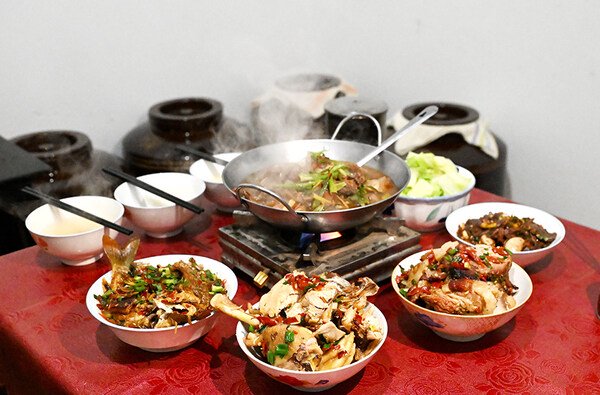
午夜团圆饭
Xin Lang Cai Jing· 2026-02-27 03:59
Core Viewpoint - The tradition of the midnight reunion dinner in Xiangbei symbolizes the deep connection between family and country, reflecting loyalty and love through shared meals and moments of togetherness [3][4] Group 1: Historical Significance - The midnight reunion dinner originated during the Anti-Japanese War when families prepared meals late at night for loved ones heading to battle, emphasizing the urgency of family bonds and national duty [3] - This custom has been passed down through generations, representing the commitment to national stability before personal reunion [3] Group 2: Cultural Elements - The dinner features simple, rustic dishes made from locally sourced ingredients, such as grass-fed beef, free-range chicken, and fresh fish, highlighting the agricultural heritage of the region [4] - The meal is characterized by warmth and familial connection, with conversations and laughter among family members, creating a comforting atmosphere [4] Group 3: Emotional Resonance - The midnight reunion dinner encapsulates the essence of love for family, serving as a reminder of the bonds that tie individuals to their roots and to each other [4] - It reflects the sentiments of those who cannot return home, transforming their longing into a sense of responsibility to protect their families and communities [4]
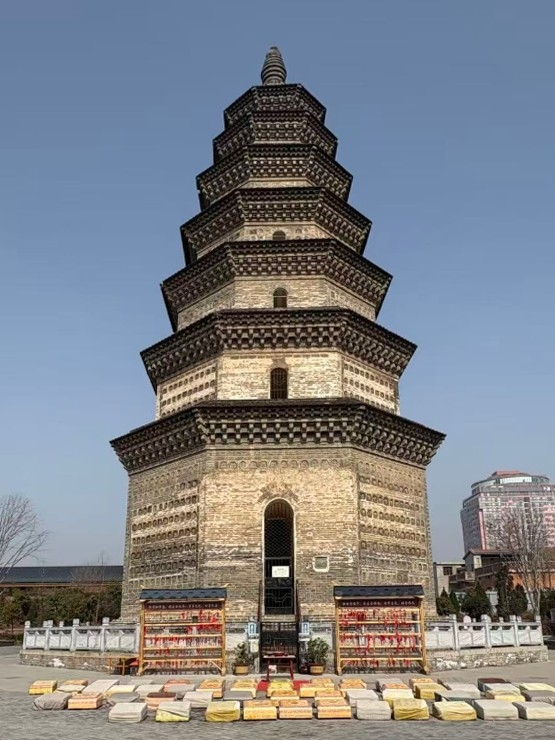
《太平年》热播,记者探访吴越钱氏纳土归宋后与南阳邓州的前尘往事 千年寺塔背后的家国情
He Nan Ri Bao· 2026-02-26 23:14
Core Viewpoint - The historical narrative of the Wu-Yue Kingdom and its last ruler Qian Hongchu is being revived through the popular TV series "Tai Ping Nian," highlighting his contributions to governance and the legacy of the Qian family in Nanyang [1][6]. Historical Context - The Wu-Yue Kingdom, under Qian Hongchu, is depicted as a stabilizing force during the chaotic Five Dynasties and Ten Kingdoms period, which saw 14 emperors in just 53 years [1][3]. - Qian Hongchu's submission to the Song Dynasty in 978 AD was a significant moment, leading to his recognition and the relocation of over 3,000 members of the Qian clan to Kaifeng [3][4]. Governance and Contributions - After his submission, Qian Hongchu was appointed as the King of Nanyang, where he implemented various governance measures, including improving local administration and infrastructure [4][6]. - His governance left a lasting impact, with historical sites like the Fusheng Pagoda in Nanyang serving as a testament to his contributions [4][5]. Cultural Legacy - The Qian family's teachings emphasize a sense of national duty and collective benefit, which continues to inspire descendants today [7][8]. - The revival of interest in Qian Hongchu's legacy through media and local history reflects the importance of historical narratives in shaping cultural identity [6][8].
爱你老己 还得看老祖宗陆游
Xin Lang Cai Jing· 2026-02-25 18:57
Core Viewpoint - The article explores the allure of Chengdu, particularly among younger generations, highlighting its cultural and culinary richness through the lens of the poet Lu You, who found deep affection for the city during his time there in the 12th century [7][11]. Group 1: Cultural Significance - Lu You's poetry reflects his profound connection to Chengdu, capturing the essence of the city and its vibrant life, which resonates with modern visitors [7][10]. - The poet's works, particularly "Chengdu Shushi," serve as a guide for contemporary city walks, showcasing the beauty of Chengdu's landscapes and cultural landmarks [8][9]. Group 2: Culinary Appeal - Lu You's writings detail the unique flavors of Sichuan cuisine, emphasizing dishes that have become iconic, such as "Jiang Huang" and "Zuo Kai Yu," which he fondly remembers even years after leaving the region [8][9]. - The poet mentions over 50 poems related to Sichuan's food, indicating the significant role of culinary experiences in his appreciation of the region [8]. Group 3: Personal Reflection and Emotional Connection - Lu You's time in Sichuan allowed him to reconcile his ambitions and frustrations, finding solace in the natural beauty and cultural richness of the area [11]. - His poetry reflects a journey of self-discovery and emotional healing, as he navigates his feelings of unfulfilled aspirations against the backdrop of Chengdu's landscapes [11].
张红梅:接续15年为烈士寻亲
Xin Lang Cai Jing· 2026-02-23 22:47
Core Viewpoint - The article highlights the dedication of Zhang Hongmei, a retired tax official, who has spent 15 years helping to locate the families of martyrs from Qiandongnan, ensuring that they are not forgotten and that their legacies are honored [1][2]. Group 1: Efforts in Finding Martyrs' Families - Zhang Hongmei and her husband have traveled over 4,000 kilometers across three provinces and five cities, identifying over 160 martyrs from Qiandongnan and locating photos for more than 50 of them [1]. - The journey involved extensive research, including reviewing archives and visiting various departments, demonstrating a commitment to reconnecting families with their lost loved ones [1]. Group 2: Initiatives Beyond Family Searches - In addition to finding families, Zhang has initiated efforts to place photos on the tombstones of martyrs, successfully adding images to 34 tombstones in the Malipo Martyrs Cemetery in 2018 [2]. - Zhang has organized volunteer efforts for regular maintenance of the tombstones and has conducted over 20 storytelling sessions about revolutionary history, impacting more than 2,000 individuals [2]. Group 3: Recognition and Ongoing Commitment - Zhang's family has received multiple accolades, including being named "Most Beautiful Military Support Family" in Guizhou Province in 2019 and "National Most Beautiful Family" in 2021, while she was honored as a moral model for helping others in 2023 [2]. - Despite retirement, Zhang continues her mission to find photos for 121 registered martyrs, emphasizing the importance of preserving their memories and passing on their spirit to future generations [2].
向春节坚守一线的工作者致敬
Xin Lang Cai Jing· 2026-02-23 20:40
Core Viewpoint - The articles highlight the dedication and contributions of frontline workers during the Spring Festival, emphasizing their role in ensuring safety and stability for society, and recognizing their sacrifices for the greater good [1][2]. Group 1: Contributions of Frontline Workers - Frontline workers maintain safety and stability during the Spring Festival, often sacrificing their own family gatherings to ensure others can celebrate [1]. - Their efforts are described as essential to the smooth operation of transportation and public services, showcasing their commitment to their responsibilities [1]. - The collective contributions of these workers symbolize the strength and resilience of the nation, reflecting a deep sense of duty and mission [1]. Group 2: Social Responsibility and Support - The commitment of these workers is framed as a societal responsibility, illustrating the connection between individual sacrifices and national unity [2]. - There is a call for relevant authorities to implement support policies for these workers, addressing their needs for food, accommodation, and family visits [2]. - Companies are urged to ensure fair compensation and provide cultural care for these workers, recognizing their contributions and ensuring they feel valued [2].
AI创意长图:用坚守诠释责任,以初心护万家团圆
Xin Lang Cai Jing· 2026-02-22 07:37
Core Viewpoint - The articles emphasize the dedication and commitment of various workers during the Spring Festival, highlighting their roles in ensuring safety, cleanliness, and order, which contribute to the overall warmth and stability of family reunions during this festive season [3][10][12]. Group 1: Roles of Workers - Medical staff in emergency rooms are tirelessly protecting lives [6] - Police officers patrol and maintain public safety [6] - Sanitation workers ensure the cleanliness of cities [6] - Utility workers (electricity, water, gas) and logistics personnel maintain city operations [7] - Railway workers are on duty during the Spring Festival, ensuring smooth travel for passengers [7] Group 2: Themes of Dedication - The commitment of countless ordinary workers connects personal sacrifices with national stability, embodying a deep sense of responsibility [12] - The spirit of selfless contribution and mission-driven dedication is portrayed as essential for achieving the vision of a harmonious society [12][15] - The collective efforts of these individuals are seen as a powerful force driving national rejuvenation and progress [15]

好评中国|AI创意长图:用坚守诠释责任,以初心护万家团圆
Huan Qiu Wang· 2026-02-22 06:41
Core Viewpoint - The article emphasizes the dedication and commitment of various workers during the Spring Festival, highlighting their role in ensuring safety and comfort for families reuniting during this time [10][12][15]. Group 1: Workers' Contributions - Numerous workers, including medical staff, police, sanitation workers, and transportation employees, remain on duty during the Spring Festival to ensure public safety and service continuity [6][7][10]. - These individuals embody the spirit of sacrifice, prioritizing their responsibilities over personal desires, thus contributing to a peaceful and harmonious festive atmosphere [10][12]. Group 2: National Sentiment - The article reflects on the deep connection between individual sacrifices and national well-being, portraying the workers' efforts as a microcosm of the broader national sentiment of unity and responsibility [12][15]. - The collective dedication of these workers is seen as a vital force driving the nation's progress and stability, reinforcing the idea of a shared destiny among citizens [15].

刷屏了!青岛这里成新晋网红打卡地!网友:拍出了我的人生照片
Xin Lang Cai Jing· 2026-02-21 11:02
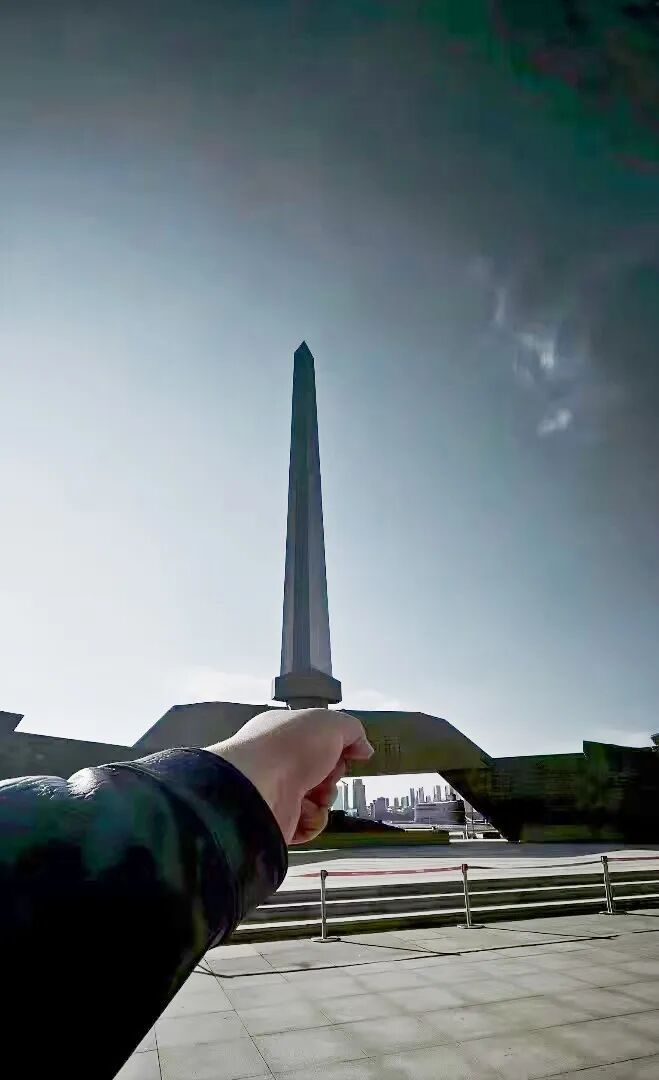
Core Viewpoint - The article highlights the popularity of a photo opportunity at the Qingdao Naval Museum, where visitors can take pictures in front of the "Bright Sword Deep Blue" sculpture, symbolizing the spirit of the People's Navy and evoking national pride [4][8]. Group 1: Photo Opportunity - The "Bright Sword Deep Blue" sculpture features a sword that symbolizes the strength and determination of the People's Navy, made from remnants of enemy ships destroyed by the Navy [4]. - Visitors can create a visual effect by positioning themselves at specific angles to appear as if they are holding the sword, enhancing the emotional connection to the military spirit [4][5]. Group 2: Photography Tips - To achieve the desired photo effect, visitors should stand at the side or at an angle to the sculpture, using perspective to align their hand with the sword's handle [5]. - It is recommended to shoot in portrait mode from a low angle to emphasize the height of the sword and the grandeur of the scene [5]. Group 3: Museum Exhibits - Beyond the photo opportunity, the museum features significant naval exhibits, including the Jinan ship and the Yingtan ship, which represent China's naval history and achievements [7]. - The land-based exhibit area showcases important military equipment, illustrating the evolution of the People's Navy from its inception to its current strength [7]. Group 4: Emotional Connection - The popularity of the "life photo" is attributed not only to its visual impact but also to its resonance with deep-seated feelings of patriotism and national pride [8]. - The experience of taking the photo is framed as a way to connect with the legacy of the People's Navy and its role in national defense [8].
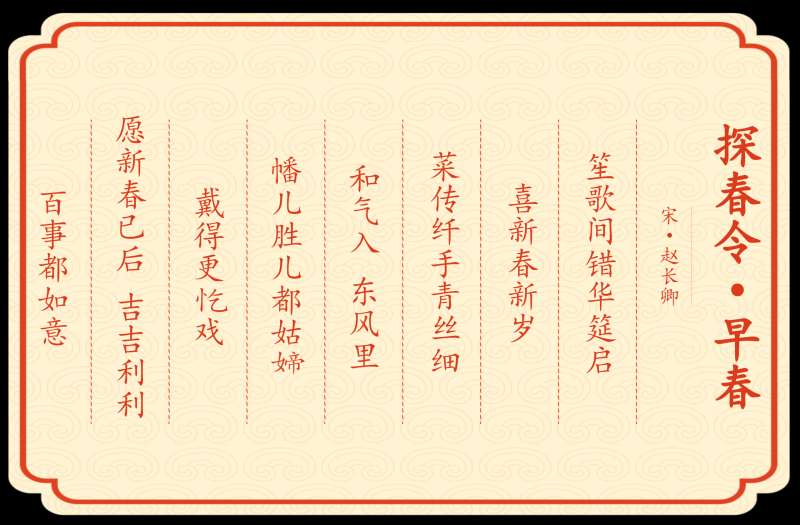
大年初五 联联带你穿越宋代诵读《探春令・早春》
Xin Lang Cai Jing· 2026-02-21 03:55
Group 1 - The article emphasizes the celebration of the Chinese New Year and the promotion of traditional culture through poetry recitation [1][3] - It highlights the importance of family unity and national sentiment during the festive season, encouraging collective engagement in classic literature [3] - The initiative aims to enhance cultural confidence and foster a sense of belonging among the community [1][4]