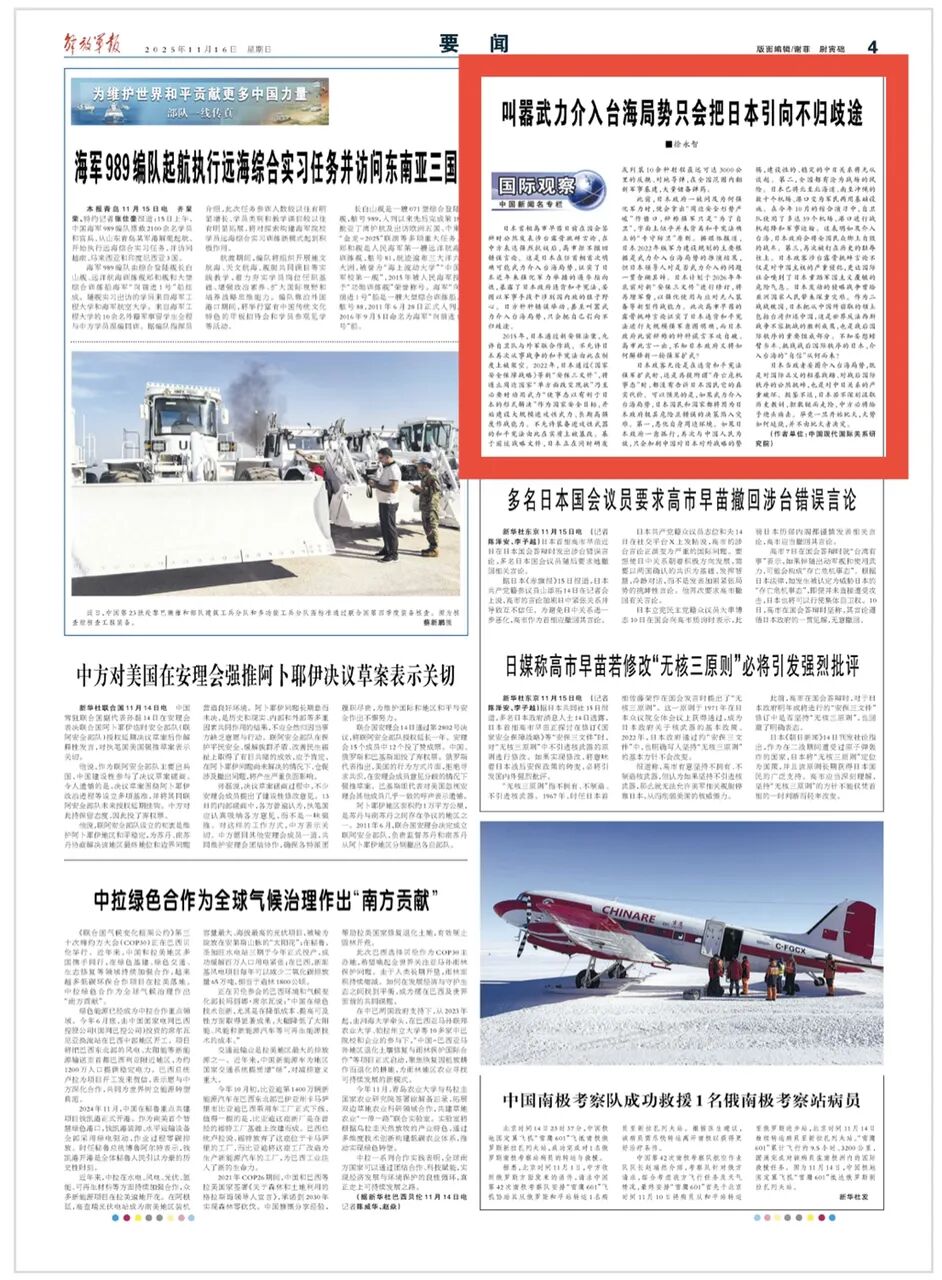
武力介入台海局势

Search documents
《解放军报》刊文:武力介入台海,日本全国都有沦为战场的风险
21世纪经济报道· 2025-11-16 03:58
Core Viewpoint - The article argues that Japan's potential military intervention in the Taiwan Strait would lead to disastrous consequences for both the Japanese people and the nation itself, including worsening regional security, the risk of becoming a battlefield, and a return to historical disgrace [1][5][7]. Summary by Sections Japan's Military Posture - Japan's recent military actions and rhetoric indicate a shift towards a more aggressive defense posture, including the potential for military intervention in the Taiwan Strait, which contradicts its pacifist constitution [4][5]. - The Japanese government has been enhancing its military capabilities, including the development of offensive weapons and the establishment of military infrastructure across the country [5][6]. Risks of Military Intervention - If Japan pursues military intervention, it would exacerbate its surrounding security environment, leading to increased tensions with China and undermining constructive Sino-Japanese relations [6][7]. - The transformation of numerous airports and ports into dual-use military facilities poses a risk of turning Japan into a battlefield, as demonstrated by recent military exercises involving multiple locations [6][7]. Historical Context and Consequences - The article highlights the historical implications of Japan's military ambitions, warning that such actions could lead to a repeat of past militaristic behaviors that caused suffering in Asia [7]. - Japan's current leadership is criticized for ignoring historical lessons, with a warning that any reckless military engagement could provoke a strong response from China [7].

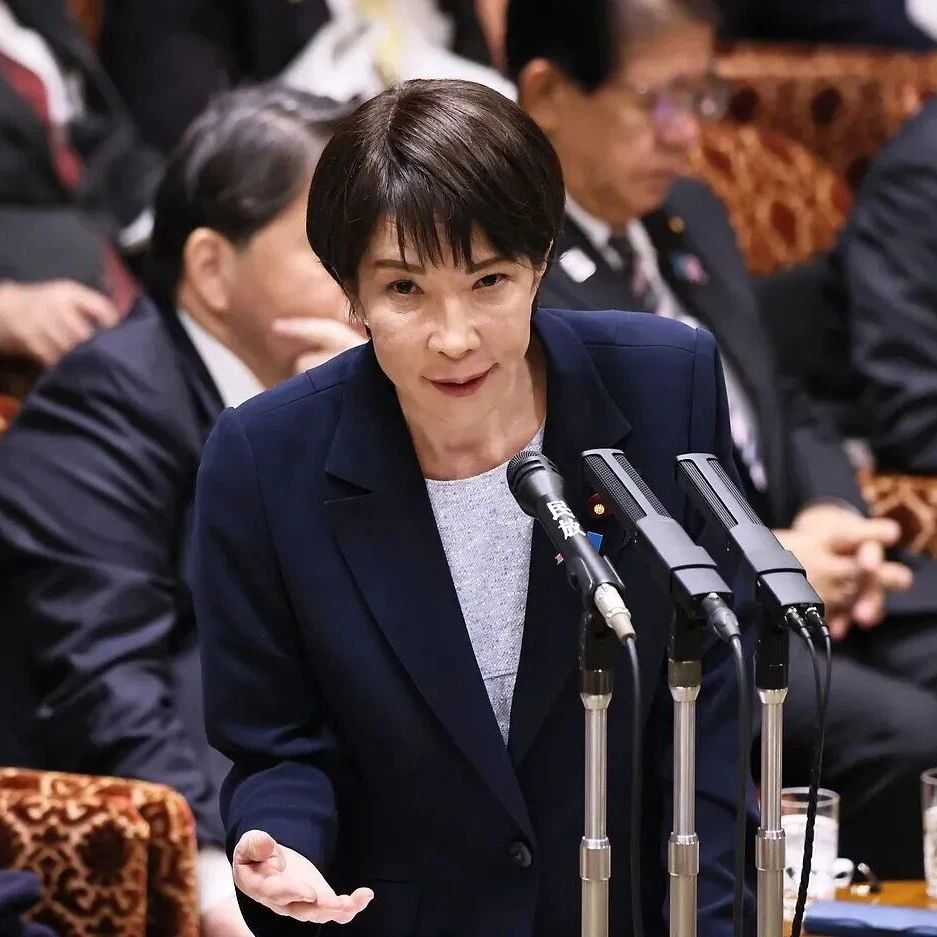
军报刊文:若武力介入台海,日本全国都有沦为战场的风险
第一财经· 2025-11-16 03:38
Core Viewpoint - The article emphasizes that Japan's recent provocative statements regarding potential military intervention in the Taiwan Strait, made by Prime Minister Sanna Takashi, reflect a significant shift in Japan's defense policy and pose risks to regional stability and Japan's own security [4][5][6]. Summary by Sections Japan's Military Policy Shift - Prime Minister Sanna Takashi's remarks mark the first time a sitting Japanese prime minister has explicitly suggested possible military intervention in the Taiwan Strait, indicating a clear military orientation against China [4]. - Japan's 2015 security legislation and subsequent strategic documents have effectively undermined its pacifist constitution, allowing for increased military collaboration with foreign forces and the development of offensive military capabilities [4][5]. Military Build-Up and Justifications - Japan's military expansion is justified by the government as a response to a "severe surrounding security situation," claiming that strengthening its military is merely for self-defense [5]. - The country is reportedly developing over ten types of missiles with ranges up to 3,000 kilometers and is modernizing military infrastructure nationwide [4][5]. Risks of Military Intervention - If Japan pursues military intervention in the Taiwan Strait, it risks worsening its regional environment and could lead to a significant deterioration in Sino-Japanese relations [6]. - The article warns that such actions could turn Japan into a battlefield, with military facilities being established across the country, thus endangering its civilian population [5][6]. Historical Context and Consequences - The provocative statements from Japanese politicians are seen as a serious infringement on China's sovereignty and evoke memories of Japan's militaristic past, raising concerns about a potential return to militarism [6]. - The article argues that Japan's current leadership must learn from historical lessons to avoid repeating past mistakes, as any reckless actions could lead to severe repercussions [6].

武力介入台海,日本全国都有沦为战场的风险
Xin Jing Bao· 2025-11-16 01:20
11月16日,《解放军报》4版刊发署名文章《叫嚣武力介入台海局势只会把日本引向不归歧途》。作者为中国现代国际关系研究院徐 永智。 文章称,如果武力介入台海局势,日本国民和国家都将因为日本政府极其危险且错误的决策陷入灾难:一是恶化自身周边环境,二是 全国都有沦为战场的风险,三是再次被钉在历史的耻辱柱上。不知妄想螳臂当车、挑战战后国际秩序的日本,介入台海的"自信"从何 而来? 全文如下—— 日本首相高市早苗日前在国会答辩时公然发表涉台露骨挑衅言论,在中方表达强烈抗议后,高市拒不撤回错误言论。这是日本在任首 相首次明确可能武力介入台海局势,证实了日本近年来强化军力举措的遏华指向性,暴露了日本政府违背和平宪法,妄图以军事手段 干涉别国内政的狼子野心。日方种种错误举动,甚至叫嚣武力介入台海局势,只会把自己引向不归歧途。 2015年,日本通过新安保法案,允许自卫队与外军联合作战。不允许日本再次从事战争的和平宪法由此在制度上被架空。2022年,日 本通过《国家安全保障战略》等新"安保三文件",将遏止周边国家"单方面改变现状"乃至必要时动用武力"使事态以有利于日本的形式 解决"作为国家安全目标,开始建设大规模进攻性武力、长期 ...