
武器交易

Search documents
最近5年全球武器交易增9%,中国进口减72%
日经中文网· 2026-03-18 08:03
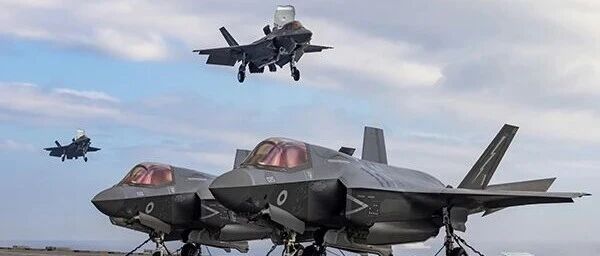
Core Viewpoint - The global arms trade is experiencing significant growth, with Europe becoming the largest importer, while China's arms imports have drastically decreased, indicating a shift in geopolitical dynamics and military procurement strategies [2][4][9]. Group 1: Global Arms Trade Trends - The global arms trade volume from 2021 to 2025 is projected to reach 154.1 billion TIV, marking the highest level since the late Cold War period of 1986-1990, and a 57% increase compared to the lowest levels recorded from 2001 to 2005 [4]. - The arms trade has increased by 9% compared to the previous five-year period of 2016-2020, driven largely by European imports which have surged to 3.1 times their previous levels [2][4]. Group 2: Regional Arms Import Dynamics - Europe is set to import 50.8 billion TIV of arms, accounting for 33% of global arms imports, making it the largest buyer, a significant increase from previous years when it lagged behind Asia, Oceania, and the Middle East [4][6]. - Ukraine's arms imports have skyrocketed to 149 billion TIV, a staggering 119-fold increase from 2016-2020, making it the largest arms importer globally [6]. Group 3: Specific Country Insights - India's arms imports are projected to reach 12.6 billion TIV, placing it second globally, while Pakistan's imports will be 6.4 billion TIV, indicating a potential for increased military tensions in the region [9]. - Japan's arms imports have increased by 76% to 6 billion TIV, ranking it sixth globally, while South Korea has reduced its imports by 54% due to increased domestic production [9]. Group 4: Dependence on U.S. Arms - European countries are increasingly reliant on U.S. arms, with 48% of their imports coming from the U.S. during 2021-2025, a rise from the previous period [6][8]. - The U.S. remains the largest arms exporter, with exports increasing by 27% to 64.6 billion TIV, and its share of global arms exports rising from 36% to 42% [9].

北约秘书长:美国反对乌克兰加入北约
Yang Shi Xin Wen· 2025-08-19 00:32
Core Viewpoint - The meeting on August 18 involved leaders from Ukraine, the U.S., and several European nations, focusing on security guarantees and military support for Ukraine amid ongoing tensions with Russia [1] Group 1: Security Discussions - NATO Secretary General Jens Stoltenberg described the day as very successful, emphasizing discussions on security guarantees, with further details to be discussed in the coming days [1] - The U.S. and some other countries have expressed opposition to Ukraine's NATO membership [1] - The discussions included the fifth security guarantee but did not cover the deployment of ground troops [1] Group 2: Military Agreements - Ukraine is set to commit to purchasing $100 billion worth of military equipment from the U.S., funded by Europe, in exchange for U.S. security guarantees following a peace agreement with Russia [1] - Additionally, a separate agreement for a $50 billion drone production collaboration is expected to be signed between the U.S. and Ukraine [1]
北约秘书长吕特:与美国的武器交易既可用于防御,也可用于进攻。
news flash· 2025-07-15 16:35
Group 1 - The core viewpoint of the article emphasizes that arms transactions with the United States can serve both defensive and offensive purposes [1] Group 2 - The statement reflects the dual-use nature of military equipment, indicating that such transactions are not limited to defensive strategies but can also be utilized for offensive operations [1] - This perspective may influence NATO's strategic planning and defense policies moving forward, highlighting the importance of understanding the implications of arms trade [1] - The comments from NATO Secretary General Jens Stoltenberg underline the ongoing discussions regarding military preparedness and the role of the U.S. in global defense initiatives [1]