母系社会

Search documents
重大成果!古DNA揭示史前母系社会
Xin Lang Cai Jing· 2026-01-24 06:12
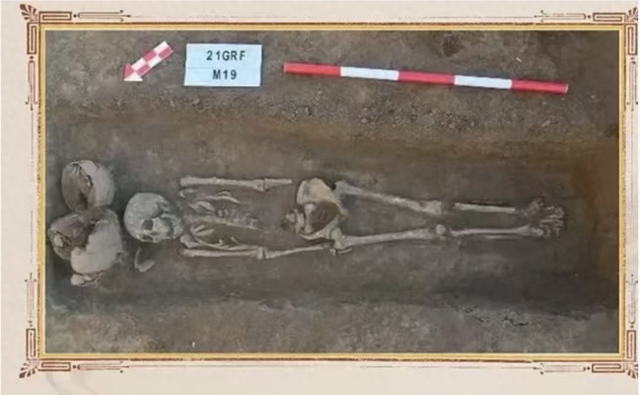
Core Viewpoint - The article discusses the recent archaeological findings at the Fujia site in Shandong, which provide concrete evidence of a matrilineal society existing around 4,500 years ago, utilizing ancient DNA analysis to verify kinship structures that were previously speculative [3][8]. Group 1: Archaeological Findings - The Fujia site, belonging to the late Dawenkou culture, features well-preserved human remains and clearly arranged burial sites, making it an ideal location for ancient DNA research [3]. - The study revealed two distinct, long-lasting matrilineal lineages at the Fujia site, with mitochondrial DNA serving as a key marker for tracing maternal lineage [7]. Group 2: Ancient DNA Research Methodology - The ancient DNA extraction process involves careful sampling from well-preserved areas like teeth or temporal bones, followed by rigorous laboratory procedures to avoid contamination [5]. - The research aims to establish biological kinship among individuals, moving discussions of clan and social structure from speculation to verifiable conclusions [5]. Group 3: Implications of the Findings - The findings indicate a stable community structure with clear boundaries between matrilineal groups, while also showing shared burial traditions and cultural practices, suggesting a cohesive social network rather than isolated groups [7]. - The research highlights a new pathway for understanding ancient societies, revealing how populations organized into families, clans, and communities, thus providing insights into social evolution [8].

一个女科幻作家的「进化」:从不写女性,到书里全员女性
36氪· 2025-03-08 13:49
Core Viewpoint - The article discusses the evolution of female representation in science fiction through the experiences of a Chinese female science fiction writer, Gu Shi, highlighting her journey towards a more inclusive and authentic portrayal of women in her works [2][8][19]. Group 1: Awakening and Transformation - Gu Shi experienced a "subjective awakening" after receiving feedback on her earlier works, prompting her to redefine her writing identity as a Chinese female author [3][12]. - She shifted from writing predominantly male protagonists to creating strong female characters, reflecting her personal growth and changing perspectives on gender roles [4][6][15]. Group 2: Cultural and Historical Context - Gu Shi's exploration of Chinese mythology and history led her to question traditional narratives, particularly regarding female figures in ancient stories, and to envision a matriarchal society as a more logical framework [5][18]. - Her works, such as "Zecheng," incorporate elements of Chinese culture and address contemporary issues like climate change, showcasing the potential of science fiction to explore gender dynamics [4][19]. Group 3: Female Representation in Science Fiction - The article emphasizes the importance of female voices in science fiction, noting that the genre can challenge societal norms and present alternative futures [19][24]. - Gu Shi's recent works, including "2181 Prelude," feature diverse female characters and have gained recognition, indicating a growing acceptance and demand for female-centric narratives in the genre [6][7][20]. Group 4: Challenges and Critiques - The article highlights the challenges female authors face, including criticism from both male and female readers regarding their portrayal of women and the expectations placed on them [27][28]. - Gu Shi advocates for the protection and encouragement of female writers, emphasizing the need for diverse representations and the importance of allowing women to define their narratives [26][29].