民族文化交融

Search documents
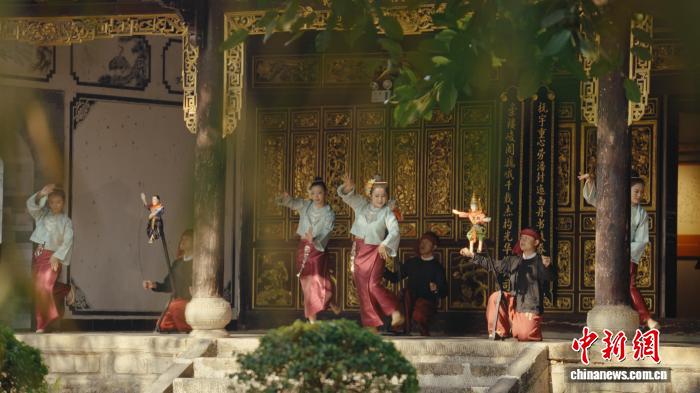
(新春见闻)云南“村晚”年味浓 各民族美美与共迎新春
Zhong Guo Xin Wen Wang· 2026-02-18 07:46
Core Viewpoint - The "Village New Year Gala" in Yunnan's Jingma County showcases the rich cultural diversity and unity among various ethnic groups, attracting significant online viewership and promoting local traditions globally [1][3]. Group 1: Event Overview - The "Village New Year Gala" titled "Every Village Has a Spring Festival, Every Settlement is Good" was broadcasted online on February 17, 2023, and has garnered over one million views [1][3]. - The event features performances from over 20 ethnic groups, including the Dai, Wa, Lahu, and Blang, celebrating the Chinese New Year through unique cultural expressions [3]. Group 2: Cultural Significance - The gala serves as a platform for cultural exchange, where different ethnic groups share their traditions, such as the Dai dance "Lai Jie En Sai" and the Wa song "Super Wa," highlighting the beauty of their respective cultures [3]. - Activities during the New Year include traditional games and community gatherings, fostering a sense of unity and shared joy among the diverse populations [3][6]. Group 3: Broader Impact - The event not only promotes local culture but also aims to attract international attention, as seen through the participation of overseas students who share their experiences and insights about Yunnan's rich cultural heritage [4][6]. - Similar "Village New Year" events are being organized across Yunnan, further enhancing the visibility of ethnic cultures and promoting community engagement [6].

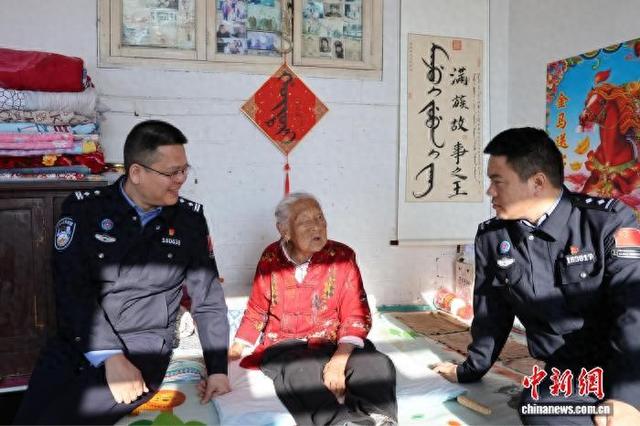
(新春走基层 )九旬老人炕头传授满语 戍边民警5年结对帮扶
Xin Lang Cai Jing· 2026-02-16 03:38
Core Viewpoint - The article highlights the heartwarming relationship between border police and a 97-year-old Manchu elder, emphasizing cultural transmission and community support in a remote border area of China [1][3][6]. Group 1: Community Support - The border police have been providing assistance to the elderly Manchu woman, He Shihuan, for five consecutive years, showcasing a strong commitment to community welfare [1][3]. - During their visit, the police brought traditional New Year goods and decorations, demonstrating their dedication to maintaining cultural traditions and supporting local residents [1][3]. Group 2: Cultural Transmission - He Shihuan shares ancient Manchu legends and traditions with the police, serving as a cultural educator and preserving the heritage of the Manchu people [3][4]. - The interaction between the police and He Shihuan represents a unique cultural exchange, where the police learn the Manchu language and stories, fostering a deeper connection with the local culture [4][6]. Group 3: Symbolism of Unity - The article illustrates the symbolic relationship between the police and the elder, with the elder's handmade paper cuttings expressing her blessings for the border police, reinforcing the bond between them [6]. - The narrative concludes with a message of unity and cultural continuity, portraying the police as guardians of both the border and the cultural heritage of the region [6].
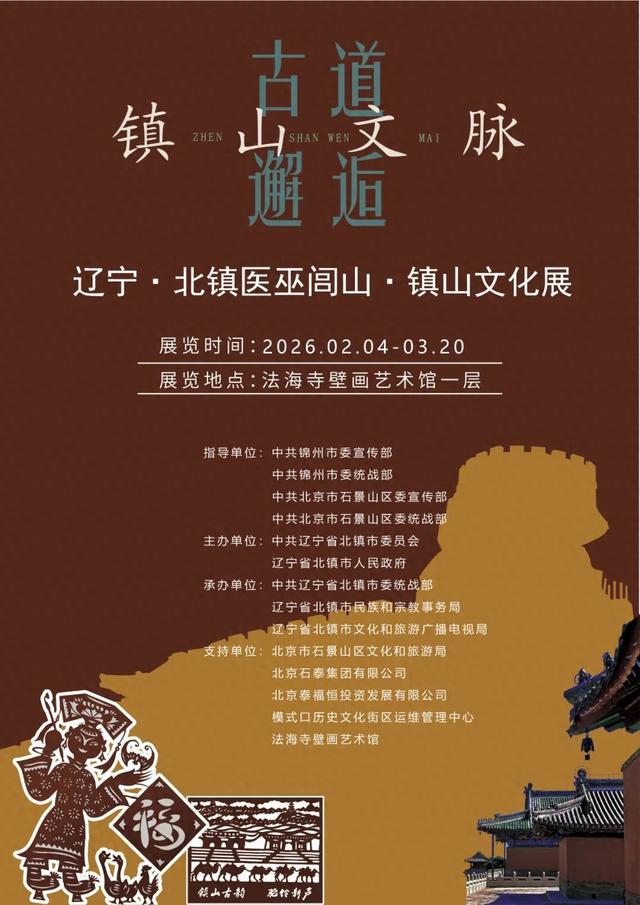
新展预告 | 从京西古道到关外镇山,一场跨越千里的文脉之约!
Bei Jing Ri Bao Ke Hu Duan· 2026-02-03 08:11
Core Viewpoint - The upcoming exhibition "Ancient Road Encountering Town Mountain Culture Exhibition" will showcase the rich cultural heritage of Beizhen and the Yiwulu Mountain, highlighting the integration of multiple ethnic civilizations along the ancient trade routes [1][19]. Group 1: Exhibition Details - The exhibition will take place from February 4 to March 20, 2026, with daily hours from 10:00 to 17:00 [5]. - The opening ceremony is scheduled for February 5, 2026, from 10:00 to 12:00, followed by the exhibition from 12:00 to 17:00 [6]. Group 2: Thematic Structure - The exhibition is organized into three main sections: "Zhenyue·Tracing Back," "Fudi·Inheritance," and "Revitalization·New Life," which will present the deep cultural roots and the vitality of the Yiwulu Mountain culture [6][17]. Group 3: Cultural Significance - "Zhenyue·Tracing Back" will guide visitors through the historical significance of the Yiwulu Mountain, showcasing artifacts from the Hongshan culture and the traditions of multi-ethnic worship [7][10]. - "Fudi·Inheritance" will focus on the historical connections between Beizhen and Beijing, illustrating the coexistence of various ethnic cultures through intangible cultural heritage [12][13]. - "Revitalization·New Life" will demonstrate the integration of traditional culture with contemporary tourism and artistic expressions, emphasizing the dynamic nature of multi-ethnic coexistence [17]. Group 4: Cultural Artifacts - The exhibition will feature national-level intangible cultural heritage items, such as Manchu paper-cutting and Liaoxi cloth tigers, showcasing the blend of different ethnic symbols and craftsmanship [16].
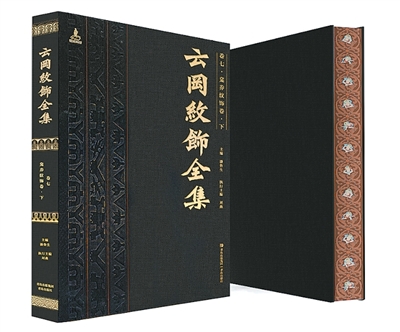
从云冈纹饰细节看文明传承(新书问答)
Ren Min Ri Bao Hai Wai Ban· 2025-08-06 22:47
Core Insights - The article discusses the significance of the newly published "Yungang Ornamentation Complete Works," which represents a milestone in the study of Yungang Grottoes and highlights the unique charm of Yungang ornamentation [4][5][6] Summary by Sections Historical Context - The "Yungang Ornamentation Complete Works" builds upon previous research, notably the archaeological reports by Japanese scholars in the 1950s and the "Yungang Grottoes Complete Works" published in 2019, marking a progression in the study of Yungang Grottoes [4][5] Innovations and Contributions - This new work fills the gap in systematic exploration of ornamentation that was absent in earlier studies, utilizing scientific methods and modern technology to recreate the artistic foundations of Yungang Grottoes [5][6] - It emphasizes a shift from macro to micro perspectives in research, revealing the evolution of artistic styles through detailed studies of ornamentation [6][10] Artistic and Cultural Significance - The ornamentation reflects the integration of diverse cultural influences, showcasing styles from Gandhara, Indian, and Persian Sasanian elements, and highlights the evolution from simple to complex designs over time [8][9] - The book categorizes ornamentation into various themes, illustrating a rich artistic world that serves as a key to understanding ancient artistic thoughts and cultural exchanges [9][10] Structure and Accessibility - The "Complete Works" consists of 18 volumes covering over 98% of visible ornamentation, organized into ten categories with detailed subcategories, ensuring a comprehensive research framework [10][11] - Plans for a simplified version and interactive digital products aim to make the content accessible to a broader audience, enhancing public engagement with Yungang ornamentation [11]
东西问丨王龙:拜寺口双塔如何见证辽宋夏金时期各民族文化交融?
Zhong Guo Xin Wen Wang· 2025-04-30 14:31
Core Viewpoint - The Baici Kou Twin Towers serve as a significant symbol of Western Xia Buddhist culture, showcasing the architectural and artistic achievements of the era while reflecting the cultural integration of various ethnic groups during the Liao, Song, Xia, and Jin dynasties [6][10]. Summary by Sections Historical and Cultural Value - The Baici Kou Twin Towers are important for their representation of Western Xia's reverence for Buddhism, featuring exquisite brick carvings and decorations that highlight the unique architectural style of the period [6]. - The towers incorporate elements from various cultures, including Central Plains styles and influences from Liao and Jin, with inscriptions in both Western Xia and Sanskrit, evidencing religious and cultural exchanges [6]. Architectural Comparison - The Baici Kou Twin Towers share similarities with contemporary towers in terms of materials and structure, primarily using brick and featuring multi-layered eaves [8]. - Differences include the robust design of the Baici Kou towers compared to the more slender forms of Song towers and the compact structure of Liao towers, reflecting regional cultural characteristics [9]. Artistic Significance - The towers are considered rare artistic treasures in Chinese Buddhist architecture, combining elements from Han and Tibetan Buddhist styles, showcasing a blend of cultural influences [10]. - Their unique structural design enhances seismic resilience, demonstrating advanced construction techniques of the Western Xia period [10]. Preservation and Research - There are six other ancient towers from the Western Xia period in Ningxia, each with distinct features, contributing to the understanding of the region's architectural evolution [12]. - Preservation efforts should focus on structural repairs and environmental management, while research should integrate archaeology and history to explore the cultural interactions reflected in the towers [18].