民生担当

Search documents
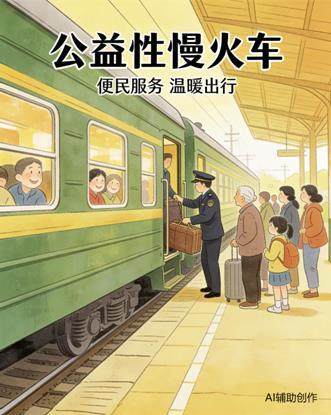
漫评:公益性慢火车的坚守,中国速度里的民生温情
Zhong Guo Jing Ji Wang· 2026-02-12 13:40
Core Viewpoint - The article emphasizes the significance of slow trains in China as a vital component of public transportation, highlighting their role in maintaining accessibility and supporting rural communities during the Spring Festival travel season [2][3]. Group 1: Public Service and Accessibility - Slow trains operate at low ticket prices, with fares starting as low as 1 yuan, ensuring that rural populations have access to transportation for education and work [2]. - The article notes that certain slow train routes, such as the 8818 train in the Taihang Mountains, have maintained unchanged fares for 34 years, reflecting a commitment to serving local communities [2]. - The slow trains connect remote areas to urban markets, facilitating the movement of local products and supporting the livelihoods of rural residents [3]. Group 2: Economic and Social Impact - Slow trains are described as engines of rural revitalization, transforming local products into marketable goods and enhancing economic opportunities for villagers [3]. - The railway department prioritizes social and developmental benefits over economic profits, focusing on improving the quality of life for rural residents [3]. - The article highlights the emotional connection and community spirit fostered by slow trains, which serve as a bridge between rural and urban areas, preserving cultural ties and local traditions [3]. Group 3: Complementary Role in Transportation - The coexistence of high-speed trains and slow trains is portrayed as a balanced approach to transportation, where high-speed trains offer efficiency while slow trains ensure inclusivity and accessibility [3]. - The article suggests that the slow trains embody a commitment to public service, providing a sense of warmth and connection in an increasingly fast-paced world [3]. - The ongoing operation of slow trains is framed as a commitment to safeguarding the needs of all citizens, ensuring that no one is left behind in the journey towards modernization [2][3].