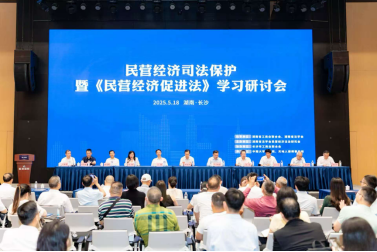
民营经济司法保护

Search documents
两会丨专访全国政协委员、上海新联会会长张毅:规范行政执法裁量 加快完善异地执法制度
证券时报· 2026-03-08 12:07
Core Viewpoint - The article emphasizes the importance of legal protection for the private economy, advocating for stricter regulation of administrative law enforcement and the establishment of clear legal frameworks to reduce disputes in judicial practices [1][4]. Group 1: Judicial Protection of Private Economy - The judicial protection of the private economy has seen improvements, but challenges remain, particularly in local enforcement practices that can be inconsistent or excessive [4][5]. - Recommendations include the strict implementation of administrative law enforcement regulations, such as public disclosure and record-keeping, to enhance transparency and efficiency [4][5]. Group 2: New Consumption Disputes - New consumption disputes are characterized by diverse parties involved, novel dispute content, electronic evidence, and complex paths for consumer rights protection [6][7]. - The legal framework is struggling to keep pace with the rapid evolution of new consumption models, leading to challenges in responsibility delineation and enforcement [10][11]. Group 3: Legal Adaptation to New Consumption Models - The current legal system shows some adaptability to new consumption scenarios but faces challenges, particularly regarding the clarity of rules for emerging models like live commerce [10][11]. - Suggestions include the need for judicial interpretations to clarify the application of existing laws to new consumption practices, ensuring that responsibilities are clearly defined for platforms and sellers [10][11]. Group 4: Intellectual Property and AIGC - The rise of AI-generated content (AIGC) has led to significant challenges in copyright attribution, with the proportion of AI-generated content increasing from 20% in 2024 to 50% in 2025 [13]. - There is a need for clearer copyright rules and compliance measures for open-source platforms to mitigate risks associated with potential infringements [14]. Group 5: Business Secrets and Employee Responsibilities - Protecting business secrets is critical, especially as employees may leak sensitive information upon leaving a company [15]. - Companies should implement strict confidentiality protocols and conduct ongoing training to mitigate the risk of information leaks [15]. Group 6: Expectations for New Company Law - The new company law introduces significant changes, including the horizontal denial of corporate personality, which requires clearer judicial interpretations to reduce ambiguity in practice [17][18]. - There is a call for improved transparency in corporate operations to facilitate evidence gathering for creditors, alongside the establishment of specialized bankruptcy courts to enhance judicial efficiency [18].


最高法为民企撑腰,严防趋利性执法
第一财经· 2025-08-13 01:00
Core Viewpoint - The article discusses the Supreme People's Court's recent guidelines aimed at addressing the issues of jurisdiction expansion and the artificial creation of cross-regional jurisdiction in cases involving private enterprises, emphasizing the need for procedural justice and transparency in the handling of such cases [2][5]. Group 1: Jurisdiction Issues - The guidelines stress the principle of "legal jurisdiction as the norm, designated jurisdiction as an exception," aiming to prevent profit-driven law enforcement and rectify the expansion of jurisdiction in cases involving private enterprises [2][5]. - There is a recognition that the expansion of jurisdiction and artificial cross-regional jurisdiction have become tools for local protectionism and channels for profit, with private enterprises viewed as lucrative targets [3][4]. - The improper handling of case-related assets is identified as a core issue, where jurisdiction serves as a seemingly legitimate opportunity for the mishandling of these assets [4][5]. Group 2: Enforcement Measures - The implementation of the Private Economy Promotion Law, effective from May, includes clear regulations on cross-regional law enforcement, requiring adherence to legal authority, conditions, and procedures [5][6]. - The Supreme People's Court and the Supreme People's Procuratorate have both emphasized the need for strict examination and legal handling of jurisdiction disputes to prevent illegal cross-regional law enforcement [5][6]. - Collaboration among various governmental and judicial bodies is highlighted as essential for addressing the prominent issues in law enforcement related to private enterprises [6][7].

民营经济司法保护暨《民营经济促进法》学习研讨会在长沙成功举行
Huan Qiu Wang· 2025-05-19 04:27
Core Points - The "Private Economy Promotion Law" will officially take effect on May 20, marking the first specialized law for the private economy in China, which clarifies the legal status of the private economy, optimizes the business environment, and strengthens rights protection [3][4] - The law aims to provide a solid legal foundation for the high-quality development of the private economy, with significant implications for its growth by 2025 [3][4] - The seminar gathered nearly 200 experts and representatives from the judicial, academic, and business sectors to explore legal pathways for the high-quality development of the private economy [1][3] Group 1 - The seminar was organized by various associations and institutions, including the Hunan Provincial Federation of Industry and Commerce and the Hunan Law Society, to discuss the implementation of the new law [1][3] - Hunan's provincial leaders emphasized the importance of the law in guiding and supporting the development of the private economy, with a focus on creating a conducive environment and addressing challenges [3][4] - Legal professionals highlighted the law as a milestone for the private economy, urging lawyers to enhance their roles in promoting the law and providing innovative services to private enterprises [3][4] Group 2 - Experts discussed the law's provisions and institutional innovations, with a focus on the judiciary's role in protecting property rights and resolving disputes for the private economy [4] - The seminar also covered the collaborative efforts between policy and judicial systems to create a law-based business environment, with practical examples shared by corporate legal representatives [4][5] - The implementation of the law is expected to lead to more practices that support the high-quality development of the private economy in Hunan, contributing to the region's economic modernization [5]