
气温回暖

Search documents
未来三天北京持续回暖最高温可达14℃
Jin Rong Jie· 2026-02-11 00:07
Group 1 - The article highlights that Beijing will experience a warming trend over the next three days, with the highest temperature reaching 14°C the day after tomorrow [1] - It notes that while daytime temperatures will be pleasant, the lowest temperatures will rise slowly, indicating that early mornings and evenings will still be cold [1] - The public is advised to continue their cold weather precautions and maintain warmth during this period [1]
最高温升至12℃!明起南京迎来回暖
Xin Lang Cai Jing· 2026-02-08 22:43
Group 1 - The core viewpoint of the article indicates that after a cold spell, temperatures in Nanjing are expected to rise starting from February 10, with a return to double-digit highs [1][4] - On February 9, the daytime temperature in Nanjing is forecasted to be between 6°C and 7°C, with morning lows of -2°C to -3°C and some areas experiencing frost [1][4] - From February 10, the maximum temperature is expected to reach 11°C to 12°C, and further increase to around 13°C on February 11, indicating a significant warming trend [1][4] Group 2 - The weather forecast for Jiangsu province indicates two weak precipitation events in the upcoming week, with the rest of the time being predominantly cloudy [2] - On the night of February 9, light rain or sleet is expected in the Huai River and northern regions, while other areas will experience light rain [2] - From February 12 to 14, temperatures are expected to rise, with most areas in the province reaching above 15°C [3]
北京本周气温回暖 最高气温可达12℃
Xin Lang Cai Jing· 2026-02-08 18:30
Summary of Key Points Core Viewpoint - The weather in Beijing is improving with clear skies and reduced wind, leading to a rise in temperatures, which is favorable for outdoor activities as the Spring Festival approaches [1]. Weather Conditions - After a period of strong northern winds, Beijing is experiencing sunny weather with temperatures expected to reach around 6°C during the day [1]. - The temperature is projected to rise gradually throughout the week, with a maximum of approximately 12°C by the 13th and a minimum of -2°C at night [1]. National Weather Outlook - A new round of widespread rain and snow is expected across China, affecting regions such as southeastern Tibet, eastern Southwest, Jianghan, Jiangnan, and Jianghuai, with light to moderate rain [1]. - Specific areas like northern Hubei, northern Hunan, northern Jiangsu, and Shandong may experience rain turning to snow or mixed precipitation [1]. - The southern regions will see a slow increase in temperature, while northern areas will warm up first, with significant warming expected in the central and eastern parts of the country by mid-month [1].
申城“冰箱模式”延续 下周中回暖
Xin Lang Cai Jing· 2026-02-08 07:08
Summary of Key Points Core Viewpoint - The article discusses the current cold weather in Shanghai, marking one of the coldest mornings of the winter, with temperatures dropping below freezing. However, a warming trend is expected to begin next week, bringing temperatures back above 10°C by Tuesday [2]. Weather Forecast - The Shanghai Meteorological Center indicates that the cold air's impact is nearing its end, with temperatures expected to rise gradually starting next week [2]. - On Monday morning, temperatures will still be below freezing, but daytime will see a slight increase in temperature [2]. - A significant turning point is anticipated on Tuesday, with maximum temperatures expected to exceed 10°C [2]. - By Saturday, maximum temperatures could reach around 15°C, leading to a more comfortable feeling in the city [2]. General Weather Trends - The overall weather for next week is expected to be favorable, with only minor precipitation expected on Monday and later in the week, while the midweek will be predominantly cloudy [2]. - Nationally, temperatures in much of central and eastern China are projected to be 1-3°C higher than the average for this time of year over the next ten days, indicating a general warming trend [2]. - Meteorological experts caution that despite the noticeable warming next week, there will still be significant temperature fluctuations between morning and evening, and uncertainties remain as the Spring Festival approaches [2].


大回暖又来了 立春后真的可以收羽绒服了吗?
Xin Lang Cai Jing· 2026-02-02 12:51
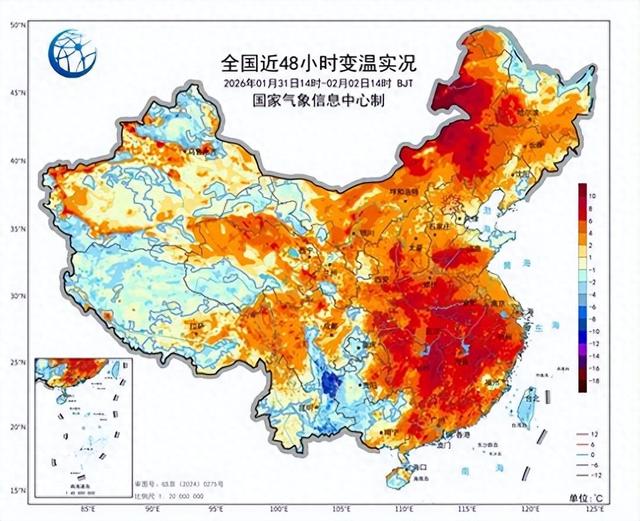
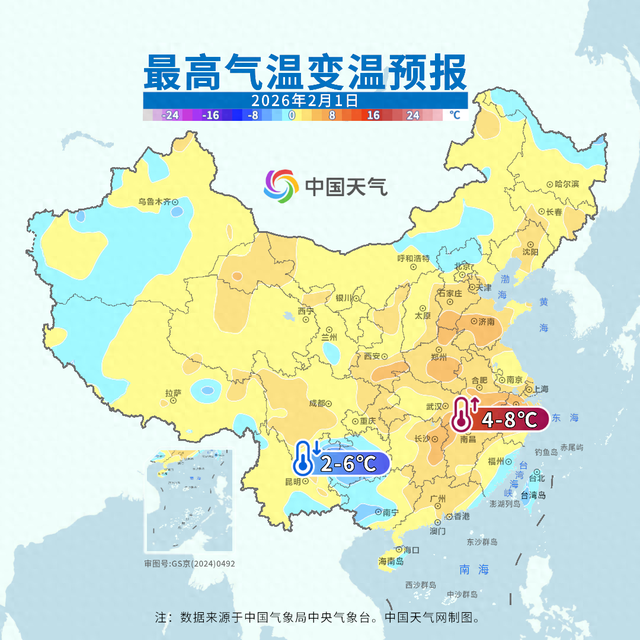
Group 1 - The core viewpoint of the article highlights a significant warming trend across most regions of China, with temperatures expected to rise notably above seasonal averages, particularly around the beginning of the spring festival [1][5] - The warming trend will see temperatures in northeastern regions peak on the 3rd, while areas from North China to the Yangtze River will reach their highs on the 4th, and southwestern to southern regions will peak on the 5th [3][8] - The article notes that daytime maximum temperatures will be 6-8°C higher than the historical average for this time of year, with some areas along the Yangtze River experiencing increases of around 10°C [5][6] Group 2 - Despite the warming, a new cold front is expected to move southward starting on the 5th, leading to a significant drop in temperatures across central and eastern regions, with declines exceeding 10°C in many areas [8] - The article warns that the rapid temperature fluctuations could lead to health risks, as the transition from warm to cold can be abrupt, potentially catching people off guard [6][8]
2月将有4次冷空气过程影响我国,还会有寒潮吗?
Xin Lang Cai Jing· 2026-01-31 10:14
Core Viewpoint - The weather during the Spring Festival travel season in February 2026 will be influenced by multiple cold air processes, with varying temperatures and precipitation across different regions of China. Group 1: Cold Air Processes - Four cold air processes will impact China in February, with varying intensities: moderate in early February, strong in mid-February, moderate again in mid-February, and weak towards the end of the month [1]. - The average temperature in February will be lower by 0.5 to 1°C in northern parts of North China, western Northeast China, northwestern Tibet, and northern Xinjiang, while the rest of the country will see temperatures close to or above normal [1]. Group 2: Precipitation and Weather Risks - The eastern and central regions will experience more precipitation in the north than in the south, with potential for low-temperature rain and snow events [2]. - Northeast China, northern North China, and northern Xinjiang will have temperatures close to or below normal with increased precipitation, leading to risks of strong cooling, strong winds, and heavy snowfall [2][3]. Group 3: Regional Temperature and Drought Conditions - Southeastern East China, southern Central China, eastern South China, and western Southwest China will experience higher temperatures and continued low precipitation, which may lead to meteorological drought conditions [4]. Group 4: Upcoming Weather Trends - A significant warming trend will last for nearly five days, with temperatures in many regions expected to rise by over 10°C, and some areas exceeding 15°C [5][6]. - A new cold air mass will arrive on February 5, bringing a temperature drop of 4 to 8°C, with localized areas experiencing drops of 10 to 12°C, along with light to moderate rain in various regions [8][10].
冷空气进入间歇期,未来南北方何时才能回暖?
Xin Lang Cai Jing· 2026-01-23 00:20
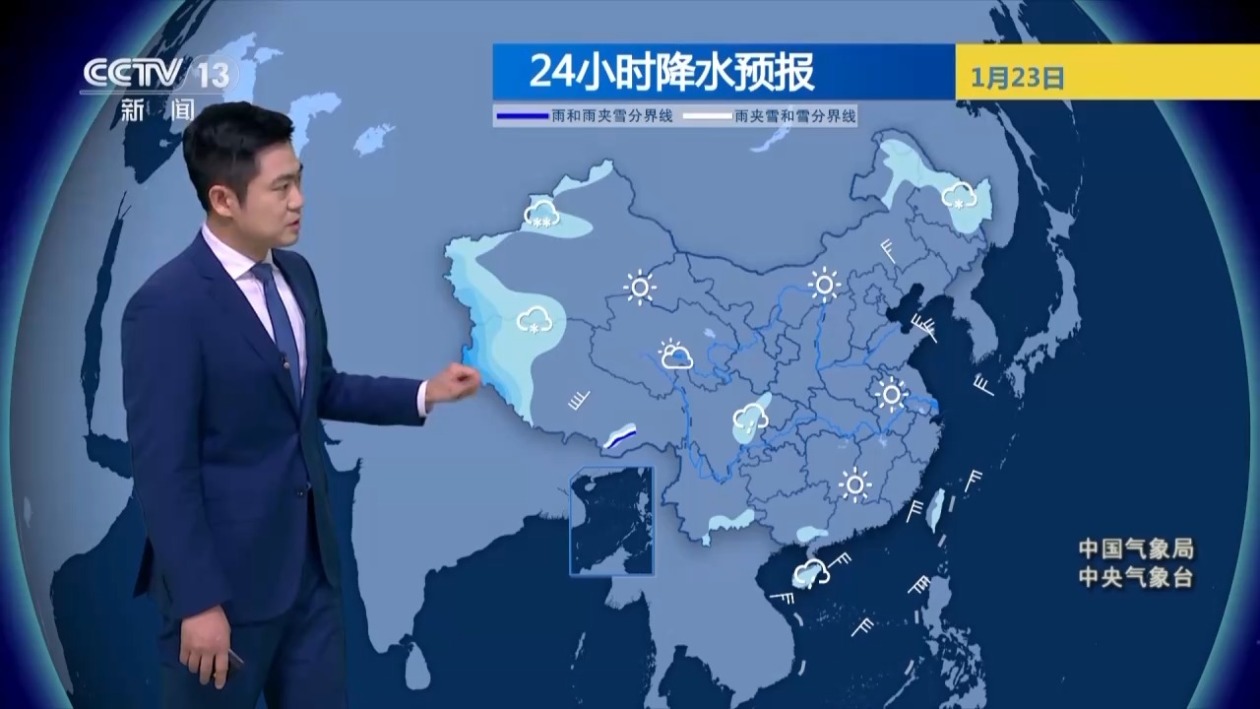
Group 1 - The cold wave in China has ended, leading to a warming trend across the country, with southern regions experiencing a more stable and significant rise in temperatures [1] - The highest temperature line of 10°C is expected to move northward to the Yangtze River, with many areas in Jiangnan and South China seeing temperatures rise above 20°C in the coming days [1] - Northern regions will experience a slower warming trend, particularly in Northeast China, where temperatures will remain lower than usual for this time of year [1] Group 2 - As the cold wave concludes, most of Central and Eastern China will enter a precipitation hiatus, while the western regions will see increased snowfall [3] - Strong snowfall is anticipated in western Xinjiang and western Tibet, with today being the peak period for snowfall, including heavy to blizzard conditions in some areas [3] Group 3 - No further cold wave events are expected in the coming days, but weak cold air will frequently impact the country [5] - From Sunday to early next week, a new cold air mass will cause temperatures to drop by 4-6°C in Jiangnan and areas north of it, with localized drops exceeding 8°C [5] - A significant rain and snow event is forecasted for Central and Eastern China, although the intensity of precipitation will be low, with light snow or sleet in northern regions and light to moderate rain in southern areas [5]
数说今年首场寒潮雨雪冰冻有多强,南北方各地何时回暖
Xin Lang Cai Jing· 2026-01-22 08:53
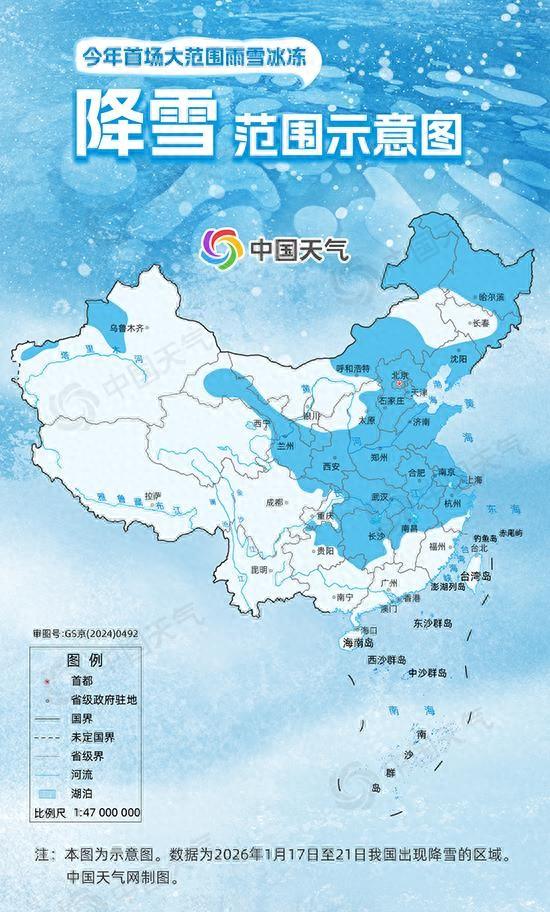
Core Insights - A significant cold wave has impacted central and eastern China, bringing the first large-scale rain, snow, and ice weather event of the winter from January 17 to 21, affecting over twenty provinces [1][2][3] Summary by Sections Snow and Ice Impact - The core areas of snowfall were identified in Henan, northern Hubei, and northern Anhui, with some regions experiencing heavy to extreme snowfall, such as over 20mm of precipitation in places like Jinzhai, Quxian, and Danjiangkou on January 19 [3][4] - Accumulated precipitation ranged from 5 to 15mm in many areas, with specific locations like Zhumadian in Henan and Liu'an in Anhui receiving between 20 to 26mm [1][2] Freezing Rain - Freezing rain occurred in regions including southern Hunan, central Hubei, and parts of Guizhou, with the maximum ice thickness reaching 169mm in Hunan [4] - Ice accumulation affected power lines in multiple counties across Hunan, Guizhou, and Hubei, leading to significant disruptions [4] Temperature Drops - A drastic temperature drop was recorded across most of the country, with average daily temperatures falling by 6°C to 10°C, and some areas experiencing drops of 12°C to 20°C [6][7] - Major cities reported record low temperatures, with Harbin reaching -30.1°C on January 18, marking the lowest temperature recorded in urban areas this winter [7][9] Future Weather Outlook - As of January 22, the cold wave's impact is diminishing, with southern regions expected to experience a stable warming trend, while northern areas will see slower and more variable temperature increases [10][12] - By January 25, temperatures in southern regions are projected to rise above 20°C, while northern areas, particularly in the northeast, will continue to experience below-average temperatures for at least the next week [12]
寒潮影响趋于结束 明起长沙气温回暖
Xin Lang Cai Jing· 2026-01-21 19:35
Group 1 - The current cold wave in Changsha has reached its peak, with temperatures dropping to a low of -3.8℃, marking the coldest point of the winter so far [2] - The snowfall in Changsha has created a festive atmosphere, with residents excitedly engaging in winter activities despite limited snow accumulation [2] - The meteorological data indicates that from January 20 to January 21, the region experienced freezing rain transitioning to snow, with ice thickness ranging from 0.2mm to 4mm and snow depth below 1cm in most areas [2] Group 2 - The cold wave is expected to end soon, with temperatures in Changsha set to rise significantly after January 23, potentially returning to or exceeding normal seasonal levels [3] - The cold air mass affecting the region originated from Siberia, characterized by a gradual spread rather than a sudden drop in temperatures, leading to a prolonged cold period [3] - By January 25, the maximum temperature in Changsha is projected to reach 18℃, with minimum temperatures rising to 5℃, although another cold air mass is expected to impact the area starting January 26 [3]

“三九”暖如春 长三角多地最高气温破20℃
Zhong Guo Xin Wen Wang· 2026-01-14 11:50
Core Viewpoint - The article discusses a significant temperature increase in the Yangtze River Delta region during the "Three Nine" period, with temperatures reaching around 20°C, but warns of an impending cold front that will drastically lower temperatures [1] Summary by Sections Temperature Trends - The Yangtze River Delta, including Shanghai, Jiangsu, and Zhejiang, experienced a warm spell with maximum temperatures around 20°C on January 14 [1] - Zhejiang province is expected to see some areas reach up to 25°C in the coming days, with morning lows rising to around 10°C, indicating a substantial reduction in cold [1] Weather Patterns - The warming trend is widespread and significant, with the Central Meteorological Observatory reporting that the temperature in the Huanghuai to Jiangnan region is notably higher than the historical average, by more than 10°C in some areas [1] - This winter warmth is expected to be interrupted by a strong cold front, bringing strong winds, a sharp drop in temperatures, and potential rain and snow [1] Public Advisory - Meteorological experts advise the public to adopt an "onion-style" dressing strategy due to the large temperature fluctuations between day and night [1] - It is recommended that individuals stay updated on weather forecasts and prepare adequate warm clothing to mitigate the impacts of the upcoming cold snap and inclement weather on travel and health [1]