
冷空气过程

Search documents
春节假期天气前雨后晴
Xin Lang Cai Jing· 2026-02-12 23:43
Summary of Key Points Core Viewpoint - The weather forecast indicates a warming trend in the city, with temperatures expected to rise significantly during the upcoming days, particularly around the Spring Festival period, with no major adverse weather conditions anticipated nationwide [1]. Weather Forecast - The highest temperature in the city reached approximately 17°C, with expectations to rise to 19°C to 20°C in the next two days [1]. - A cold air mass is expected to arrive on February 15-16, leading to a temperature drop of 7°C to 9°C, with maximum temperatures falling to 7°C to 8°C [1]. - The coldest temperatures are predicted for the mornings of February 18-19, with lows of 1°C to 2°C [1]. - After the initial cold spell, clear weather is expected to return on February 18, with temperatures potentially rising to 20°C to 21°C by February 20-21 [1]. - A new cold air mass will arrive around February 24-25, which will lower maximum temperatures to 11°C to 12°C, but without bringing rain [1]. National Weather Overview - The national weather map for the Spring Festival indicates no significant rain, snow, or freezing weather across the country, making it generally suitable for travel [1]. - Some southern regions may experience light rain, but overall precipitation is expected to be minimal [1].
广西气温直冲24℃ 2月5日后冷空气上线
Xin Lang Cai Jing· 2026-02-02 00:29
Group 1 - The Spring Festival travel season in 2026 has begun, with favorable weather conditions in Guangxi for travel, as temperatures are gradually rising, reaching a high of 24°C in southern Guangxi [1] - From February 5th, a new cold air mass will arrive, bringing rain, temperature drops, and strong winds, prompting travelers to dress warmly [1] - The China Meteorological Administration announced that February will experience four cold air events, including moderate and strong cold air processes [1] Group 2 - Starting from February 1st, most of the country has entered a warming trend, with southern regions also experiencing rising temperatures [3] - The Guangxi Meteorological Station forecasts that temperatures will rise over the next three days, with northern Guangxi reaching highs of 14°C to 20°C and southern regions reaching 20°C to 24°C [3] - The temperature fluctuation in Guangxi will show a clear trend of rising then falling over the next week, indicating that travelers should closely monitor weather forecasts and adjust their clothing accordingly [3]

2月全省大部降水偏少 平均最低气温比常年略高
Xin Lang Cai Jing· 2026-02-01 00:45
Core Insights - The weather forecast for February 2026 in Guangdong province indicates a significant reduction in precipitation across most areas, with temperatures expected to be close to or slightly above historical averages [1][2] - The forecast predicts four cold air events throughout the month, which may lead to low-temperature rainy weather in certain regions, particularly in northern Guangdong during the early part of the Spring Festival [1][2] Summary by Sections Precipitation Forecast - Most areas in Guangdong are expected to experience a 20% to 50% decrease in rainfall compared to the historical average, except for the southwestern region, which may see a 10% increase [1] - In Guangzhou, the expected monthly rainfall is between 20mm and 45mm, averaging 25mm to 40mm, which is 20% to 50% lower than the historical average of 51.7mm [2] Temperature Forecast - Average temperatures in northern Guangdong are projected to be 0.5°C to 1.0°C higher than the historical average, while most other areas will be close to or slightly above the norm [1] - In Guangzhou, the average temperature is forecasted to range from 15.5°C to 18.0°C, with an overall average of 16.2°C to 16.7°C, also reflecting a 0.5°C to 1.0°C increase compared to the last 30 years [2] Cold Air Events - The month is expected to see four cold air processes occurring on specific dates: February 6-8 (weak), 11-13 (weak), 16-18 (moderate to weak), and 24-27 (weak) [1] - The cold air events are likely to coincide with periods of light to moderate rainfall, particularly affecting northern regions of Guangzhou from February 17-19 [2] Public Advisory - The meteorological departments advise the public to monitor daily weather updates due to the long-term nature of the forecasts, as actual conditions may vary [2] - There is a warning regarding the potential impacts of reduced rainfall on forest fire risks and the need for careful water management during the month [2]
2月将有4次冷空气过程 春运出行有哪些影响?一文了解
Xin Lang Cai Jing· 2026-01-31 11:13
Core Viewpoint - The weather forecast for the Spring Festival travel period in February 2026 indicates multiple cold air processes affecting China, with varying temperatures and precipitation patterns across different regions. Group 1: Cold Air Processes - Four cold air processes are expected in February, with varying intensities: moderate in early February, strong in mid-February, moderate again in mid-February, and weak towards the end of the month [1][2][3]. Group 2: Temperature Trends - Average temperatures in February show that most regions will be close to or above normal, except for northern parts of China where temperatures may be 0.5 to 1°C lower than usual [1]. - Significant warming is anticipated, with some areas experiencing temperature increases exceeding 10°C, and in some cases, over 15°C [6][8]. Group 3: Precipitation Patterns - Precipitation is expected to be higher in northeastern and northern regions, with risks of low-temperature rain and snow events [2][3]. - Southern regions, including parts of East China and South China, are forecasted to have lower precipitation, leading to potential meteorological drought conditions [4]. Group 4: Upcoming Weather Events - A new cold air mass is set to arrive from February 5 to 7, bringing temperature drops of 4 to 8°C, with localized areas experiencing drops of 10 to 12°C [7]. - The weather will fluctuate significantly, with a trend of warming followed by cooling, necessitating travelers to stay updated on weather forecasts [10].
2月将有4次冷空气过程影响我国,还会有寒潮吗?
Xin Lang Cai Jing· 2026-01-31 10:14
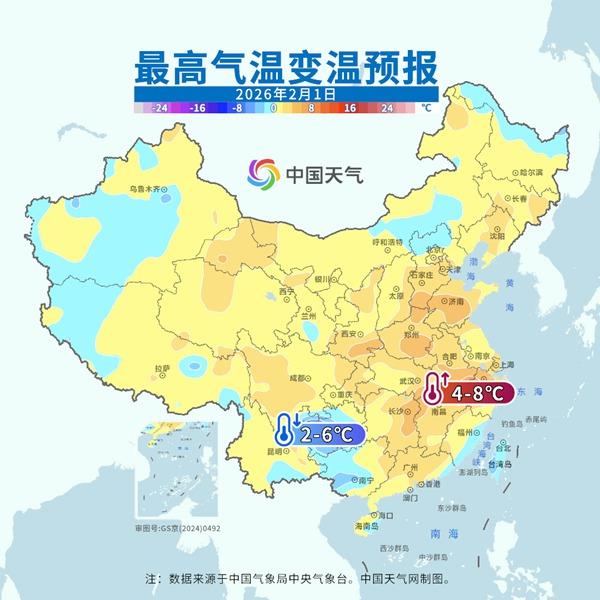
Core Viewpoint - The weather during the Spring Festival travel season in February 2026 will be influenced by multiple cold air processes, with varying temperatures and precipitation across different regions of China. Group 1: Cold Air Processes - Four cold air processes will impact China in February, with varying intensities: moderate in early February, strong in mid-February, moderate again in mid-February, and weak towards the end of the month [1]. - The average temperature in February will be lower by 0.5 to 1°C in northern parts of North China, western Northeast China, northwestern Tibet, and northern Xinjiang, while the rest of the country will see temperatures close to or above normal [1]. Group 2: Precipitation and Weather Risks - The eastern and central regions will experience more precipitation in the north than in the south, with potential for low-temperature rain and snow events [2]. - Northeast China, northern North China, and northern Xinjiang will have temperatures close to or below normal with increased precipitation, leading to risks of strong cooling, strong winds, and heavy snowfall [2][3]. Group 3: Regional Temperature and Drought Conditions - Southeastern East China, southern Central China, eastern South China, and western Southwest China will experience higher temperatures and continued low precipitation, which may lead to meteorological drought conditions [4]. Group 4: Upcoming Weather Trends - A significant warming trend will last for nearly five days, with temperatures in many regions expected to rise by over 10°C, and some areas exceeding 15°C [5][6]. - A new cold air mass will arrive on February 5, bringing a temperature drop of 4 to 8°C, with localized areas experiencing drops of 10 to 12°C, along with light to moderate rain in various regions [8][10].
2月天气早知道:4次冷空气过程将影响我国
Xin Hua She· 2026-01-29 09:44
Group 1 - The core viewpoint of the article highlights the expected impact of four cold air processes in February, which may affect transportation and other sectors during the Spring Festival period [1] - The first cold air process is expected from February 5 to 7, followed by another from February 10 to 13, with a potential cold air impact before the Spring Festival holiday [1] - The intensity of the cold air processes varies, with moderate strength in early February, stronger in mid-February, and weaker towards the end of the month [1] Group 2 - Northern regions are advised to prepare for significant temperature drops and heavy snowfall, particularly in areas like Inner Mongolia, Northeast China, and Northern Xinjiang, where temperatures may be below normal [2] - Areas in Northeast and Central China should be aware of low-temperature rain and snow risks, necessitating safety measures for transportation and energy supply [2] - Regions in Southeast China and parts of Southwest China are at risk of meteorological drought, requiring water conservation efforts and fire prevention measures [2] - The Northwest region is expected to experience increased dust and low visibility, which could adversely affect health and transportation [2] Group 3 - January saw higher-than-normal temperatures in China, with significant fluctuations and below-average precipitation [3] - A total of five cold air processes impacted the country in January, which is above the normal frequency for this time of year [3] - Drought conditions have developed in several regions, including severe drought in parts of Fujian and Guangdong [3]
中国气象局:2月将有4次冷空气过程
Yang Shi Xin Wen· 2026-01-29 08:36
Group 1 - In January 2026, the average temperature in China was -4.2°C, which is 0.7°C higher than the same period in previous years, with four cold air processes affecting the country, which is 1.2 times more than usual [2] - A significant cold air event occurred from January 16 to 21, leading to severe weather conditions including heavy snow and freezing rain, impacting electricity, transportation, and agriculture [2] - The average precipitation in January was 4.5 mm, which is 65.1% less than the historical average, resulting in drought conditions in several regions, including Jiangsu, Shanghai, and Guangdong [2] Group 2 - In February 2026, four cold air processes are expected, with varying intensities, affecting temperature and precipitation across the country [4] - Most regions in southern China are expected to have temperatures 1 to 2°C higher than the historical average, while northern areas may experience temperatures close to or slightly below average [4] - Precipitation is forecasted to be higher in northern regions and lower in southern areas, with some regions experiencing a 20% to 50% increase in precipitation compared to historical averages [4] Group 3 - There is a warning for potential strong cold spells, heavy snowfall, and strong winds in northern regions, with recommendations for agricultural and transportation sectors to prepare for adverse weather conditions [5] - Increased dust storm days and intensity are expected in the northwest and southern Xinjiang, while fog or haze days may increase in the Fenwei Plain and Yangtze River Delta [5]