氢能装备自主化

Search documents
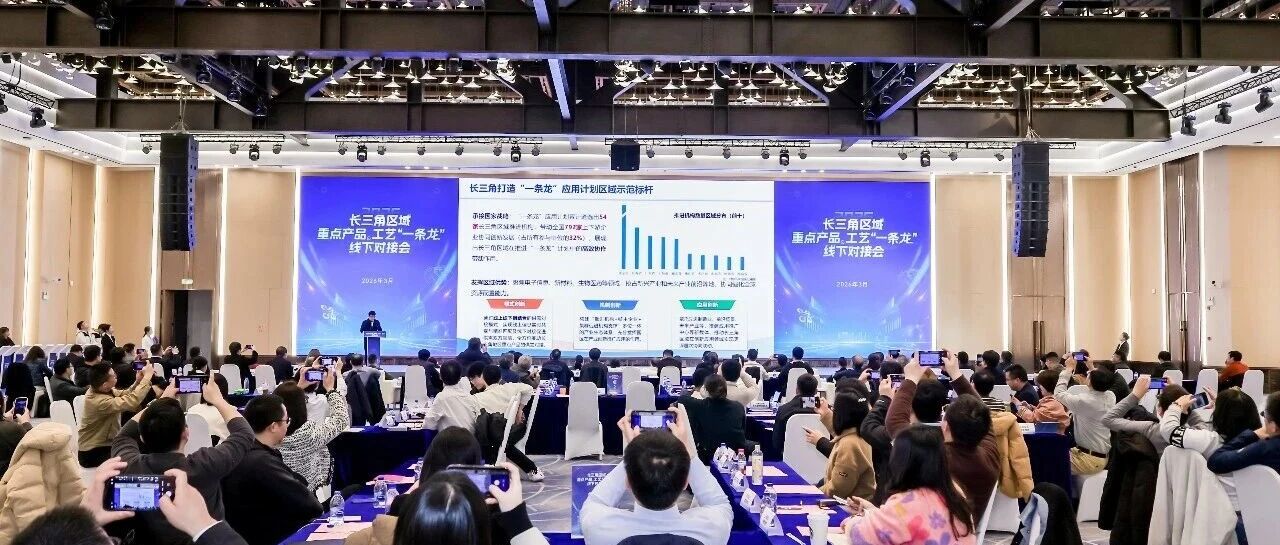
2026年长三角区域重点产品、工艺“一条龙”线下对接活动:攻坚核心装备,引领产业突破
远川研究所· 2026-03-16 12:28
Core Viewpoint - The article discusses the "one-stop" offline docking event for key products and processes in the Yangtze River Delta region, aimed at promoting collaborative innovation and accelerating the localization of core products and processes by integrating various industries and regions [1][3]. Group 1: Event Overview - The event took place on March 15, 2026, in Shanghai, gathering representatives from the industrial and information departments of Shanghai, Jiangsu, Zhejiang, and Anhui, as well as national think tanks and leading enterprises from the industry chain [1][3]. - Key officials, including the Deputy Director of the Planning Department of the Ministry of Industry and Information Technology, delivered speeches, emphasizing the importance of collaborative development in the Yangtze River Delta [3]. Group 2: Strategic Partnerships - A significant cooperation signing ceremony occurred, where representatives from various enterprises in the Yangtze River Delta signed multiple strategic cooperation agreements covering areas such as AI-integrated cloud-native CAD, hydrogen compression technology, and CT detector development [5]. - The signing marked a transition from top-level design to practical implementation of the "one-stop" model, indicating a solid step towards collaborative cooperation across the industry chain [5]. Group 3: Key Projects - The "AI-integrated cloud-native 3D CAD project" aims to overcome challenges in traditional industrial software by utilizing AI to understand proprietary knowledge and physical continuity requirements, enhancing the manufacturing process in sectors like precision instruments and aerospace [6][7]. - The "high-pressure large-displacement membrane hydrogen compressor" project has achieved a significant upgrade, increasing hydrogen transport capacity by over 60% and reducing operational costs by 20%, addressing short-distance transport bottlenecks [8]. - The "photon counting CT detector" project aims to break the monopoly of foreign companies by developing a domestic detector that improves image clarity by three times while reducing radiation dosage to one-third, with a target to launch commercially viable products within two years [9]. Group 4: Future Implications - The successful hosting of the "one-stop" docking event has established an efficient communication bridge for the industry chain, injecting confidence into tackling core technologies and enhancing resilience in key industries across the Yangtze River Delta and nationwide [12]. - The ongoing development of this collaborative model is expected to support the advancement of Chinese manufacturing towards higher value chains [12].